Which Faults Judges Mark on an American Shorthair
A cat can look perfectly healthy and still lose points in the show ring because its proportions, coat, color, or presentation differ from the breed standard. That can be confusing when the same feature seems charming at home. This guide explains the common areas judges assess on an American Shorthair, what counts as a correctable presentation issue, and what no amount of grooming can change.
How judges assess an American Shorthair
The standard is the measuring stick
Judges evaluate an American Shorthair against the standard used by the registry and show organization. The standard describes the desired balance of features: a strong, substantial body; a broad head with full cheeks; a square-looking muzzle; and a dense, short coat. The aim is not to reward the biggest cat or the roundest face in the room, but to assess how well the whole cat fits the breed type.
That distinction matters because a single feature rarely tells the whole story. A broad head may be attractive, but it should still fit the cat’s body and overall proportions. Likewise, a muscular frame is desirable, but an unusually heavy, short-legged, or overly cobby appearance may depart from the intended type. For more detail on the proportions the standard calls for, see What the American Shorthair Standard Asks For.
The specific wording and judging rules can differ between organizations, so an exhibitor should check the standard for the registry hosting the show. A feature treated as a fault in one context may be described differently in another. It is also useful to separate a fault, which is a departure from the ideal, from a disqualification, which may make a cat ineligible for an award under a particular show’s rules.
Judges consider balance, not just isolated features
Judging is a whole-cat assessment. The head, body, legs, tail, coat, color, and condition should work together. A cat may have a lovely coat pattern but lack the sturdy structure expected of the breed. Another may have a strong frame but carry itself poorly or have a coat that looks unprepared. The judge considers how these elements combine rather than treating one striking feature as a substitute for the rest.
This is why a pet owner’s idea of “perfect” may differ from a show judge’s. A very round face, short nose, or extra-plush coat can look appealing, but American Shorthairs are not meant to have exaggerated features. The breed’s appeal lies partly in its moderate, capable-looking build. What an American Shorthair Looks Like by the Standard explains the appearance judges are generally looking for.
| Area assessed | What the standard generally favors | What may count against the cat |
|---|---|---|
| Overall type | Balanced, sturdy, substantial appearance | Extreme, unbalanced, or markedly unlike the breed type |
| Head and muzzle | Broad head, full cheeks, square-looking muzzle | Narrow head, weak muzzle, or an exaggerated profile |
| Body and legs | Muscular body with proportionate legs and feet | Frail, overly fine, very short-legged, or excessively cobby build |
| Tail | Proportionate tail with the expected shape and set | Tail that appears unusually short, long, thin, or otherwise out of balance |
| Coat | Short, dense coat with the expected texture | Coat that appears too soft, sparse, uneven, or poorly presented |
| Color and pattern | Clear, appropriate color and pattern for the class | Pattern or color that is unclear, uneven, or not accepted in that class |
| Condition | Clean, healthy-looking, well-prepared cat | Poor coat condition, uncleanliness, or signs of inadequate care |
Common faults in shape and structure
Head, muzzle, ears, and eyes
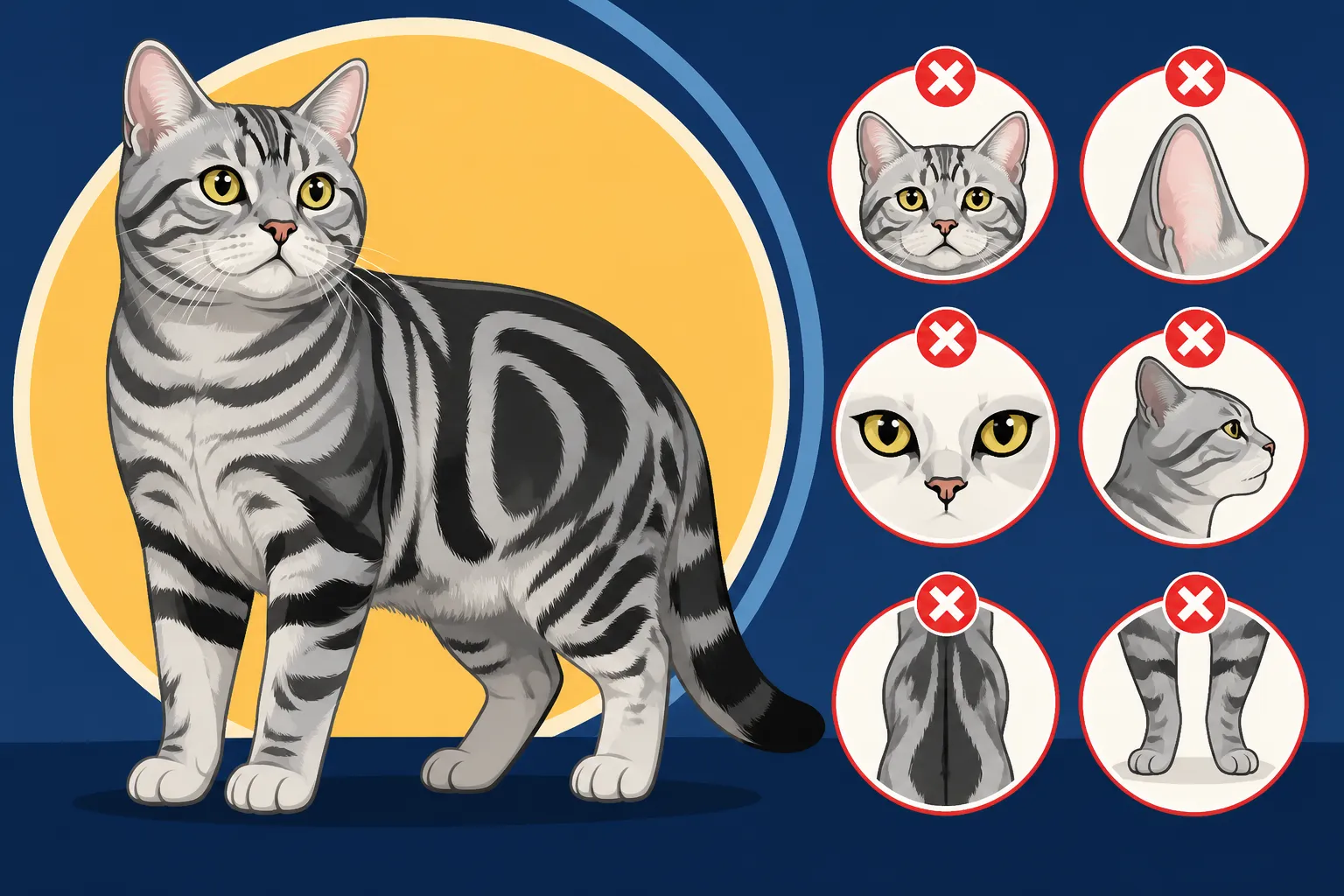
A judge may mark down a head that is too narrow or lacks the broad, rounded impression expected of an American Shorthair. The cheeks should contribute to a full look, while the muzzle should appear firm and square rather than pinched or delicate. A weak chin or a muzzle that looks too long or too fine can reduce the impression of strength and balance.
Ears and eyes also contribute to the overall expression. Ears that appear unusually large, narrow, or poorly placed may affect the cat’s balance, while eyes that do not have the expected shape or spacing may make the head look less typical. These observations are about degree and proportion; a judge is assessing the cat against the standard, not declaring that every minor variation is a serious defect.
Exhibitors sometimes focus heavily on one feature because it is easy to see in photographs. In person, the judge can assess the profile, the way the head sits on the neck, and how the face relates to the body. A photo that makes a cat look exceptionally round may not show whether the muzzle, chin, and proportions are actually correct.
Body, legs, feet, and tail
American Shorthairs should look strong and substantial, with a broad chest and muscular body. A very fine-boned or delicate cat may appear too light for the breed, while an overly short, bulky, or cobby cat can lose the balanced outline the standard calls for. The distinction is not simply “large is good” or “small is bad”; proportion and substance matter together.
The legs and feet should support the body in a way that looks sturdy and balanced. A judge may mark down a cat whose legs appear too fine for its frame or whose overall stance looks out of proportion. Tail length, thickness, and shape also affect the silhouette. A tail that looks unusually thin, short, long, or poorly balanced with the body may be less typical.
For owners comparing a pedigreed cat with a non-pedigreed tabby, these structural details are part of why appearance alone cannot prove breed. A domestic shorthair can share many visible traits without meeting the full standard or having documented lineage. See How an American Shorthair Differs From a Domestic Shorthair for that distinction.
Coat, color, and show presentation
Coat texture and condition
The American Shorthair coat is short and dense, with a firm texture rather than a long, silky, or especially plush finish. A coat that looks too soft, thin, uneven, or unkempt may not present the desired breed character. Judges also notice whether the cat’s coat appears clean and healthy. Grease, loose debris, excessive shedding, or a dull appearance can affect presentation even when the underlying coat type is good.
Some coat concerns are manageable with routine care. Regular gentle combing can remove loose hair, and a calm grooming routine can help an exhibitor notice changes in coat or skin. For basic grooming supplies, a retailer such as Chewy may be one place to compare combs and brushes, alongside local pet shops and veterinary recommendations. A grooming tool can improve tidiness, but it cannot change coat texture or make a structurally incorrect feature conform to the standard.
A cat’s coat also changes with age, season, health, and environment. A coat that looks less full during a seasonal shed is not automatically evidence of poor care. Judges assess what they see on the day, but responsible exhibitors should avoid trying to disguise a health or coat problem with excessive products or stressful grooming. For the breed’s natural coat characteristics, see The American Shorthair's Coat Was Built for Weather, Not a Judge.
Color and pattern clarity
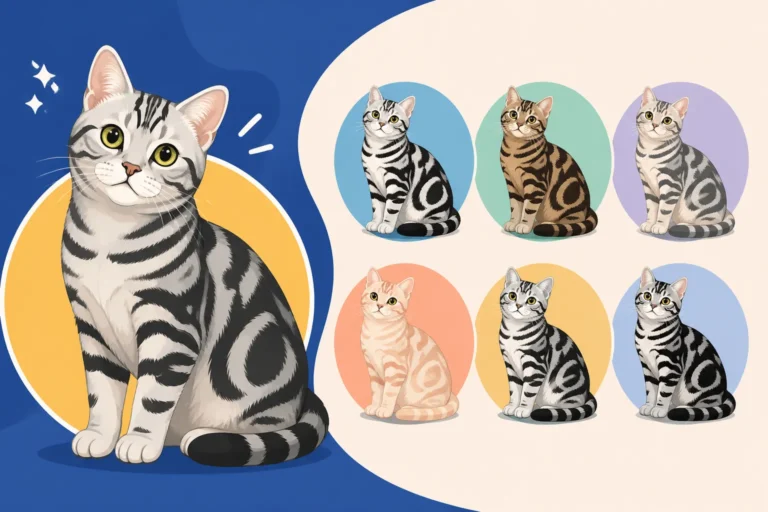
Color and pattern are assessed according to the class and the rules of the organization. A pattern that looks muddy, indistinct, or uneven may be less competitive than one with clear definition. In a tabby, judges may look at the contrast and placement of markings; in other color classes, they assess the expected color and overall presentation. The precise requirements depend on the standard and category.
A common misunderstanding is that a popular color automatically protects a cat from being marked down elsewhere. It does not. A striking silver tabby still needs the right body type, head, coat quality, and condition. Similarly, a less familiar color is not necessarily a fault if it is accepted in the relevant class and is presented well. The Silver Tabby That Made the American Shorthair Famous offers more background on the breed’s best-known pattern.
Color and pattern are also not the same as proof of pedigree. Many non-pedigreed cats have classic tabby markings, and a visual resemblance alone cannot establish that a cat is a registered American Shorthair. For exhibitors, the relevant question is whether the cat’s paperwork and show eligibility meet the organization’s rules—not whether its coat looks familiar.
Preparation, cleanliness, and handling
Show presentation can influence a judge’s impression, but it should not be confused with changing the cat. A clean coat, trimmed claws where appropriate, and a cat that can be handled calmly help the judge examine the animal. Poor presentation can draw attention away from a cat’s strengths, while anxious or resistant behavior can make the examination more difficult.
Preparation should be gradual and comfortable. Get the cat used to brief handling sessions, a carrier, and having its paws and body touched. Chewy or another pet-supply retailer may carry carriers and grooming basics, but choose items based on your cat’s comfort and size rather than appearance alone. A carrier that is too cramped can make the trip to a show stressful, particularly for a broad, sturdy cat.
A judge is not expecting every cat to behave like a statue. However, a cat that cannot be examined safely may not be assessed as fully as one that tolerates routine handling. Practicing calmly at home can help. It should never involve forcing a frightened cat through repeated handling or trying to suppress normal signs of distress.
What owners can change and what they cannot
Manageable issues versus lasting traits
Some show-day issues are manageable: a dusty coat, loose hair, overgrown claws, or a cat that has had little practice being handled. A consistent routine can help with these. Owners can also keep records of grooming, weight, and veterinary care so they have a clearer picture of changes over time. A cat’s health and comfort should always come before show preparation.
Other characteristics are structural. Head width, body proportions, leg length, tail shape, and many aspects of coat texture are not things a bath, brush, or styling product can correct. Responsible exhibitors accept those limits. The goal is to present the cat honestly and care for it well—not to make it look like a different animal.
This matters especially for people considering showing a pet cat. A pet can be a wonderful companion even if it does not match the show standard closely. Some organizations have classes or events with different eligibility rules, so check those rules before entering. Whether a Pet American Shorthair Can Be Shown explains why eligibility depends on the show and the cat’s registration status.
A useful checklist before a show
Before entering, review the official standard for the show organization and ask an experienced breeder or exhibitor to assess the cat in person. A photograph can help identify broad patterns, but it cannot reliably show the full profile, coat texture, body balance, or temperament during examination. An honest assessment can save an owner from spending time and money preparing for a class that is not a good fit.
Use a simple pre-show routine:
- Read the show organization’s breed standard and entry requirements.
- Confirm the cat’s registration and class eligibility.
- Check the cat’s coat, claws, ears, and general condition without over-grooming.
- Practice brief, gentle handling sessions well before the event.
- Choose a carrier that allows the cat to travel comfortably.
- Ask a knowledgeable exhibitor to point out strengths and possible departures from the standard.
- Treat any health or behavior concern as a reason to pause and seek appropriate care, not as something to cover up.
The most useful feedback is specific. “The cat needs work” is not actionable; “the muzzle looks narrow compared with the head” or “the coat needs more consistent preparation” gives an exhibitor something concrete to consider. If you are unsure whether a comment concerns a temporary presentation issue or a lasting feature, ask the judge or mentor to clarify after the class, following the show’s etiquette.
An American Shorthair does not need to win a ribbon to be a healthy, beautiful, well-loved cat. The standard is a tool for evaluating breed type in a competitive setting, not a measure of an individual cat’s worth. Understanding the difference helps owners take judging notes in perspective—and focus on what they can meaningfully improve: comfort, care, preparation, and a clear understanding of the rules.
Disclaimer
This article is for general informational purposes only and does not constitute professional advice. Laws, prices and regulations vary by location and change over time. Consult a qualified professional for guidance on your specific situation.