What Shape an American Shorthair’s Head Should Be
An American Shorthair’s head should look broad, balanced, and gently rounded, not flat-faced or sharply pointed. That can be hard to judge from a kitten photo, especially when fluffy cheeks, camera angles, or a growing body change the impression. This guide explains the breed’s expected head shape, how to assess it fairly, and when a difference may be worth discussing with a veterinarian.
The American Shorthair head shape at a glance
Broad and rounded, but not a perfect sphere
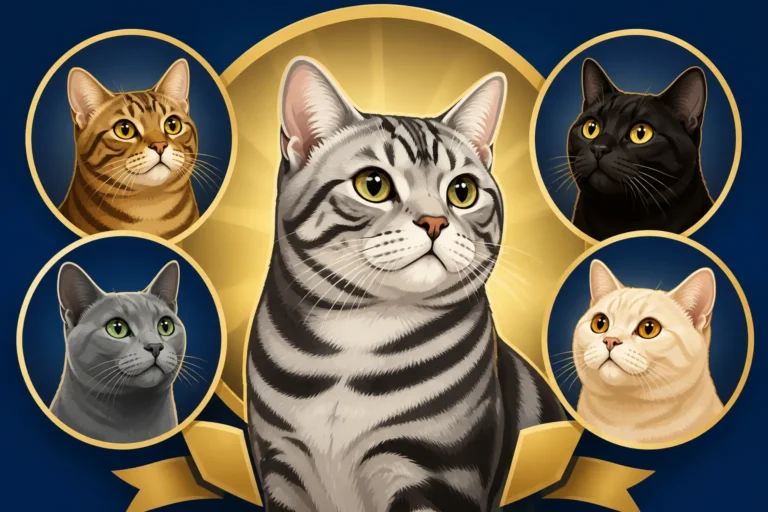
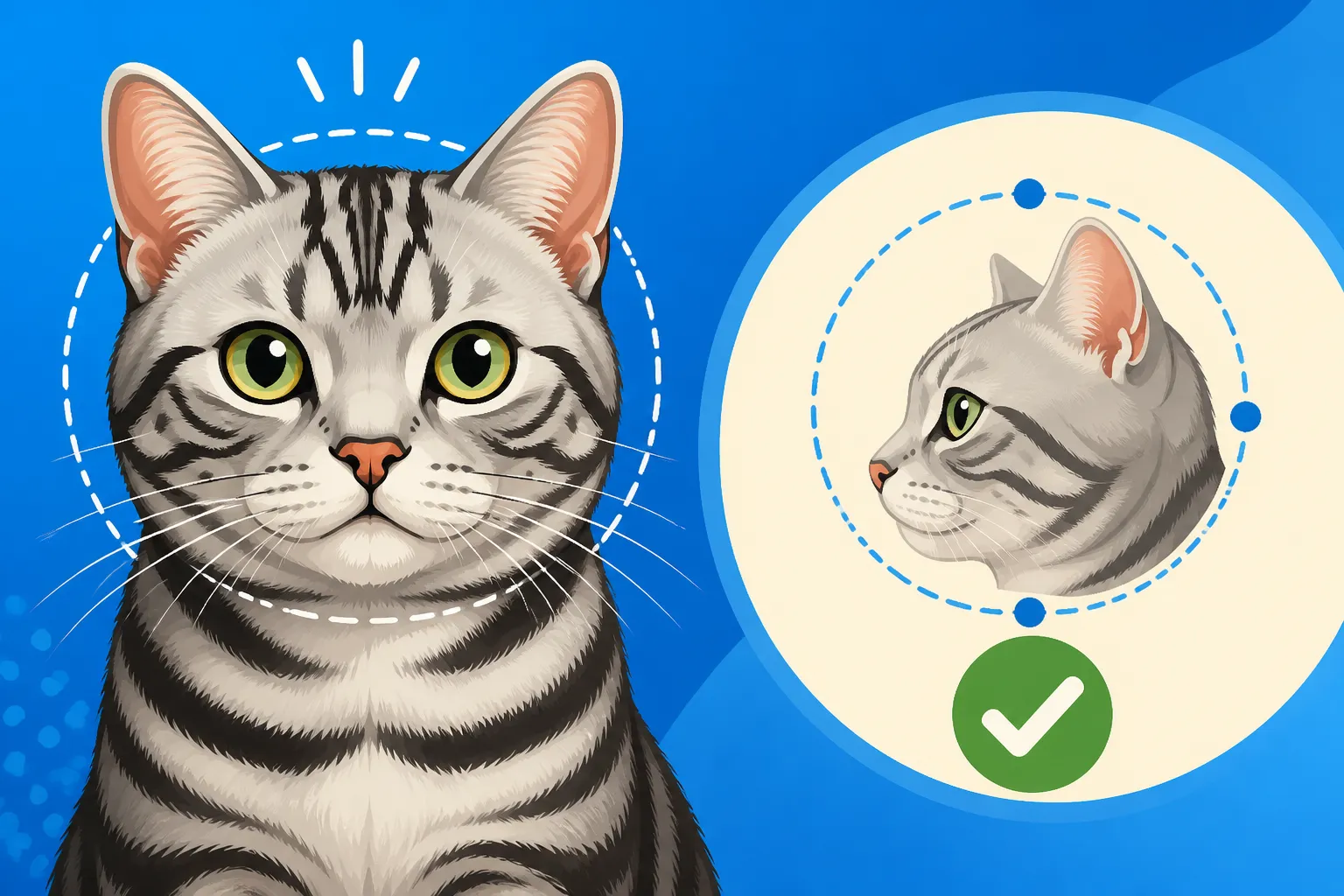
The American Shorthair standard calls for a large head that is broad and full-cheeked, with an overall shape that is slightly longer than it is wide. “Rounded” describes the general impression, not a perfectly circular outline. The forehead, cheeks, muzzle, and jaw should flow together in a sturdy, balanced way.
That balance is part of what gives the breed its familiar working-cat look. Picture a cat with a strong frame and a broad chest: its head should look substantial enough to belong to that body, rather than tiny, narrow, or delicate. The cheeks add fullness, but the face should still have definition.
A head that appears extremely round from the front may look different in profile. Likewise, a side view can make a normal muzzle seem longer or shorter depending on the angle. It helps to look at the whole cat from more than one direction before comparing its features with a written standard. For broader context on the breed’s structure, see What the American Shorthair Standard Asks For.
The square muzzle and firm chin
One of the most recognizable details is the muzzle. It should be square-looking and well developed, rather than sharply tapered or unusually short. The chin should be firm and in line with the upper jaw, giving the lower part of the face a solid appearance.
“Square” does not mean the cat has a box-shaped face with hard corners. It means the muzzle has substance and a defined outline instead of narrowing to a delicate point. The cheeks, whisker pads, and jaw contribute to that impression, so an individual feature should not be judged in isolation.
For example, a young cat may not yet have the broad, mature look of an adult. A thick coat can also soften the outline, while a leaner cat may appear more angular. Those differences do not automatically mean the head is outside the expected type. The breed’s square muzzle is one part of a broader, balanced appearance, not a reason to expect every American Shorthair to have an identical face.
A gentle profile rather than a flat face
Viewed from the side, the American Shorthair’s face should have a natural, moderate profile. The nose is neither dramatically pushed in nor strongly elongated, and the transition from forehead to nose should look smooth rather than sharply broken. The breed is not meant to have the flattened facial structure associated with some brachycephalic breeds.
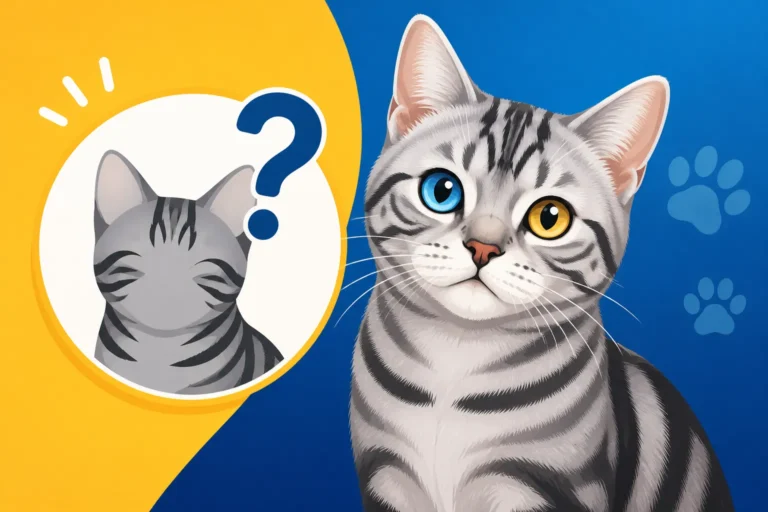
A flat-looking face can be especially misleading in close-up photographs. Wide-angle phone cameras may make the nose and eyes look larger while compressing the rest of the head. A cat photographed from above may also seem rounder than it does at eye level. For a more dependable impression, look at a relaxed cat from the front and side, with its head held naturally.
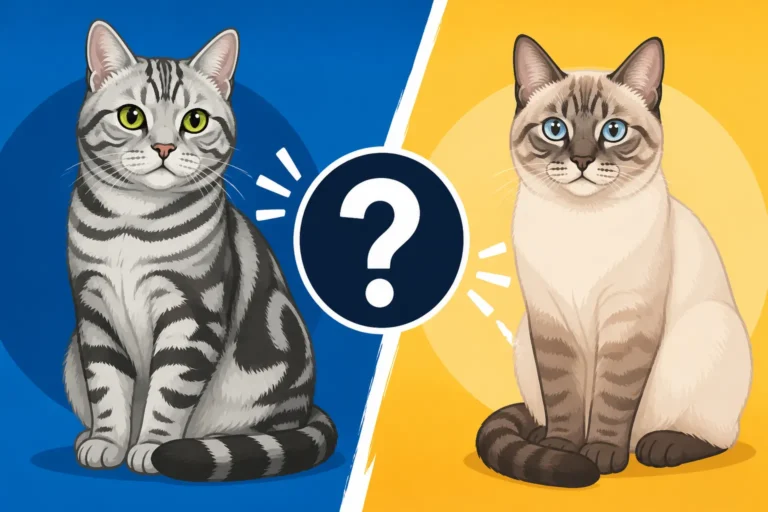
The contrast with other shorthaired breeds can help clarify the distinction. The American Shorthair is not simply a round-headed cat with a short coat; its head shape sits within a particular combination of body, muzzle, and facial proportions. For a fuller comparison, read How an American Shorthair Differs From a British Shorthair.
How to assess the head without overreading a photo
Check the head as a whole
When looking at an American Shorthair, start with the overall outline. From the front, notice whether the head looks broad and full-cheeked. Then look at the muzzle and chin: do they appear sturdy and balanced with the rest of the face? From the side, check whether the profile looks moderate rather than flat or unusually long.
A simple comparison table can help keep the details in perspective:
| Feature | Expected impression | What can distort the impression |
|---|---|---|
| Overall head | Broad, substantial, gently rounded | Camera angle, coat, age, body condition |
| Cheeks | Full and well developed | Fluff, posture, facial expression |
| Muzzle | Defined and square-looking | Whisker pads, close-up photography |
| Chin | Firm and balanced with the upper jaw | Open mouth, side angle, dental issues |
| Profile | Moderate, not flat-faced or sharply elongated | Lens distortion, head tilt |
No single feature makes a cat a pedigree American Shorthair. The head should be considered alongside the body, coat, and other characteristics described by the breed standard. And even a cat that resembles the breed is not automatically a registered example of it. Appearance alone cannot establish pedigree, as explained in How an American Shorthair Differs From a Domestic Shorthair.
Account for age, sex, and individual variation
Kittens do not arrive looking like finished adults. Their proportions change as they grow, and a head that seems narrow or large at one stage may look more balanced later. The cheeks and overall structure can take time to mature, so a single early photo is a poor basis for making a firm judgment about adult type.
Sex and individual build can influence the impression too. Some cats have a broader or heavier-looking head than others, even within the same breed. Coat density can add visual fullness around the cheeks, while a sleek coat may reveal the outline more clearly. These variations are normal reasons to avoid expecting a precise “template face.”
If you are assessing a kitten from a breeder, ask to see clear photos from different angles and, if possible, the kitten’s parents. Ask how the breeder evaluates head shape alongside health and temperament rather than selecting for one exaggerated feature. For a wider picture of how the breed’s structure is described, What an American Shorthair Looks Like by the Standard is a useful companion topic.
Separate head shape from weight and coat
A full-cheeked appearance can be part of the breed’s characteristic look, but extra body fat can make the face and neck seem heavier too. That does not mean a round face is automatically a sign of excess weight, nor does it mean a cat with less prominent cheeks is underweight. Consider the cat’s whole body and ask a veterinarian to assess body condition if you are unsure.
Coat texture and seasonal changes can also affect the outline. A dense coat may make the cheeks appear puffier, especially in certain light or when the cat turns its head. Grooming can tidy loose hair, but it cannot change the underlying skull shape. Products or supplements sold through retailers such as Chewy are not a way to reshape a cat’s head; discuss any concern about body condition or nutrition with your veterinarian.
Common misconceptions about American Shorthair faces
A round face does not mean a flat face
People sometimes use “round” and “flat” as if they mean the same thing. They do not. The American Shorthair is expected to have a broad, rounded overall head shape, but its muzzle and nose should remain clearly defined. A face can look full without being pushed in.
A flat face may raise different concerns from ordinary breed variation, especially if it is accompanied by noisy breathing, difficulty eating, persistent eye discharge, or other changes in comfort. Those signs are not something to explain away as a breed feature. A veterinarian can assess the cat’s facial structure and decide whether further evaluation is needed.
Similarly, a prominent nose or a slightly longer-looking face does not automatically rule a cat out as an American Shorthair. The standard describes a balanced type, not a single identical facial expression. Photos, coat, posture, and age all affect what you see. If you are comparing breeds, How an American Shorthair Differs From an Exotic Shorthair helps show why a short coat and a round head alone are not enough to identify a breed.
A head shape cannot confirm pedigree
A cat may have a broad head, full cheeks, and a square muzzle without having a documented American Shorthair pedigree. Many domestic shorthairs share similar features, and mixed-breed cats can resemble purebred cats in particular traits. That resemblance can be charming, but it is not proof of registration or ancestry.
If pedigree matters to you, ask for the relevant registration and lineage documents and verify them through the appropriate registry. A DNA test may offer information about ancestry, but it should not be treated as a substitute for official pedigree records or as a definitive visual test. The distinction between breed appearance and documented ancestry is covered in Whether a DNA Test Tells an American Shorthair From a Moggy.
Be cautious of listings that promise a specific breed based only on a photograph or a seller’s description. Chewy or any other pet-supply retailer is not a way to establish a cat’s lineage; a retailer’s food or accessory listings do not certify breed. If you are contacting a breeder, request documentation and ask how the kitten’s parents were selected and evaluated.
More extreme is not necessarily more correct
A very exaggerated head may attract attention in a photo, but “more round” or “more massive” does not automatically mean “more true to type.” Breed standards aim for a combination of features that work together. Pushing one trait to an extreme can undermine the balance that makes the breed recognizable.
The same caution applies to online comparisons. A show photograph may be carefully posed and lit, while a family cat is caught mid-yawn or looking down at a toy. Neither image gives a complete picture. Look for proportion and overall balance, rather than judging a cat against a single idealized picture.
If a breeder talks only about head size or cheek fullness and avoids discussing health, temperament, and documentation, ask more questions. A responsible discussion of the breed should cover the whole cat. The breed’s broader history and working-cat background are explored in The Mayflower Cats Behind the American Shorthair.
When a head difference deserves a closer look
Ordinary variation versus a health concern
A slightly narrower muzzle, less prominent cheeks, or a head that looks different from a show photograph can simply be individual variation. It is more useful to watch for changes in function or sudden changes in appearance than to worry over minor differences in shape.
Contact a veterinarian if your cat develops swelling, a new lump, a facial injury, a suddenly uneven appearance, trouble closing its mouth, difficulty chewing, or signs of pain. Persistent eye discharge, noisy breathing, or changes in eating also deserve attention. These symptoms need an actual health assessment; they should not be judged against a breed standard at home.
Likewise, if the jaw seems misaligned or the cat repeatedly drops food, paws at its mouth, or avoids chewing, a dental or oral problem may be involved. The head’s outward shape cannot tell you what is happening inside the mouth. A veterinary exam is the practical next step.
What to ask a breeder or veterinarian
If you are choosing a kitten, ask the breeder how the parents’ structure compares with the breed standard and whether you can see them in relaxed, clear photos. Ask for records and health information, not just close-up portraits. A good conversation should leave room for questions about the kitten’s development and the breeder’s priorities.
If you already own an American Shorthair and are concerned about its appearance, take clear front and side photos in natural light. Note whether the difference has always been there or appeared recently. Bring those details to a veterinarian, especially if you have noticed eating, breathing, or comfort changes.
Avoid trying to correct a normal-looking head shape with diet changes, supplements, or grooming. Chewy and other retailers may offer ordinary pet supplies, but products cannot alter a cat’s inherited skull structure. If weight or diet is part of the concern, have the veterinarian assess the cat’s body condition and recommend an appropriate feeding plan. Selecting food from a retailer such as Chewy should be based on the cat’s nutritional needs, not on hopes of changing its facial proportions.
A practical way to remember the standard
Think broad, balanced, and moderate. The American Shorthair’s head should be substantial and gently rounded, with full cheeks, a square-looking muzzle, and a firm chin. Its profile should remain natural rather than flattened. The exact impression will vary with age, coat, posture, and individual build.
That description is a guide, not a checklist for diagnosing breed or health. Use it to understand the type, not to decide from one photo whether a cat is “correct.” For a cat’s identity, rely on documentation; for a concern about comfort or function, rely on a veterinary examination. And for everyday purchases, such as food or grooming supplies from Chewy, keep the goal practical: support the cat’s health rather than trying to change its head shape.
Disclaimer
This article is for general informational purposes only and does not constitute professional advice. Laws, prices and regulations vary by location and change over time. Consult a qualified professional for guidance on your specific situation.