Whether an Odd Eyed American Shorthair Exists
Yes, an odd-eyed American Shorthair can exist, although the look is uncommon. Odd eyes usually mean one blue eye and one eye of another color, and they’re most often associated with white cats. Eye color alone, however, can’t confirm a cat’s breed or tell you whether its hearing is affected. Here’s how to understand the trait and what to ask a breeder or veterinarian.
What odd eyes mean in an American Shorthair
Heterochromia is a difference in eye color
Odd eyes are a form of heterochromia: the two eyes have different colors. In a cat, the familiar version is one blue eye and one gold, copper, or another non-blue eye. A cat can also have a difference in color within one iris, though that is not the same appearance as having two distinctly different-colored eyes.
Eye color is influenced by pigment. A blue-looking iris has little pigment, while gold and copper eyes have more. In kittens, the final shade may not be clear at first: many kittens’ eyes start out blue and change as they mature. So a young kitten with two blue-looking eyes may not keep that color, and it’s sensible to wait for development rather than treat an early appearance as a permanent trait.
The important distinction is that “odd-eyed” describes appearance, not breed. A domestic shorthair, a white cat of another breed, and a pedigreed American Shorthair might all have different-colored eyes. To learn more about the breed’s accepted appearance, see Which Eye Colors an American Shorthair Has and What the American Shorthair Standard Asks For.
White coats are the most familiar setting for odd eyes
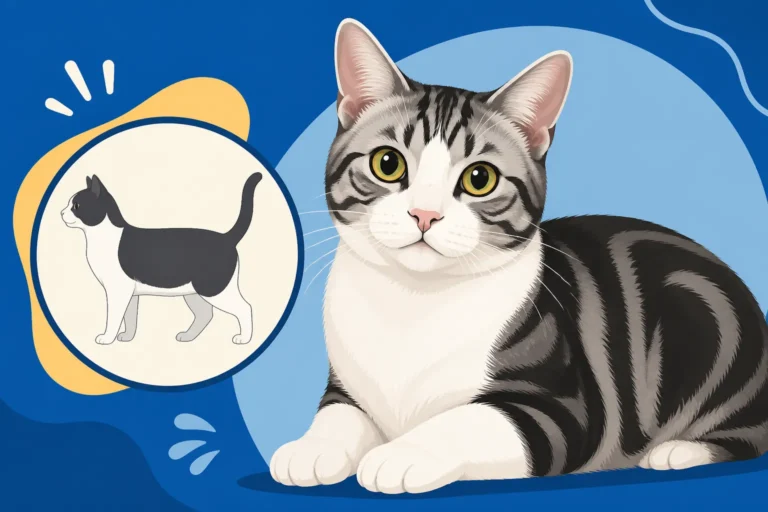
Odd eyes are most often noticed in white cats. A white coat can be associated with genetic processes that also affect pigment in the eyes and, in some cats, the development of hearing. That does not mean every white cat has odd eyes, or that every odd-eyed cat is deaf. It also doesn’t mean that a cat with a small white patch is genetically the same as a completely white cat.
That difference matters when people try to infer health from photos. A mostly white cat with one blue eye may attract attention because of the visible combination, but appearance alone can’t establish the cat’s genetics, hearing status, or pedigree. A breeder’s records and a veterinarian’s assessment are more useful than assumptions based on coat color.
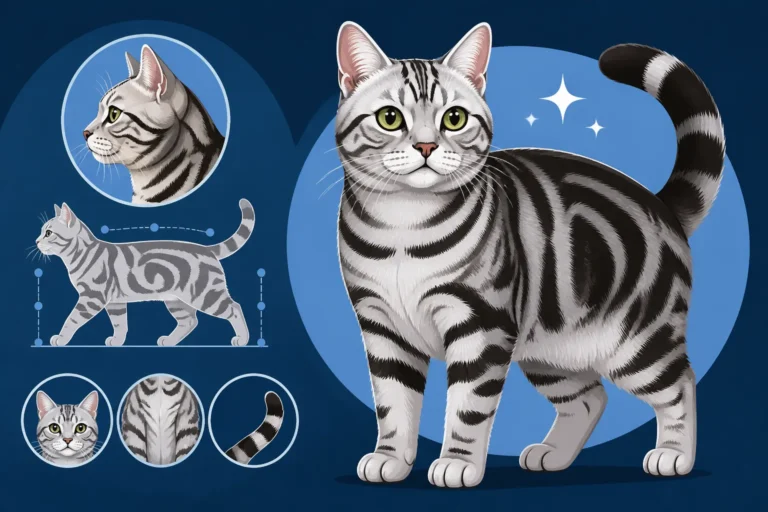
American Shorthairs come in many coat colors and patterns, but a white American Shorthair is the most likely context in which an owner might ask about odd eyes. The breed’s recognizable silver tabby is far more familiar, but it isn’t the only possible appearance. For a broader look at accepted coats, see Which Colors an American Shorthair Comes In and Which Patterns an American Shorthair Comes In.
Can an odd-eyed cat be a pedigreed American Shorthair
Eye color alone does not prove breed
It is possible for an American Shorthair to have odd eyes, but the cat’s eyes don’t establish that it is an American Shorthair. Breed identity is supported by pedigree and registration records through a recognized registry, not by a particular coat pattern, eye color, or resemblance to a breed photograph.
This is a common source of confusion for people browsing kitten listings. A white, round-faced cat with a sturdy build may look “like an American Shorthair,” but similar features appear in many mixed-breed and domestic shorthair cats. A seller’s description or an online ancestry estimate is not the same thing as documented pedigree. For more on the distinction, read How an American Shorthair Differs From a Domestic Shorthair and Whether Papers Are the Only Difference an American Shorthair Has.
If you’re considering a kitten advertised as a pedigreed American Shorthair, ask which registry the breeder uses and request the kitten’s registration and lineage details. You can also ask whether the eye color is expected to meet the relevant registry’s standard. These are separate questions: a kitten can be registered yet not be considered a show-quality example, and a cat can look convincing without having a verified pedigree.
Breed standards and show eligibility are not quite the same question
Breed standards describe the appearance expected of a breed and can specify how eye color relates to coat color. The exact wording and show rules depend on the registry and the class or color variety involved. If a breeder says an odd-eyed kitten is acceptable for showing, ask which registry’s standard they mean and whether they can show you the applicable rule.
A visible trait can be striking without being especially common or especially desirable for every purpose. Someone choosing a companion may care most about health, temperament, and a responsible start in life. Someone planning to show or breed needs to understand the registry’s rules and the cat’s full pedigree, rather than relying on a single feature.
| Question | What to keep in mind |
|---|---|
| Can an American Shorthair have odd eyes? | Yes, it is possible, though uncommon. |
| Does odd-eyed appearance prove the cat is an American Shorthair? | No. Breed identity relies on pedigree and registration, not eye color. |
| Are odd eyes most associated with white cats? | Yes, but coat appearance alone does not confirm the underlying genetics. |
| Does a blue eye mean a cat is deaf? | No. Some white cats have a higher risk of congenital deafness, but an individual cat’s hearing cannot be determined from eye color alone. |
| Can the kitten’s eye color change? | Yes. Kitten eye color can develop as the cat matures, so an early appearance may not be final. |
| Should show eligibility be assumed? | No. Check the relevant registry’s standard and rules. |
Hearing, health, and what an owner should watch for
Odd eyes do not diagnose deafness
A blue eye is not a hearing test. Some cats with white coats, particularly those with blue eyes, have an increased risk of congenital deafness. But many blue-eyed cats hear normally, and an odd-eyed cat may have normal hearing in both ears. The appearance of the eyes cannot tell you whether one or both ears are affected.
If you’re bringing home a kitten, ask the breeder what they know about the kitten’s hearing and whether any evaluation has been done. If the kitten does not respond to sounds, startles only when approached from a particular direction, or seems unusually unaware of activity behind it, raise those observations with a veterinarian. Cats with hearing differences can still have full, comfortable lives; the practical issue is making the home and communication predictable and safe.
An owner can adapt by approaching where the cat can see them, using visual cues, and taking extra care near doors or outdoor hazards. Don’t use loud noises to “test” hearing at home: a cat may respond to vibration, movement, or air currents rather than sound, and a casual test can be misleading. A veterinarian can advise whether a formal hearing assessment is appropriate.
Choose a veterinarian based on the cat, not the eye color
At a routine appointment, mention the cat’s coat and eye colors, any known hearing history, and anything you’ve noticed about its response to sound. The veterinarian can examine the cat and help decide whether further evaluation makes sense. If you’re buying a kitten, ask for health records and veterinary information rather than assuming that an unusual appearance means a health problem—or that a pretty eye color guarantees health.
A white coat and odd eyes are not a reason to avoid a cat. They are a reason to ask sensible questions, especially when the cat’s hearing history is unknown. The same approach applies to any kitten: ask what is documented, what has actually been examined, and what should be monitored as the cat grows.
When preparing for a new cat, practical basics such as a secure carrier, food and water bowls, and a suitable litter box matter more than buying products based on eye color. Chewy is one retailer where owners may compare basic supplies, but product choice should fit the individual cat and advice from its veterinarian. If the cat has hearing impairment, household safety adjustments and a consistent routine matter more than specialized shopping.
How to assess an odd-eyed American Shorthair kitten
Ask focused questions before choosing a kitten
A responsible breeder should be able to explain the kitten’s pedigree, the registry involved, and what they know about the parents and litter. If the kitten has odd eyes, ask whether the eye colors are mature or still changing, whether the breeder has any hearing information, and whether the kitten has had a veterinary examination. Clear, specific answers are more reassuring than claims that the eye color itself proves the cat is rare, healthy, or a certain breed.
It’s also reasonable to ask for paperwork before making a decision. Check that the kitten’s registration details and health records match the seller’s description. If the breeder says a particular eye color is acceptable under a breed standard, ask which registry’s rules they are referring to. For more guidance, see Which Health Results an American Shorthair Breeder Must Show and Whether an American Shorthair Kitten Comes With Health Paperwork.
Be cautious if unusual eye color is being used to pressure you into a quick decision or to justify sweeping health claims. A distinctive look can be part of a cat’s appeal, but it doesn’t replace documented ancestry, appropriate veterinary care, or a good match with your household.
Make the home comfortable and safe
For any new kitten, set up a quiet place to settle in, keep food and water easy to find, and make sure the litter box is accessible. Chewy may be useful for comparing ordinary supplies such as litter, bowls, and carriers; check the size and features against your kitten’s needs rather than buying based on a label or appearance alone.
If you learn that your cat has reduced hearing, make your approach visible and predictable. Avoid startling it awake, use gentle visual signals, and keep it away from risks it cannot hear coming. Outdoor access deserves particular care because traffic, other animals, and sudden hazards may be harder for a deaf cat to detect. A secure indoor environment or enclosed outdoor space can make supervision more manageable.
As your cat matures, keep routine veterinary appointments and bring up any changes in behavior or response to sound. If you’re organizing care supplies, Chewy can be one option for comparing everyday items, but it cannot determine whether a cat is deaf or confirm a pedigree. Those questions belong with the veterinarian and the registry or breeder records, respectively.
Ultimately, an odd-eyed American Shorthair is possible, but it is an uncommon appearance rather than proof of breed or a diagnosis. Focus on the cat’s documented background, health history, and individual needs. Whether the eyes remain mismatched or change as the kitten grows, good care begins with asking clear questions and getting the right information from the people who know the cat.
Disclaimer
This article is for general informational purposes only and does not constitute professional advice. Laws, prices and regulations vary by location and change over time. Consult a qualified professional for guidance on your specific situation.