How Many Scratching Posts an American Shorthair Needs
You've brought home that wonderful American Shorthair, a cat known for its calm demeanor and sturdy build, only to find your sofa mysteriously acquiring new "designer" scratches, or your favorite armchair looking like it went a round with a tiger. It's incredibly frustrating, and you might be wondering if your cat just has it out for your furniture. The truth is, your American Shorthair isn't being naughty; they're simply following deep-seated instincts that every cat, especially one with a working-class lineage, possesses. This guide is here to help you understand why your American Shorthair scratches, how many scratching posts they really need, and how to choose and place them effectively to save your furniture and keep your feline friend happy and healthy.
Understanding the American Shorthair's Instinctual Need to Scratch
Scratching isn't just some random bad habit; it's a fundamental part of being a cat, especially for a breed like the American Shorthair, whose ancestors were valued for their practical skills. These aren't just delicate creatures looking for a manicure; they're muscular, capable hunters with a need to maintain their tools and mark their territory.
Why Scratching is More Than Just Sharpening Claws
When your American Shorthair digs their claws into a surface, they're doing far more than simply filing them down, although that's certainly part of it. Think of it as a multi-purpose activity, deeply ingrained in their DNA, stemming from centuries of needing to be effective predators and territorial beings.
Firstly, it's a fantastic full-body stretch. Imagine waking up from a long nap, stiff and a little cramped. You'd want to stretch out, right? Cats do the same. They extend their bodies, arch their backs, and pull those claws through a resistant surface. This helps keep their muscles limber and joints healthy, which is vital for a cat that, even indoors, retains a strong hunting drive. Without appropriate outlets, they might feel physically unfulfilled or even uncomfortable.
Secondly, scratching is a powerful form of communication, a way to mark their territory. Cats have scent glands in their paws. When they scratch, they're depositing their unique scent onto the surface, essentially leaving a "calling card" that says, "I was here, this is my space." This is particularly important for American Shorthairs, who historically patrolled large areas for vermin. Even in a modern home, they still feel the need to establish their domain. The visual marks left by their claws also serve as a signal to any other cats (or even humans) that this territory is claimed. It's a primal message that helps them feel secure in their environment. Why Centuries of Ratting Left the American Shorthair Its Drive
Finally, it's a stress reliever. Just like we might tap our foot or bite our nails when anxious, cats can use scratching as a way to self-soothe. A good, satisfying scratch session can release pent-up energy, alleviate boredom, or even help them cope with changes in their environment. If you've ever seen your American Shorthair vigorously scratch after a perceived threat (like the vacuum cleaner coming out) or a new visitor, you're witnessing this stress-release mechanism in action. Providing ample, appropriate scratching surfaces helps them manage their emotional well-being without resorting to your prized possessions.
The American Shorthair's Preferences for Scratching Surfaces
Not all scratching posts are created equal, especially when it comes to accommodating a breed like the American Shorthair. Their sturdy, muscular build and innate hunting instincts mean they're not looking for anything flimsy or insubstantial. They need something that can stand up to their strength and provide a truly satisfying experience.
An American Shorthair will naturally gravitate towards surfaces that offer resistance and stability. Imagine a wild cat trying to sharpen its claws on a wobbly twig – it simply wouldn't work. They need something firm that won't give way or tip over under their weight and force. This means a scratching post needs a heavy, solid base. A post that wobbles or falls when they lean into a good scratch can actually deter them from using it, sending them straight back to your stable, sturdy sofa. You might find them trying to dig their claws into door frames or wooden furniture, not out of spite, but because these surfaces offer the rigidity they crave.
The texture of the material is also crucial. American Shorthairs often prefer rough, fibrous materials that allow their claws to sink in and pull away, effectively removing the outer layer of the claw and getting a good stretch. Sisal rope, corrugated cardboard, and even untreated wood are popular choices. Smooth, slick surfaces like carpet (unless it's a very dense, loop-pile carpet that offers good resistance) are often less appealing as they don't provide the necessary grip or "shredding" sensation. They want to feel like they're accomplishing something with each scratch, really digging in and leaving their mark.
Considering their broad chests and powerful front legs, a post must also be tall enough for them to stretch out fully. If they can only reach halfway up a post, they won't get that satisfying, full-body extension that is so important. A post that allows them to stretch from their toes to their shoulders will be much more effective and utilized. Observing How an American Shorthair Hunts might give you clues; they're powerful, grounded cats, and their scratching reflects that physical capability.
Factors Influencing the Number and Type of Scratching Posts Needed
It's not just about getting a scratching post; it's about getting the right number and right types, placed strategically, to cater to your American Shorthair's specific needs and your home environment. Thinking like your cat is the key here.
Household Size and Cat Population
This might seem obvious, but it's often overlooked: the more cats you have, the more scratching resources you need. While American Shorthairs are generally known for their placid and adaptable nature, they still have individual personalities and territorial instincts. If you have multiple American Shorthairs, or an American Shorthair living with other breeds, each cat will likely want their "own" scratching spot.
Think about it like this: if you have a multi-person household, everyone wants their own comfortable chair or space to relax. Cats are no different with their resources. A single scratching post for two cats can lead to competition, stress, and ultimately, one or both cats seeking alternative (read: furniture-based) scratching outlets. To reduce territorial disputes and ensure every cat feels secure in marking their space, a good rule of thumb is one scratching post per cat, plus one extra. So, for two American Shorthairs, you'd ideally want three posts distributed around the home.
This isn't just about sharing; it's about comfort and accessibility. A cat might prefer a certain type of scratcher (vertical sisal, horizontal cardboard) or a particular location. By offering a variety of posts in different styles and placements, you increase the chances that every cat in your home finds a spot they love, reducing the likelihood of them turning their attention to your prized belongings. Whether Two American Shorthairs Split the Territory or Fight for It is a legitimate concern, and proper resource management, including scratching posts, can go a long way in maintaining harmony.
Home Layout and "Territory" Marking
The placement of your scratching posts is just as vital as having them. Your American Shorthair is a creature of habit and instinct, and they will naturally scratch in certain areas, particularly those that are important in their perceived territory. You want to place scratching posts where they would naturally choose to scratch, not just tuck them away in an unused corner.
Consider the "high-traffic" areas of your home. Where does your American Shorthair sleep? Where do they often stretch after waking up? Where do they hang out when you're in the room? These are prime locations. Cats often like to scratch near their resting spots to mark their territory as they settle down or wake up. Placing a post near their favorite napping spot on the sofa, or by a window where they love to perch and observe the outside world, makes perfect sense to them.
Entryways and exits are another key area. Cats often scratch near doors or main thoroughfares to mark their territory as they move through their space. If your American Shorthair has a preferred route through the house, consider placing a scratcher along that path. This helps them reinforce their presence and feel more secure.
Also, observe where your cat is currently scratching if they're already damaging furniture. Is it the corner of the sofa? The leg of a dining chair? This tells you exactly where they feel the need to mark and stretch. The solution isn't to punish them but to provide an acceptable alternative right in that very spot. You might initially place the new scratcher right in front of the damaged area, then gradually move it a few inches away once they start using it. An American Shorthair's patrol route is a serious business, even if it's just from the kitchen to the bedroom. How an American Shorthair Splits Its Day Between Patrol and Sleep and providing scratching posts along these routes validates their instinct.
Individual American Shorthair Personality and Habits
Just like people, every American Shorthair has their own unique personality and set of preferences. What one cat loves, another might ignore. Observing your individual cat's scratching habits is crucial to providing the most effective solutions.
Does your American Shorthair prefer to scratch vertically, stretching upwards with their front paws and arching their back? This indicates a preference for traditional upright scratching posts or cat trees. If they're currently attacking the sides of your sofa or doorframes, a tall, sturdy vertical post is likely the answer. They need something that allows them to get that full, satisfying stretch.
On the other hand, does your cat tend to scratch horizontally, like digging into a rug or a flat piece of cardboard on the floor? This suggests they prefer horizontal scratchers, like scratching mats or flat cardboard pads. Some cats even combine both, enjoying a mix of vertical and horizontal action throughout their day. If they are trying to dig their claws into carpets, a horizontal cardboard scratcher might be exactly what they're looking for.
Also, consider the intensity of their scratching. Some American Shorthairs are very vigorous scratchers, really putting their weight into it. For these power-scratchers, durability is paramount. Flimsy, easily shredded posts won't last and won't satisfy their strong instincts. You'll need extra sturdy options. Others might be more casual about it. Paying attention to these nuances will help you select posts with the right materials and construction to match your cat's specific style. Don't be afraid to experiment with different types until you find what truly resonates with your unique American Shorthair.
Choosing the Right Scratching Posts for Your American Shorthair
Once you understand why your American Shorthair scratches and where they like to do it, the next step is selecting the best posts. This isn't just about aesthetics; it's about functionality, durability, and catering to their natural design.
Vertical vs. Horizontal: Understanding Their Purpose
Cats, including our beloved American Shorthairs, utilize different scratching motions for different purposes. Providing a variety ensures all their needs are met.
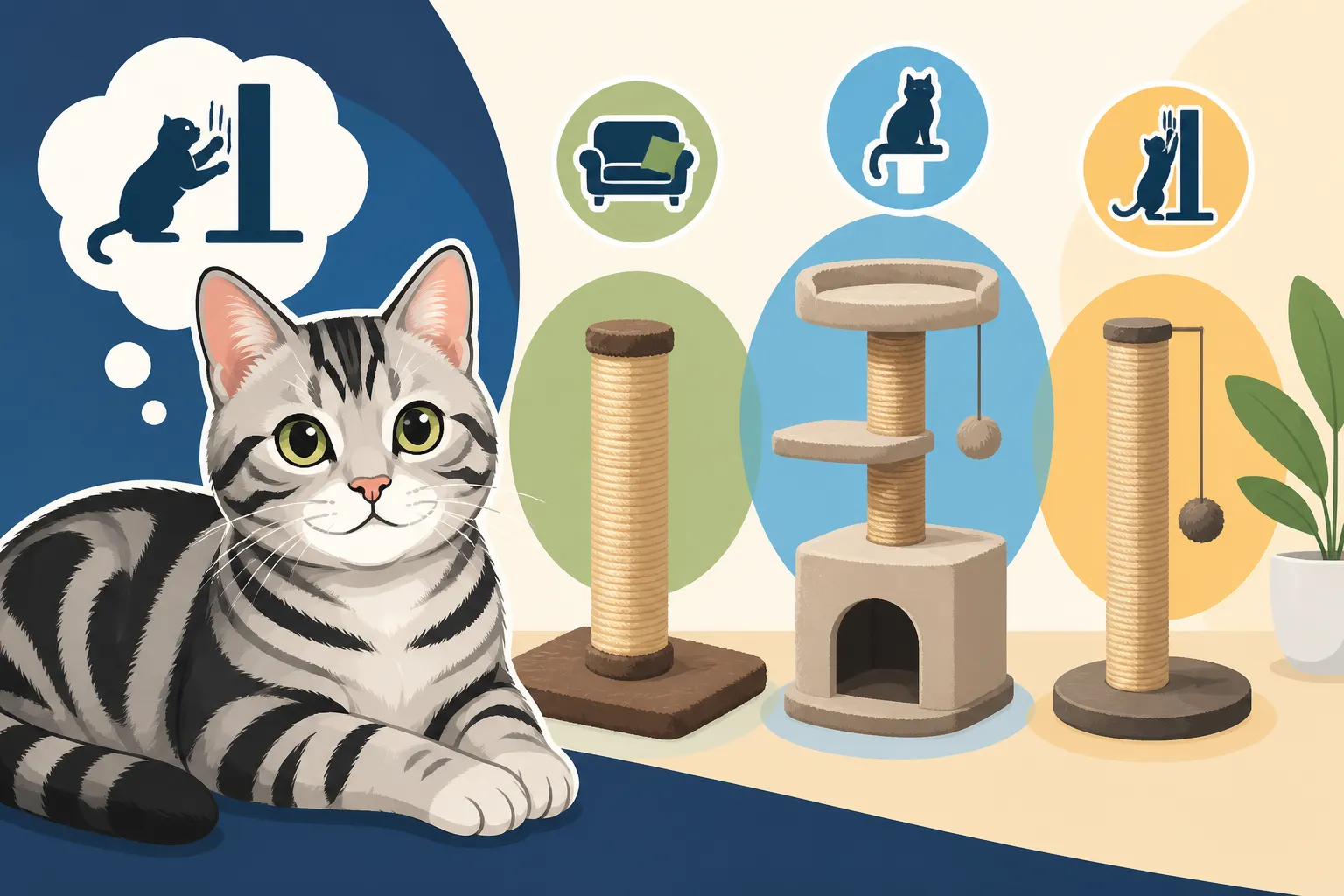
Vertical Scratching Posts: These are perhaps the most iconic type of scratcher, typically made of sisal rope or carpeted material wrapped around a tall, sturdy pole. Your American Shorthair will use a vertical post to stretch their entire body upwards, extending their spine and shoulders, much like they would on a tree trunk in the wild. This full-body extension is fantastic for muscle tone and flexibility, and it also allows them to leave a clear visual and scent mark at a prominent height. For a muscular breed like the American Shorthair, a tall post (at least 30-36 inches high) is essential so they can stretch to their full length without hunching over. The material should be robust, like tightly woven sisal, which gives their claws excellent purchase and allows for a satisfying shred. Many cat trees incorporate vertical scratching surfaces, offering dual benefits of climbing and scratching. Which Post Lets an American Shorthair Condition Its Claws is all about finding that perfect angle and texture.
Horizontal Scratchers: These often come in the form of corrugated cardboard pads, mats, or even ramps. American Shorthairs will use horizontal scratchers for a different type of claw maintenance and marking. This motion allows them to really dig in and pull, effectively peeling back the dull outer layers of their claws and stimulating the paw pads. Some cats simply prefer scratching on a flat surface, especially if they were previously allowed to scratch rugs or carpets. Horizontal scratchers can be incredibly versatile; you can place them on the floor, on a raised platform, or even integrated into a lounge-style bed. Materials like high-density corrugated cardboard are excellent because they offer a unique shredding experience that many cats adore, and they're often replaceable, which is a great feature for active scratchers. You can find excellent multi-packs of cardboard scratchers on sites like Amazon or Chewy.
Ideally, you'll want a mix of both vertical and horizontal options in your home to satisfy all your American Shorthair's scratching desires. Observe which type your cat gravitates towards most, and then invest more heavily in those preferred styles.
Height, Stability, and Durability
When selecting a scratching post for an American Shorthair, three words should always be at the forefront of your mind: height, stability, and durability. These aren't just buzzwords; they are critical components for a successful scratching solution.
Height: As mentioned earlier, an American Shorthair needs to stretch. Fully. If a post is too short, they can't get that satisfying, full-body extension. A post that is at least 30-36 inches tall is generally recommended for an adult American Shorthair, allowing them to truly reach up and extend. Anything shorter will likely be ignored or used half-heartedly, leading them back to your furniture for that full-length stretch they crave.
Stability: This is non-negotiable. An American Shorthair is a stocky, muscular cat, and they put their full weight and energy into a good scratch. If a scratching post wobbles, tips, or slides across the floor when they try to use it, they will quickly lose interest. A wobbly post feels insecure and can even be startling or frightening for a cat. Look for posts with a wide, heavy base that prevents tipping. Some high-quality posts feature weighted bases or even wall-mount options for maximum stability. You can test a post by giving it a good shake yourself; if it feels flimsy to you, it will certainly feel flimsy to your powerful cat.
Durability: An American Shorthair's claws are strong, and they're going to use them. Flimsy materials or poorly constructed posts will quickly be shredded and rendered useless, making them a waste of money and failing to satisfy your cat. Invest in posts made with high-quality, dense materials like tightly woven sisal rope, solid wood, or thick, industrial-grade corrugated cardboard. Avoid posts covered in thin, looped carpet that can easily unravel or snag their claws unpleasantly. Durability means the post will stand up to repeated, vigorous scratching, providing a long-lasting and satisfying outlet for your cat's instincts. You might initially pay a bit more for a durable post, but it will save you money (and furniture!) in the long run.
Introducing and Encouraging Use
So, you've bought the perfect scratching posts – great! But how do you actually get your American Shorthair to use them instead of, say, your antique rug? It's all about positive reinforcement and strategic placement.
First and foremost, placement is key. Don't hide the scratching post in a back room where your cat never goes. Place it directly in the areas where your cat already likes to scratch, or where they spend a lot of time. If they've been eyeing the corner of your sofa, put the new vertical scratcher right there. If they're fond of scratching the carpet, place a horizontal cardboard scratcher in that spot. Once they consistently use the post, you can slowly (and we mean slowly) move it a few inches at a time to a more aesthetically pleasing location, if desired.
Next, make it appealing. Cats are often drawn to new scents. Try sprinkling a bit of fresh catnip on the scratching surface, or rubbing some dried catnip into the material. The enticing aroma can pique their curiosity and encourage them to investigate. You can also dangle a favorite wand toy near the post, leading your cat to bat at it and inadvertently "catch" the post with their claws, discovering how satisfying it feels. Many of the high-quality cat trees and scratchers available from retailers like Chewy often come with small sachets of catnip to help with initial attraction.
Finally, positive reinforcement works wonders. When you see your American Shorthair scratching their post (or even just sniffing it), offer praise, a gentle pet, or a small treat. This helps them associate the scratching post with positive experiences. Never punish your cat for scratching inappropriate surfaces; they don't understand "naughty." Instead, redirect their attention to the appropriate scratcher immediately. Gently pick them up and place their paws on the post, or lure them over with a toy. Consistency is the most important tool here; every time they choose the post over your furniture, reinforce that good choice.
Beyond Traditional Posts: Other Scratching Solutions
While dedicated scratching posts are foundational, a truly enriched environment for your American Shorthair can include other creative and functional scratching solutions that cater to their diverse needs.
Cat Trees and Multi-Level Structures
Cat trees are fantastic for American Shorthairs because they combine multiple feline needs into one convenient piece of furniture. These structures aren't just for climbing and napping; many incorporate ample scratching surfaces. A good cat tree will feature vertical posts wrapped in sisal rope or other durable materials, providing a perfect outlet for those full-body stretches your American Shorthair loves.
The multi-level aspect is also crucial for a cat with a strong sense of territory. American Shorthairs enjoy surveying their domain from a higher vantage point. A tall cat tree gives them elevated perches, which can reduce stress and provide a sense of security. They can climb, observe, nap, and then hop down to scratch on the integrated posts. This mimics the varied activities they would engage in if they were outdoor cats, satisfying their instinct to patrol and mark. For a robust cat like the American Shorthair, ensure any cat tree you choose is incredibly sturdy with a wide, heavy base so it won't wobble or tip when they leap onto it. Brands like Trixie Pet Products or MidWest Homes for Pets offer substantial cat trees that can withstand a solid American Shorthair's enthusiastic use. You can find a huge variety of these on Amazon and Chewy. Providing sufficient vertical space helps fulfill their instincts. How Much Vertical Space an American Shorthair Needs.
Scratching Boards and Mats
Sometimes, a full upright post isn't what your American Shorthair is looking for, or you simply need more options spread throughout the house. This is where scratching boards and mats come into their own.
Scratching boards are typically flat or angled pieces of corrugated cardboard. They're excellent for American Shorthairs who prefer to scratch horizontally, either on the floor or a slightly inclined surface. Many cats love the satisfying tearing sensation of cardboard, and these boards are relatively inexpensive and replaceable. You can place them on the floor in popular lounging spots, near furniture they've been inappropriately scratching, or even secure them to a wall at a low angle. They're also great for older American Shorthairs who might have joint issues and find it difficult to stretch fully upwards on a vertical post.
Scratching mats are similar but often made of sisal or natural fibers, sometimes with a non-slip backing. These can be laid flat on the floor, draped over the arm of a sofa, or even used to protect parts of your carpet. They offer a different texture from cardboard but still provide that crucial resistance for claw maintenance and marking. Their portability makes them incredibly versatile. You can easily move them around the house to see where your American Shorthair prefers to use them, or provide them in multiple rooms without taking up much space. Both boards and mats are discreet, effective ways to provide additional scratching opportunities.
DIY Options and Creative Solutions
If you're on a budget or simply enjoy a good DIY project, there are plenty of creative ways to provide scratching opportunities for your American Shorthair using common materials. The key is to ensure they are safe, stable, and appealing to your cat.
One popular and effective DIY option is to wrap a sturdy piece of wood, a discarded furniture leg, or even a section of PVC pipe with sisal rope. You can buy sisal rope in bulk at hardware stores or craft shops. Simply start at one end, apply a strong, non-toxic adhesive (like hot glue or wood glue), and tightly wrap the rope around the object, ensuring there are no gaps or loose ends that could snag your cat's claws. A heavy base is paramount for stability, so consider attaching your sisal-wrapped post to a wide, heavy piece of plywood or a concrete paver covered in fabric. This can be particularly satisfying for an American Shorthair, as it mimics the natural texture of tree bark.
Another idea is to utilize cardboard boxes. Instead of tossing them, cut them into various shapes or create multi-layered cardboard scratchers. You can stack and glue multiple layers of corrugated cardboard together, varying the direction of the corrugation for different textures, or cut slots into a box and insert pieces of cardboard vertically to create a shredding maze. Just ensure there are no sharp edges or loose pieces of tape that your cat could ingest. These homemade cardboard scratchers are essentially free, and many cats absolutely adore them.
You can also think about repurposing other household items. An old, sturdy wooden chair leg, if it's no longer needed for its original purpose, can be converted into a small scratching post. Just ensure any splinters are removed and perhaps wrap it in sisal for added appeal. The goal is to provide a stable, resistant, and appropriately textured surface for your American Shorthair to dig their claws into, without having to break the bank.
How Many Scratching Posts Does an American Shorthair Really Need?
Okay, let's get down to the brass tacks. You've understood the why and the how, but what's the magic number? While there's no single, universally perfect answer, there are some excellent guidelines that work well for the average American Shorthair.
For a single American Shorthair in an average-sized home:
You should aim for at least two to three dedicated scratching opportunities, strategically placed.
- One primary vertical scratching post or cat tree: This should be tall, sturdy, and made of sisal, placed in a main living area where your cat spends a lot of time (e.g., near the sofa or a favorite window). This serves as their main stretching and marking station.
- One to two additional horizontal scratchers or mats: These can be cardboard pads, sisal mats, or even a cat tree with a horizontal scratching element. Place these in different areas – perhaps near their food bowl, in a bedroom, or in another room they frequent. This offers variety and provides alternatives if they're in a different part of their territory.
For multiple American Shorthairs (or multiple cats) in the home:
The general rule is one scratching post per cat, plus one extra.
So, if you have two American Shorthairs, you'd want at least three primary scratching spots. This helps minimize competition and ensures each cat feels comfortable exercising their natural instincts. These can be a mix of vertical posts, cat trees, and horizontal scratchers, distributed thoughtfully throughout your living space.
Remember, these are minimums. More is almost always better when it comes to scratching opportunities. Cats, especially American Shorthairs, appreciate having choices and feeling like their territory is well-equipped. If you notice your cat still scratching inappropriately, it's a clear sign they need more or different scratching options in those specific areas. Don't be afraid to experiment, observe your cat, and adjust your approach.
Here's a quick summary of common scratching solutions:
| Scratching Solution | Type Preferred | Best For | Pros | Cons |
|---|---|---|---|---|
| Tall Sisal Post | Vertical | Full-body stretch, territorial marking | Very satisfying, durable, clear visual marker, good for muscular cats | Can be bulky, needs strong stability, higher initial cost |
| Sisal Cat Tree | Vertical (integrated) | Climbing, napping, multi-cat households | Combines multiple cat needs, offers high perches, can have multiple posts | Very bulky, more expensive, stability crucial for American Shorthairs |
| Corrugated Cardboard Pad | Horizontal / Flat / Angled | Floor scratchers, claw filing, budget-friendly | Inexpensive, replaceable, cats love the shredding sensation, portable | Less durable, can create cardboard mess, needs frequent replacement |
| Sisal Mat/Pad | Horizontal | Protecting furniture, floor scratchers | Versatile placement, good resistance, relatively durable, portable | Can slide on smooth floors, less satisfying for vertical stretchers |
| DIY Sisal Post | Vertical | Budget-conscious, customization | Inexpensive if materials are on hand, can be tailored to exact height | Requires effort and tools, ensuring stability can be a challenge |
Ultimately, the goal is to provide so many appealing and appropriate scratching options that your American Shorthair never even considers your furniture. By understanding their needs, observing their preferences, and offering a variety of stable, durable posts in key locations, you'll ensure a happy cat and a pristine home. How Many Months an American Shorthair's Diet Runs might be a long commitment, but investing in good scratching posts is an even longer-term investment in your home's well-being!
Disclaimer
This article is for general informational purposes only and does not constitute professional advice. Laws, prices and regulations vary by location and change over time. Consult a qualified professional for guidance on your specific situation.