How to Judge an American Shorthair’s Ideal Weight by Frame
It’s a tale as old as time for American Shorthair owners: you look at your beloved furball, so solid and substantial, and wonder, "Are they a perfectly healthy chunk of cat, or are we flirting with a few extra pounds?" Their naturally muscular, sturdy build can make it incredibly tricky to tell the difference between a well-conditioned cat and one that’s heading towards an unhealthy weight. This guide is here to walk you through how to accurately assess your American Shorthair’s ideal weight, focusing on their unique body frame rather than just a number on the scale.
Understanding the American Shorthair's Unique Build
The American Shorthair isn't just "a cat." They're a specific breed with a rich history that has shaped their physical characteristics, including their impressive musculature and robust frame. This background is crucial to understanding why typical weight assessment methods might not apply perfectly to them.
The Legacy of a Working Cat's Frame
Imagine cats that sailed the seas, kept barns free of vermin, and thrived in the harsh realities of early American settlements. These weren't dainty lap cats; they were working animals, valued for their strength, agility, and hunting prowess. The American Shorthair descends directly from these hardy, utilitarian felines. Their build reflects centuries of natural selection for survival and effectiveness in demanding roles.
This historical context explains why they possess such a powerful, well-muscled body. Their ancestors needed strong bones, broad chests, and substantial muscle mass to capture prey, defend themselves, and endure varying environmental conditions. This isn't excess weight; it's an inherited blueprint for a formidable working cat. When we talk about their ideal weight, we're considering this inherent robustness, not comparing them to a more delicate or svelte breed.
What "Square Built" Really Means for an American Shorthair
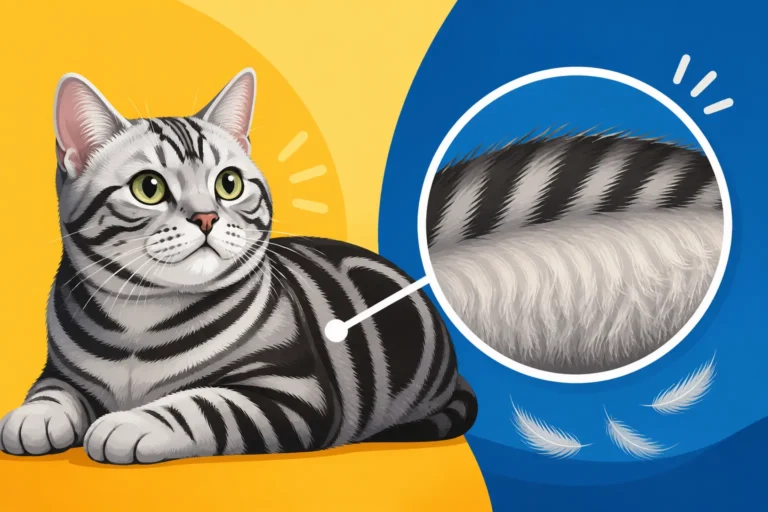
One of the defining characteristics of the American Shorthair, according to breed standards, is their "square built" or cobby body. This isn't a fluffy way of saying "fat"; it describes a distinct, balanced physique. Picture a cat that is as long as it is tall, with a broad chest, powerful shoulders, and a well-rounded hindquarters. Their legs are strong and of medium length, providing a stable foundation for their substantial torso.
This "square" appearance contributes to the challenge of assessing their weight. A cat with a more delicate, tubular body might show signs of weight gain much more obviously. The American Shorthair, however, can carry a fair amount of muscle and still appear proportionate. It’s about balance and condition, not just the raw number on a scale. We're looking for that solid, athletic feel, not a bony or overly padded one. What an American Shorthair Looks Like by the Standard delves deeper into these physical traits.
The Challenges of Visual Weight Assessment
Many cat owners rely on what they see, but for an American Shorthair, visual assessment alone can be incredibly misleading. Their inherent structure can make a healthy cat appear heavier than it is, and conversely, early weight gain can be easily missed.
When a Stocky Cat Looks Heavier Than It Is
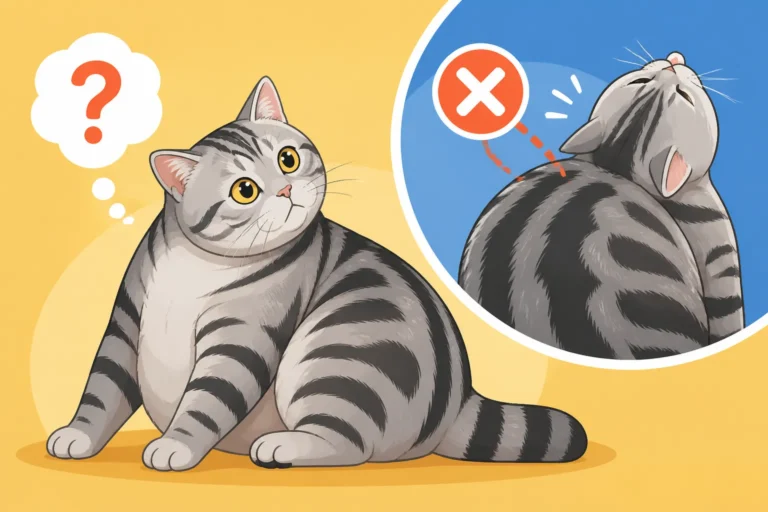
It’s incredibly common for American Shorthair owners to fret over their cat's weight, often because the breed's natural stockiness can be mistaken for being overweight. Their broad chest, substantial bone structure, and well-developed muscles can give them a robust silhouette that might look "chunky" compared to, say, a Siamese or a sleek Abyssinian. However, this appearance is often perfectly normal for the breed. You might see a full-chested cat and think, "Oh dear, they're getting a bit round," when in reality, they're simply fulfilling their breed standard for a powerful build. Why a Stocky American Shorthair Looks Heavier Than It Is explores this common misconception.
This visual trickery can lead to unnecessary worry or, worse, misguided attempts to put a healthy cat on a diet. It's not about comparing them to the average housecat you might see in a shelter, but understanding the specific proportions and musculature that define a well-conditioned American Shorthair. A cat that is truly "square" and muscular will feel firm and solid, rather than soft and jiggly, even if their profile looks ample.
The Problem with Generic "Ideal Weight" Charts
If you've ever Googled "ideal cat weight," you've probably encountered charts that give a broad range, say 8-12 pounds, or display images of various cat body types. The critical issue with these general charts is that they often don't account for breed-specific variations. An American Shorthair, particularly a male, can easily weigh more than 12 pounds and still be perfectly lean and muscular. Trying to force a powerful, substantial American Shorthair into a generic weight bracket designed for a smaller, more delicate breed is like trying to fit a square peg in a round hole – it just doesn't work.
These charts can set owners up for frustration and misdiagnosis. What might be considered overweight for a domestic shorthair could be a healthy, athletic weight for an American Shorthair. This is why relying solely on a number from a general chart, or even just what the scale says, can be detrimental. It doesn't tell the whole story of your individual cat's health and condition. Instead, we need a more nuanced, hands-on approach that respects their unique physical attributes. What an American Shorthair Should Weigh at Its Frame offers further insights into this.
Hands-On Assessment: The Body Condition Score (BCS)
For American Shorthair owners, the most reliable way to assess ideal weight isn't just looking or weighing; it's feeling. The Body Condition Score (BCS) is a standardized, tactile method used by veterinarians that helps you evaluate your cat's fat reserves and muscle mass. It takes the guesswork out of visual assessment, especially for breeds with unique builds.
Learning to Feel for Ribs and Spine
This is where you become an expert in your cat's anatomy! To perform a BCS, you'll need to use your hands to gently palpate, or feel, specific areas of your cat's body. The key areas are the ribs, spine, and hip bones. You want to feel for them, but not see them prominently.
Start by placing both hands on your American Shorthair's sides, just behind their front legs. Gently run your fingers along their rib cage. You should be able to feel each individual rib bone with a slight amount of fat covering them, similar to feeling the knuckles on the back of your hand. If you have to press hard to feel the ribs, or can't feel them at all, your cat might be carrying too much weight. Conversely, if the ribs are very prominent, easily visible, or feel like a washboard with no fat covering, your cat may be underweight.
Next, move your hands to their spine, running your fingertips down their back from shoulders to tail. You should feel the individual vertebrae, but they shouldn't protrude sharply. There should be a smooth, gentle curve, not a series of distinct bumps. Finally, check the hip bones near the base of their tail. Again, you should be able to feel them, but they shouldn't be sticking out or feel overly padded. This hands-on method cuts through the visual noise of their stocky build and gives you a much clearer picture of their true body condition.
Scoring Your American Shorthair on a 1-5 or 1-9 Scale
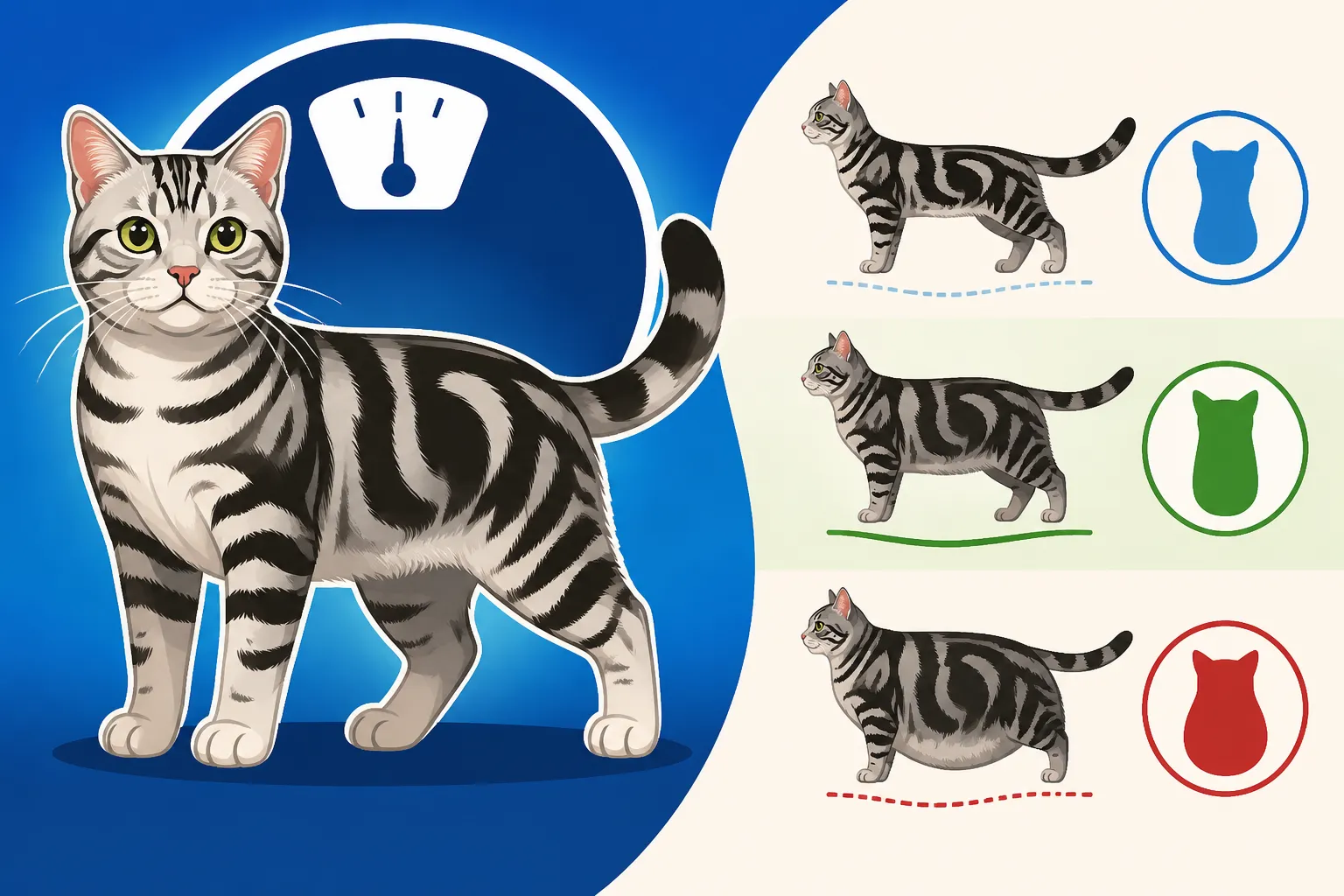
The Body Condition Score (BCS) typically uses either a 1-5 or a 1-9 scale, with the middle score (3/5 or 5/9) representing the ideal. For an American Shorthair, given their natural musculature, you're generally aiming for that solid "ideal" range. Here’s a simplified breakdown using a 5-point scale, adapted for their unique physique:
| BCS Score | Description for American Shorthair (Feel/Look) | Implications |
|---|---|---|
| 1 (Emaciated) | Feel: Ribs, spine, and hip bones are extremely prominent and easily seen, often with no muscle mass. Little to no body fat. | Look: Severely underweight. Concave abdomen. Implications: Serious health concerns, malnutrition. Immediate vet attention needed. |
| 2 (Underweight) | Feel: Ribs, spine, and hip bones are easily palpable with minimal fat covering. Some muscle wasting may be present. | Look: Very lean, visible waist and abdominal tuck. Implications: Could indicate illness, insufficient food, or extreme activity. Vet assessment recommended. |
| 3 (Ideal) | Feel: Ribs are easily palpable with a slight fat covering. Spine is palpable but not prominent. A palpable waist and a slight abdominal tuck. Good muscle mass. | Look: Muscular, well-proportioned. Implications: Healthy weight, good physical condition. This is the goal for most American Shorthairs. |
| 4 (Overweight) | Feel: Ribs are palpable but require more pressure. Spine may be less distinct. Obvious fat deposits over the lower back and tail base. Waist is barely discernible. | Look: Rounder body shape, less defined waist. Implications: Carrying excess weight, increasing risk for health issues like diabetes, joint problems. How to Spot Weight Gain on a Square Built American Shorthair provides more detail. |
| 5 (Obese) | Feel: Ribs are difficult or impossible to palpate due to heavy fat covering. Spine and hip bones are buried under thick fat layers. Significant fat deposits on abdomen, chest, and tail base. | Look: Very round, no waist or abdominal tuck. Often has a pronounced fat pad (primordial pouch) that is soft and pendulous, not just skin. Implications: High risk for serious health complications. Urgent vet-supervised weight loss plan required. |
When you assess your American Shorthair, try to be objective. It’s easy to be biased by our love for our pets. If you're unsure, a vet can give you a professional assessment. They use these very same scales and can help you interpret what you're feeling.
Identifying the "Waist" on a Broad-Chested American Shorthair
One of the trickiest parts of assessing an American Shorthair's weight is finding their "waist." Because they are naturally broad-chested and can have a very solid, almost cylindrical torso, the classic "hourglass" figure you might look for in other breeds isn't always obvious. For your American Shorthair, think less about a dramatic indentation and more about a subtle taper.
Stand above your cat and look down at their body from directly overhead. As their body moves from their rib cage towards their hips, you should ideally see a gentle narrowing, a distinct "tuck" just before their hind legs. It won't be as dramatic as some breeds, but it should be present. If their sides continue in a straight line from their chest all the way to their tail, or if they bulge outwards, then they are likely carrying too much weight around their midsection.
Another way to check for the waist is to look at your cat from the side. A healthy American Shorthair should have an abdominal tuck, meaning their belly should gently slope upwards from the bottom of their rib cage to their hind legs. If their belly hangs low, is pendulous, or appears to sag, especially if it's not just the natural primordial pouch (which is usually just skin and a small amount of fat), it could be a sign of excess abdominal fat. Why a Broad Chested American Shorthair Puts Weight Through Its Hips explains how this weight distribution can affect their mobility and joint health over time.
Factors Influencing Ideal Weight Beyond Genetics
While their breed standard provides a baseline, a cat's ideal weight isn't static. Several individual factors can significantly influence what a healthy weight looks like for your specific American Shorthair.
Age and Activity Level
Just like humans, cats' bodies change as they age, and their activity levels can fluctuate dramatically throughout their lives. A rambunctious American Shorthair kitten, constantly exploring and playing, will naturally burn through a lot more calories than a mature adult or a senior cat who prefers naps in sunbeams. Kittens are rapidly growing and developing muscle and bone, so they have higher caloric needs relative to their size. However, even kittens can become overweight if overfed, especially if they are not getting enough vigorous play.
As your American Shorthair matures into adulthood, their metabolism may slow slightly, and their intense bursts of kitten energy often give way to more measured patrols and longer periods of rest. A cat that spent its younger years tearing through the house might settle into a more sedentary routine by age five or six. For senior American Shorthairs, typically those over 10-12 years, their activity levels can decrease significantly. They may move less due to joint stiffness or simply a reduced desire to play. This drop in activity means their caloric requirements also decrease, and continuing to feed them the same amount as their younger, more active selves will almost certainly lead to weight gain. Caring for an American Shorthair Past Twelve touches on many aspects of senior cat care, including managing weight changes.
Sex and Neutering Status
The sex of your American Shorthair also plays a role in their ideal weight. Generally, male American Shorthairs tend to be larger and more muscular than females. They often have bigger heads, broader shoulders, and a more robust overall frame, leading to a naturally higher ideal weight. It's not uncommon for a healthy male American Shorthair to weigh a few pounds more than a healthy female, even if both are perfectly conditioned. This is simply a biological difference, so don't be alarmed if your male weighs more than your friend's female of the same breed type.
Neutering or spaying is another significant factor that profoundly impacts a cat's metabolism and, subsequently, their ideal weight. When a cat is neutered, their hormonal balance shifts dramatically, which often leads to a decrease in their metabolic rate and an increase in appetite. It’s a double whammy: they burn fewer calories at rest, and they feel hungrier. This makes neutered cats significantly more prone to weight gain. Owners of spayed or neutered American Shorthairs need to be particularly diligent about portion control and ensuring adequate exercise to counteract these physiological changes. Why a Neutered American Shorthair Puts On Weight Faster delves into this common challenge. Ignoring these changes can quickly lead to an overweight cat, even if their diet remains unchanged after the procedure.
When to Seek Professional Guidance
Knowing how to assess your American Shorthair’s weight is empowering, but sometimes, the best course of action is to bring in the professionals. Your veterinarian is an invaluable partner in ensuring your cat maintains a healthy weight throughout their life.
Early Signs of Weight Gain or Loss to Watch For
While the BCS is a fantastic tool, it's also important to pay attention to more subtle, everyday signs that your American Shorthair's weight might be shifting. These can be behavioral or physical and often appear before a significant change in their BCS. For weight gain, you might notice your once agile cat struggling to jump onto their favorite perch, or they might seem less enthusiastic about playtime. They might move slower, pant more easily after exertion, or even struggle to groom themselves thoroughly, especially their back and hindquarters. You might also observe changes in their eating habits, such as constantly begging for food or eating very quickly. How to Spot Weight Gain on a Square Built American Shorthair goes into these indicators in more detail.
Conversely, unexplained weight loss can be a red flag, even if your cat doesn't appear emaciated. If your American Shorthair suddenly seems to lose muscle mass, feels bonier than usual, or is eating less or more than normal without a corresponding increase in activity, it's time to take note. Changes in coat quality, lethargy, or alterations in litter box habits can also accompany weight fluctuations. Given the American Shorthair's stoic nature, they often hide pain or discomfort, so these subtle cues are vital. If you notice any of these signs, it's always best to consult your vet.
Partnering with Your Vet for a Healthy Weight Plan
Your veterinarian is your primary resource for managing your American Shorthair's weight. They can provide an accurate professional BCS, discuss any underlying health conditions that might be contributing to weight issues, and help you formulate a personalized weight management plan. This plan might include specific dietary recommendations, portion control guidelines, and suggestions for increasing activity. For instance, they might recommend a prescription weight-loss diet, or suggest specific strategies like using puzzle feeders, which are widely available on platforms like Amazon, to make your cat "work" for their food, mimicking their natural hunting instincts.
When discussing diet, your vet can advise on the best type of food – whether that’s wet, dry, or a combination – and recommend specific brands or formulations that are appropriate for your cat's age, activity level, and health status. They might also discuss premium food services that provide fresh, portion-controlled meals if that aligns with your lifestyle and budget. Many reputable pet supply retailers, such as Chewy, offer a wide array of specialized foods and supplements that your vet may recommend. Regular check-ups with your vet are essential, especially during a weight loss journey, to monitor progress, make adjustments as needed, and ensure your cat is losing weight safely and effectively. Remember, slow and steady weight loss is key to preventing health complications like fatty liver disease. How a Vet Builds an American Shorthair's Weight Loss Plan outlines the steps a vet might take.
Disclaimer
This article is for general informational purposes only and does not constitute professional advice. Laws, prices and regulations vary by location and change over time. Consult a qualified professional for guidance on your specific situation.