Whether an American Shorthair Can Still Earn Its Keep
An American Shorthair may not patrol a barn or ship for a living anymore, but the breed’s history still shows up in its curiosity, sturdy build, and interest in chasing moving things. If you’re wondering whether one can still “earn its keep,” the answer depends on what you mean: practical pest control, useful household skills, or the everyday value of sharing your home with a capable companion.
What earning its keep meant for the American Shorthair
From working cat to household companion
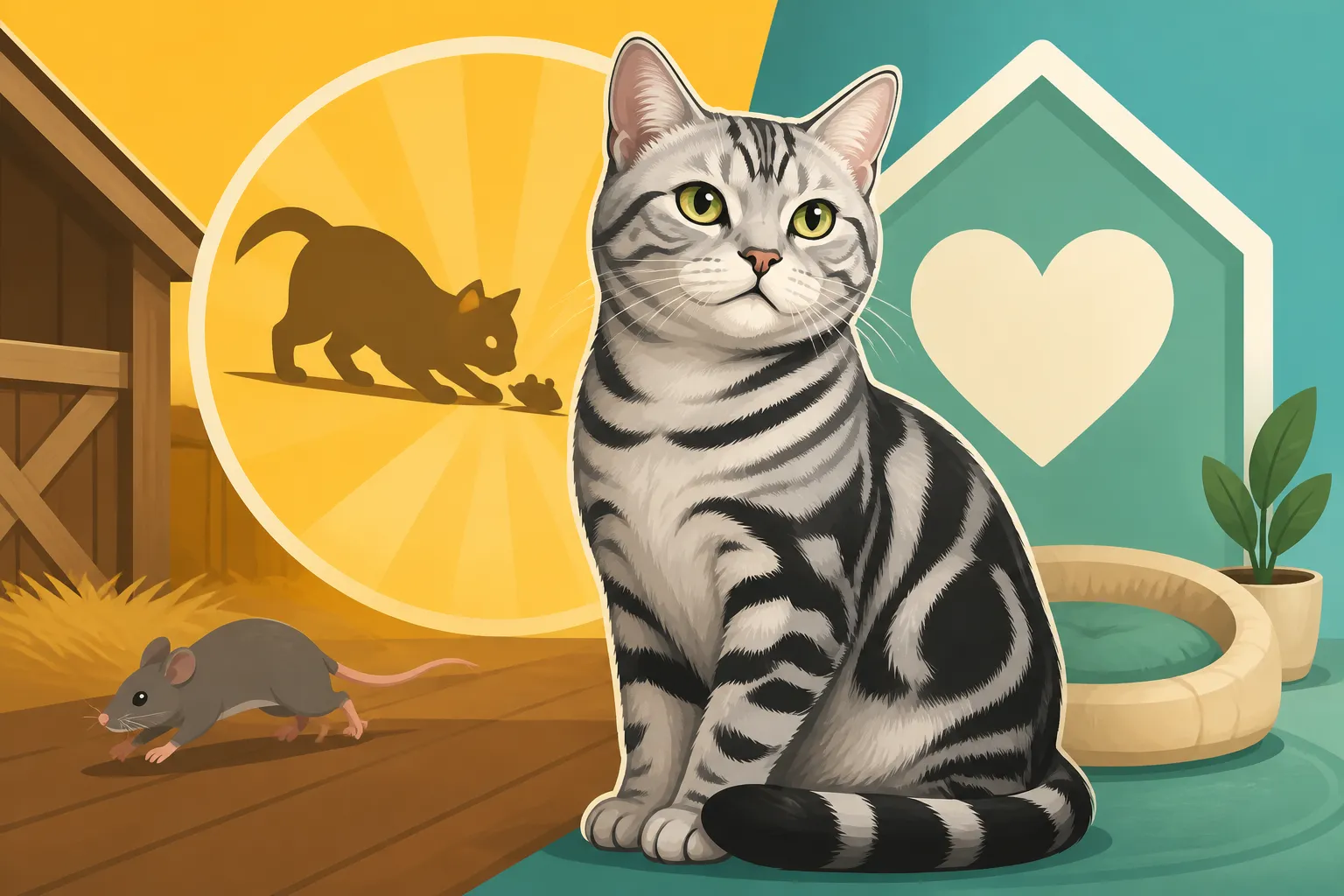
The American Shorthair’s ancestors were valued for catching rodents around ships, farms, and homes. A cat that could keep mice away from stored food or nesting areas offered a practical benefit, especially in places where people had limited ways to protect supplies. That history helps explain why the breed is often associated with a sturdy body and an alert, observant nature.
But the working cats of earlier centuries were not necessarily the same thing as today’s registered American Shorthair. A breed takes shape through generations of deliberate selection and a written standard. The connection is historical and developmental: domestic cats that worked alongside people contributed to the type, while modern breeding established the recognized breed. Ships Carried the American Shorthair's Ancestors as Ratters explores that practical history in more detail.
The old name can cause confusion, too. Cats once described broadly as domestic shorthairs were not all members of the modern pedigreed breed. The American Shorthair name helped distinguish cats bred to a defined standard from the much wider population of shorthaired house cats. Why the American Shorthair Was Called Domestic Shorthair Until 1966 explains how that distinction developed.
What “earning its keep” means today
For a modern owner, the phrase usually means one of three things: the cat helps control pests, contributes to a working property, or provides enough companionship and enjoyment to justify the care it needs. Those are very different expectations. A cat may show strong interest in stalking a toy without being a reliable way to manage mice in a building.
It’s also worth being clear about the economics. A cat costs money to feed and care for, and pest control is not guaranteed. A mouse may be inaccessible, a cat may ignore it, or a rodent problem may involve entry points and nesting sites a cat cannot address. Even a keen hunter cannot replace sealing gaps, storing food securely, or using safe, appropriate pest-management methods.
So, yes, an American Shorthair can still be useful in a household—but “useful” is better understood as a set of natural behaviors and companionship, not a promise of labor or savings. If you are choosing a cat mainly to catch rodents, consider the work of keeping it healthy and safe alongside any possible benefit. Why the American Shorthair Was One of the CFA's Five Founding Breeds offers more context on how a working-cat background became part of a recognized breed identity.
Can an American Shorthair still catch mice
Instinct is not the same as a guarantee
Many cats are drawn to small, quick movement. A cat may crouch behind a chair, track a toy across the floor, or spring toward a fluttering insect. These behaviors resemble parts of hunting, but individual cats vary. Some show a strong chase response; others would rather watch from the sofa.
Breed history can provide context, but it cannot tell you exactly what a particular cat will do. Age, temperament, early experience, health, and the environment all matter. A young cat might enthusiastically chase a feather toy while an older cat prefers a short, gentle game. Another cat may be curious about a mouse but never attempt to catch one. How Farm Work Shaped the American Shorthair looks at the traits associated with the breed’s working past without turning them into a guarantee of performance.
Even when a cat does catch prey, that does not necessarily solve a pest problem. Rodents can hide in wall cavities, insulation, cupboards, and other places a cat cannot reach. They may also reproduce or enter the home faster than a cat can catch them. If you are dealing with a persistent infestation, addressing access points and food sources is more reliable than expecting a pet to do the job.
Safety matters more than the catch
A cat that hunts outdoors can face traffic, fights, parasites, infectious diseases, and exposure to poisons. Rodenticides are a particular concern: a cat may be harmed by direct exposure or by eating a poisoned rodent, depending on the product and circumstances. If pest control is needed, keep your cat away from bait and consult a veterinarian or qualified pest professional about safer options.
There are risks indoors as well. A mouse may bite when cornered, and wild prey can carry parasites or pathogens. A cat that catches prey may also bring it into the house, which can be unpleasant and may create a cleanup problem. That doesn’t mean every encounter will cause illness, but it does mean prey-catching should not be treated as a risk-free service.
For these reasons, many owners provide hunting-like activity through play rather than relying on live prey. A wand toy, a tossed toy, or a food puzzle can let a cat stalk, chase, and pounce in a controlled setting. Keep play sessions supervised, put away string or wand toys afterward, and give the cat a chance to catch the toy instead of ending every session with an unreachable target. The American Shorthair Still Hunts, Whether You Want It To or Not and Play That Finishes the Hunting Sequence for an American Shorthair offer more ideas for working with that instinct at home.
How to give an indoor American Shorthair a useful outlet
Make everyday life interesting
A cat does not need a barn to use its natural curiosity. A comfortable window perch, rotating toys, climbing furniture, and brief play sessions can turn an ordinary room into a more engaging environment. Try placing a perch near a window with a view, while making sure the window is secure and the cat cannot push through a screen.
A simple routine is often more effective than buying a pile of toys that quickly become familiar. For example, you might play before breakfast, hide a few pieces of the cat’s measured daily food in safe locations, and bring out a different toy in the evening. A food puzzle can add problem-solving to mealtime, but it should not be so difficult that the cat gives up or goes hungry.
The goal is not to make every moment a training session. It is to provide opportunities for the cat to investigate, move, and play. If you’re picking up supplies, Chewy and local pet stores may offer puzzle feeders, wand toys, scratching surfaces, and window perches; choose items that suit your space and your cat’s size and play style. What an Indoor American Shorthair Does With a Mouser's Instinct explores how that working drive can show up indoors.
| What you want to provide | A practical option | What to watch for |
|---|---|---|
| Chasing and pouncing | A supervised wand-toy session | Store string and wand toys after play |
| Exploration | A secure window perch or climbing surface | Check stability and secure nearby windows |
| Food searching | A puzzle feeder or hidden portions of measured food | Make sure the cat can access the food and finish its meal |
| Scratching | A stable scratching post or cardboard scratcher | Offer a texture and position the cat will actually use |
| Pest prevention | Sealed food, closed entry points, and appropriate pest management | Keep the cat away from poison and traps |
Give the cat a role without putting it to work
A cat can contribute to household life in ways that are less obvious than catching a mouse. It may keep you company while you work, greet you when you come home, or turn a quiet evening into a more playful one. That value is real to many owners, even though it does not translate into a measurable financial return.
If you live in a rural area or on a property with outbuildings, it can be tempting to treat a cat as a convenient pest-control tool. Before doing that, consider whether the environment is safe, whether the cat has reliable shelter and veterinary care, and whether outdoor access is appropriate for the individual animal. A cat should not be left to fend for itself because people expect it to earn its food.
Some owners choose a catio or supervised outdoor time as a middle ground. Those options can provide fresh air and sensory stimulation while reducing some dangers associated with roaming. They still require attention to secure construction, weather protection, and the cat’s comfort. Chewy or a neighborhood pet shop may carry harnesses and enrichment supplies, but no accessory can replace supervision, gradual training, and a secure setup.
What to expect before calling an American Shorthair a working cat
Match expectations to the individual cat
If you already have an American Shorthair, pay attention to what your cat actually enjoys. One may chase a toy for several minutes and then settle down; another may prefer watching birds from a protected window. A cat that ignores mice or toys is not failing at its breed, and a cat that catches prey is not automatically a dependable pest-control solution.
For anyone considering a cat for a farm, workshop, or other working environment, think through the whole care plan before focusing on hunting ability. The cat still needs food, clean water, shelter, routine veterinary care, and protection from hazards. A safe environment and responsible pest management matter more than a presumed breed trait. Whether the American Shorthair Still Works on Farms is relevant if you’re considering how the breed fits into a modern working property.
Pedigree also does not guarantee a specific temperament or job skill. A registered American Shorthair may fit the breed standard, but that does not mean its behavior can be predicted with certainty. Likewise, a shorthaired cat without a pedigree may be an enthusiastic hunter. How an American Shorthair Differs From a Domestic Shorthair explains why appearance and registration are not the same as a promise about a cat’s abilities.
Think of the value as care, not labor
A realistic answer is that an American Shorthair can still display behaviors rooted in a working history, and some individuals may catch rodents. But no cat should be expected to earn its food, control every pest, or take the place of safe home maintenance. Its modern contribution is better measured in companionship, curiosity, play, and the pleasure of sharing a home with an alert animal.
That expectation also helps prevent frustration. If you adopt a cat expecting a tireless mouser and get a relaxed observer, the mismatch can be disappointing for both of you. If you welcome the cat as a companion and make room for safe, engaging activities, its hunting instincts can be part of daily life without becoming a job description.
For a short-haired cat that enjoys chasing, interactive play can provide a satisfying outlet; for one that prefers a calm perch, observation and comfortable resting spots may be enough. Chewy and other pet retailers can be convenient places to find toys or feeders, but thoughtful routines and safe surroundings matter more than any particular product. Whether the American Shorthair Deserves More Attention offers a broader perspective on what makes the breed worth appreciating beyond its history as a working cat.
Disclaimer
This article is for general informational purposes only and does not constitute professional advice. Laws, prices and regulations vary by location and change over time. Consult a qualified professional for guidance on your specific situation.