What People Get Wrong About the American Shorthair
People often see a sturdy tabby and assume it must be an American Shorthair—or expect a pedigreed cat to behave like a low-maintenance, perfectly predictable pet. Both assumptions can lead to confusion when choosing a cat or understanding one you already love. This guide clears up common myths about the breed, from its appearance and temperament to health, grooming, and everyday care.
An American Shorthair Is Not Just Any Tabby
A familiar coat does not prove a pedigree
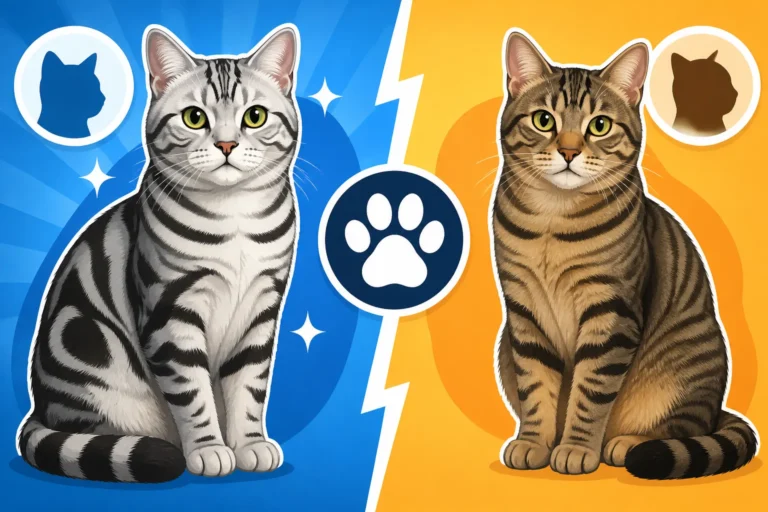
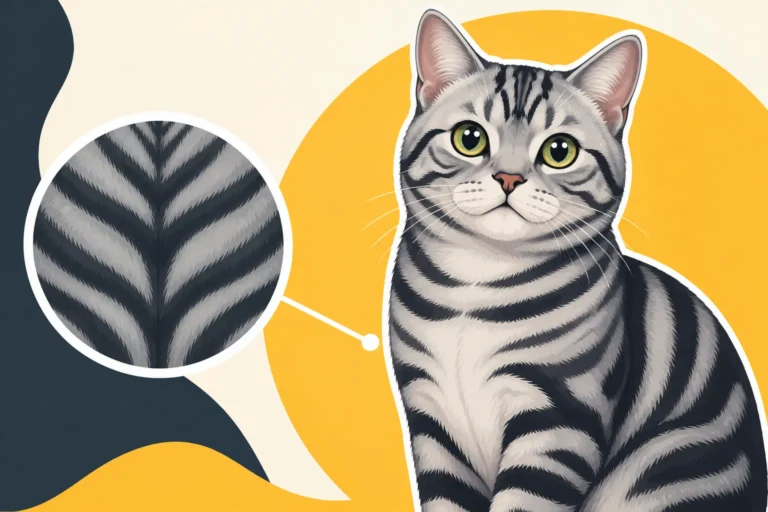
The silver tabby American Shorthair is so recognizable that plenty of cats with similar stripes get called American Shorthairs. But coat pattern alone cannot confirm a cat’s breed. Many domestic shorthairs have tabby markings, broad faces, or sturdy bodies without having documented American Shorthair ancestry.
An American Shorthair is a pedigreed breed: its lineage is recorded and its features are assessed against a breed standard. A domestic shorthair, by contrast, is a general term for a short-coated cat without a verified pedigree. Domestic shorthairs can be wonderful, healthy, affectionate cats; “not pedigreed” is not a judgment about their quality or personality.
If you are deciding whether a shelter cat is a good match, focus on the individual cat’s health, behavior, and needs rather than trying to identify a breed from a photo. A shelter may describe a cat as “American Shorthair type” to convey its appearance, but that description is not the same as confirmed pedigree. For a deeper comparison, see How an American Shorthair Differs From a Domestic Shorthair and What a Domestic Shorthair Is Next to an American Shorthair.
The breed standard is more than a color or a face
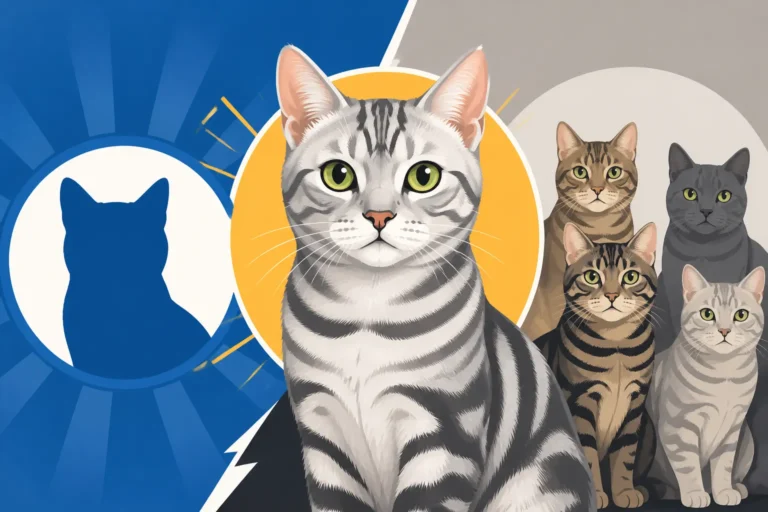
People sometimes expect every American Shorthair to look like a silver tabby with the same round cheeks and compact build. The breed includes many coat colors and patterns, and individual cats can look different while still fitting the overall type. Silver tabby may be the image that comes to mind first, but it is not the only possible look.
A breed standard describes a combination of physical features, not one signature marking. The American Shorthair is generally known for a balanced, sturdy build, a broad chest, and a short, dense coat. A cat’s age and condition also affect how it looks: a young cat may not yet have filled out, while weight gain can make a cat appear heavier than its underlying frame suggests.
That is why a single visual clue is a shaky way to identify a breed. If you are curious about the details, What an American Shorthair Looks Like by the Standard explains the overall appearance, while Which Colors an American Shorthair Comes In covers the variety people often overlook.
| What people often assume | What is more accurate |
|---|---|
| A tabby cat must be an American Shorthair | Tabby is a common pattern found in many cats |
| Every American Shorthair is silver | The breed comes in a range of recognized colors and patterns |
| A sturdy-looking cat is definitely pedigreed | Appearance alone cannot confirm ancestry |
| A shelter cat that looks similar can be registered as one | Breed registration depends on documented lineage and registry rules |
Their Personality Is Not a Guarantee
Breed traits describe tendencies, not a script
Another common misconception is that every American Shorthair will be independent, easygoing, or cuddly in exactly the same way. Breed history and selective breeding can shape typical tendencies, but they do not write a cat’s whole personality. Early experiences, age, health, socialization, and the home environment all matter.
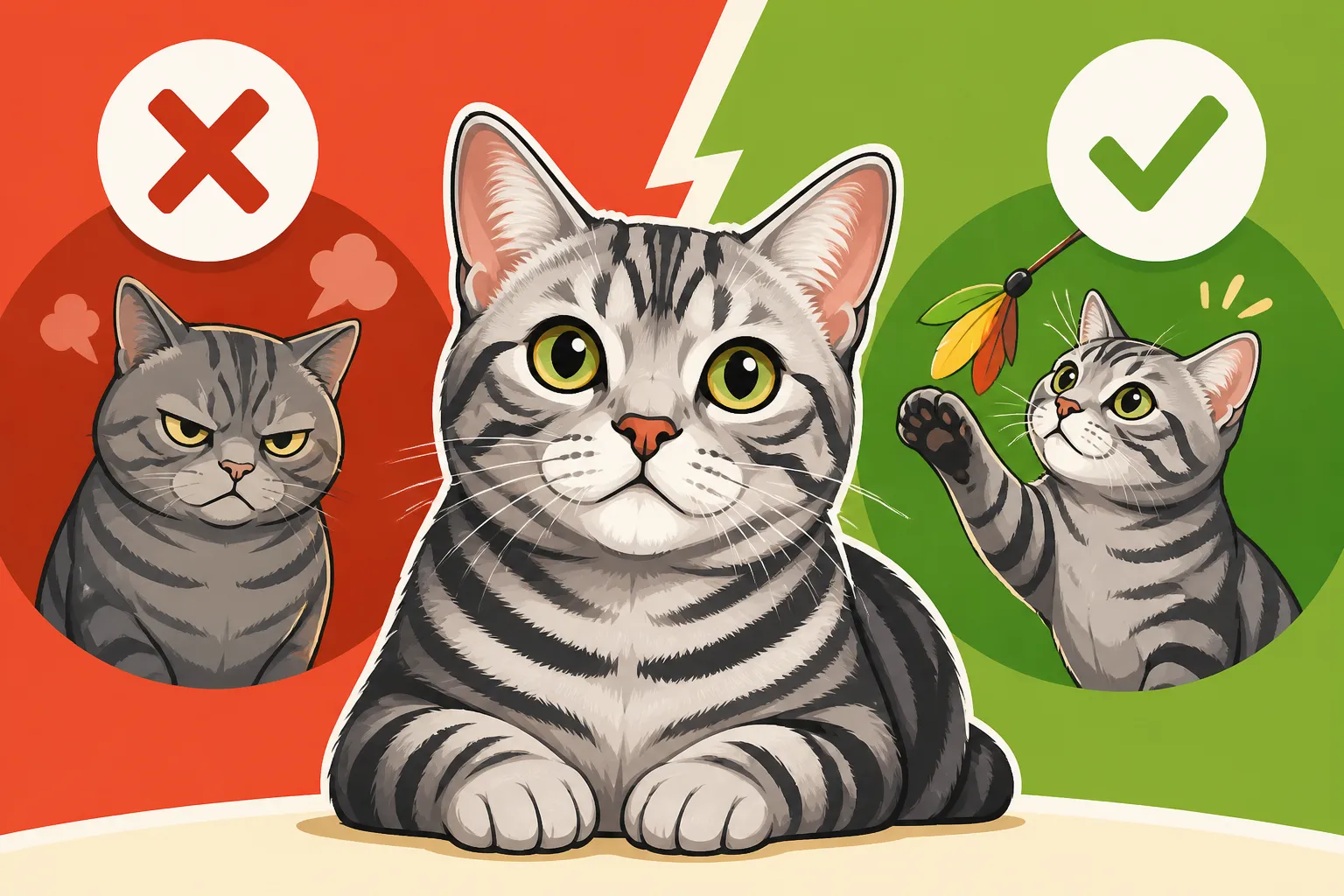
One American Shorthair may happily nap near the family but dislike being carried. Another may seek out attention on its own terms. A cat that hangs back when visitors arrive is not necessarily unfriendly; it may simply prefer to observe before approaching. Likewise, a cat that enjoys play does not automatically want constant activity or interaction.
When choosing a kitten or adult cat, ask about the individual’s behavior and routines rather than relying on a breed stereotype. Does the cat enjoy handling? How does it react to household noise? Has it lived with children or other pets? Those practical details are more useful than expecting a label to predict every interaction. What an American Shorthair Pedigree Predicts About Temperament offers more context on what lineage can—and cannot—tell you.
“Low-demand” does not mean “no attention needed”
American Shorthairs are sometimes described as undemanding, and that can be mistaken for a cat that needs little from its household. A cat may be content without constant lap time, but it still needs play, companionship, a clean litter box, safe places to rest, and routine care.
Consider a cat spending a long workday indoors. It may not meow insistently or follow its person from room to room, but it can still benefit from a predictable play session, a comfortable window perch, and a few opportunities to explore or work for food. Quiet behavior is not proof that a cat has no needs. If an ordinarily engaged cat becomes unusually withdrawn, that change deserves attention rather than being dismissed as typical independence.
A little structure can prevent boredom without turning the home into an elaborate playground. Rotate a few toys, offer a sturdy scratching post, and use short interactive play sessions that let the cat chase and catch a toy. For ideas about the breed’s reputation for independence, see How Undemanding an American Shorthair Really Is.
They are not automatically the right fit for every home
Their adaptable reputation can make the breed sound like a guaranteed match for any household. In real life, compatibility depends on the individual cat and the people sharing the home. A busy family may suit a social, confident cat, while a more cautious one may need quieter introductions and a reliable retreat.
If there are children, teach them to let the cat approach, avoid grabbing, and give it space when it walks away. If there is a dog, introductions should be gradual, with safe separation and a way for the cat to retreat. If another cat is already at home, plan for separate resources and a slow introduction rather than expecting the newcomers to sort out territory on their own.
These are not breed-specific guarantees or deal-breakers. They are ordinary parts of choosing and welcoming a cat. A good match comes from considering temperament, routine, and household setup—not from assuming a pedigree makes adjustment effortless.
A Sturdy Build Still Needs Care
“Hardy” does not mean immune to health problems
The American Shorthair’s sturdy appearance can lead people to believe it is almost never ill. No breed can promise that. Individual cats can develop health problems, and inherited conditions may occur in pedigreed and non-pedigreed cats alike. A healthy-looking cat still benefits from preventive care and veterinary attention when something changes.
Some concerns are easy to miss because cats may hide discomfort. Changes in energy, appetite, breathing, mobility, thirst, or litter-box habits are worth discussing with a veterinarian. Regular checkups can help establish what is normal for your cat, so subtle changes are easier to spot. Questions about screening are best answered with a veterinarian who can consider the cat’s age, family history, symptoms, and risk factors. See Why an American Shorthair Still Needs a Yearly Heart Scan for more on why health monitoring should not be replaced by a breed reputation.
If you are adopting an adult cat with incomplete medical records, that missing history does not mean something is wrong. It does mean you may need to build a new health baseline with your veterinary team. Bring any records you do have, note observed changes, and ask which preventive steps make sense for that particular cat.
A square, muscular frame can still carry excess weight
Because the breed is naturally solidly built, it can be hard to tell at a glance whether an American Shorthair is at a healthy weight. A broad chest or substantial frame may look “stocky” even when the cat is fit. On the other hand, extra fat can be mistaken for normal breed build, especially when weight gain happens gradually.
Rather than judging by appearance alone, pay attention to body condition. Your veterinarian can show you how to assess whether the ribs are easy to feel under a light layer of tissue and whether the cat has a visible waist when viewed from above. Weighing the cat regularly can also reveal a slow upward trend that is otherwise easy to miss.
Food portions matter, particularly for indoor cats who are not roaming or hunting for meals. Measure meals rather than relying on a bowl that stays full all day, and account for treats as part of the overall diet. If you shop for food or a measuring scoop through Chewy, check the feeding guidance on the product and then ask your veterinarian whether the portion suits your cat’s body condition. For a closer look at how indoor routines can affect weight, read Why Indoor Life Made the American Shorthair Fat.
Their coat is easy-care, not no-care
A short coat is often taken to mean no grooming is needed. American Shorthairs generally do not need elaborate styling, but they still shed and benefit from occasional brushing. A quick comb-through can help remove loose hair and gives you a chance to notice changes in the skin, coat, or body.
Grooming needs can vary with the season, the cat’s age, and its health. Some cats shed more noticeably during seasonal changes; others leave hair around the house year-round. Older cats or cats carrying extra weight may have trouble reaching parts of their backs, so they may need more help than they did when younger.
Keep grooming low-pressure. Offer a few gentle strokes, pause if the cat becomes uncomfortable, and build up gradually. You do not need a complicated kit for routine coat care; a suitable brush or comb is often enough. If you are comparing basic grooming tools, Chewy carries options, but the right choice depends on your cat’s coat and tolerance, not the number of products in the cupboard.
Everyday Ownership Is More Than the Purchase Decision
A pedigree predicts some things, not everything
A documented pedigree can tell you about recorded ancestry and whether a cat is recognized as a particular breed by a registry. It does not provide a complete forecast of health, lifespan, size, or behavior. Even kittens from the same litter can develop into noticeably different adults.
Size is a good example. People may expect every American Shorthair to reach a particular weight, but cats vary by sex, frame, age, and body condition. A young cat may continue filling out as it matures, while an adult’s weight needs to be considered alongside its overall shape and health. A single number without context can be misleading. For more on the breed’s size range, see How Big an American Shorthair Gets.
The same caution applies to promises about temperament. A breeder or rescue can describe a cat’s observed behavior, but nobody can guarantee exactly how it will act in a new home. Ask specific questions, meet the cat when possible, and give it time to settle after a move. Those steps offer a much more realistic picture than assuming the pedigree tells the whole story.
Adoption and responsible breeding are different paths, not a simple ranking
Some people assume that a pedigreed cat is automatically a better choice, while others assume that adopting a shelter cat is always the only responsible choice. Those are overly simple ways to frame a personal decision. A shelter or rescue may have cats whose needs and personalities fit a household beautifully. A responsible breeder may help a person looking for a specific breed and should be prepared to discuss health, ancestry, and care.
Whichever route you consider, look for transparency. A responsible source should be willing to answer questions about the cat’s history, veterinary care, and known health concerns. Be cautious if someone relies on appearance alone to claim a cat is purebred, avoids reasonable questions, or pressures you to decide before you have enough information.
It is also worth planning for the long-term responsibilities before bringing any cat home: routine veterinary care, food, litter, enrichment, and unexpected medical needs. Shopping for supplies can be part of that preparation. For example, Chewy may be one place to compare litter-box sizes or carrier options, but measure the space and consider your cat’s comfort before buying. The practical choice matters more than the label on the package.
The best guide is the cat in front of you
Many misconceptions grow from treating “American Shorthair” as a complete personality description. It is more useful to think of it as a breed with recognizable ancestry and general physical traits, while remembering that each cat is an individual. A cat’s comfort, health, habits, and response to its home tell you more about its day-to-day needs than a stereotype does.
If you already share your home with an American Shorthair, notice what your cat actually enjoys. Does it prefer a perch or a lap? Does it play in brief bursts or settle into a longer session? Does it eat calmly or race through meals? Those observations help you choose routines and supplies that fit the cat you have—not an imagined “typical” version.
For example, if your cat eats too quickly, a puzzle feeder may be worth trying; if it avoids a new bed, its preferred sleeping spot may simply be somewhere else. Chewy can be a convenient place to browse options, but no purchase replaces careful observation, patient adjustment, or veterinary advice when a health concern arises. The most helpful correction to the myths is also the simplest: get to know the individual cat.
Disclaimer
This article is for general informational purposes only and does not constitute professional advice. Laws, prices and regulations vary by location and change over time. Consult a qualified professional for guidance on your specific situation.