Whether a Shelter Tabby Can Be Registered as an American Shorthair
A shelter may describe a cat as an American Shorthair because of its short coat, sturdy build, or tabby markings, but appearance alone generally cannot establish a registered pedigree. This guide explains what breed registration means, why shelter cats usually cannot be registered as American Shorthairs, and what records or alternatives to check if you’re trying to understand your cat’s background.
What American Shorthair registration means
A breed name is not the same as a registered pedigree
“American Shorthair” can be used casually to describe a cat that looks like the breed. But for registration, it has a more specific meaning: the cat must meet the requirements of a registry, which commonly include a documented pedigree tracing its ancestry through recognized cats.
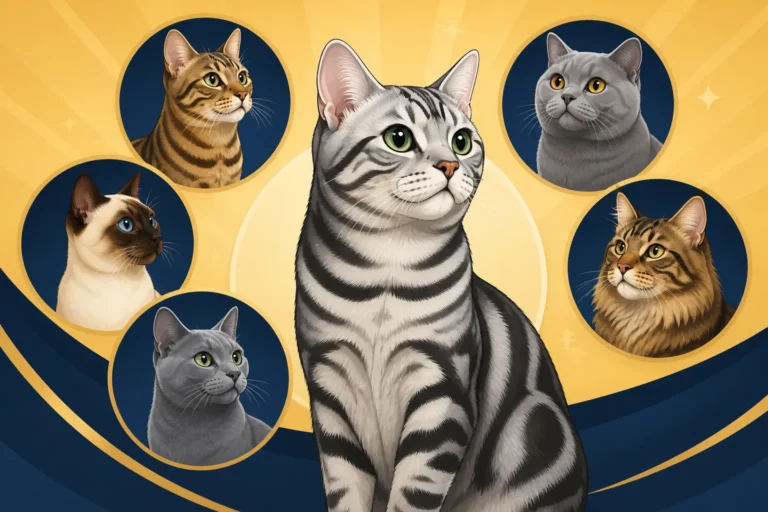
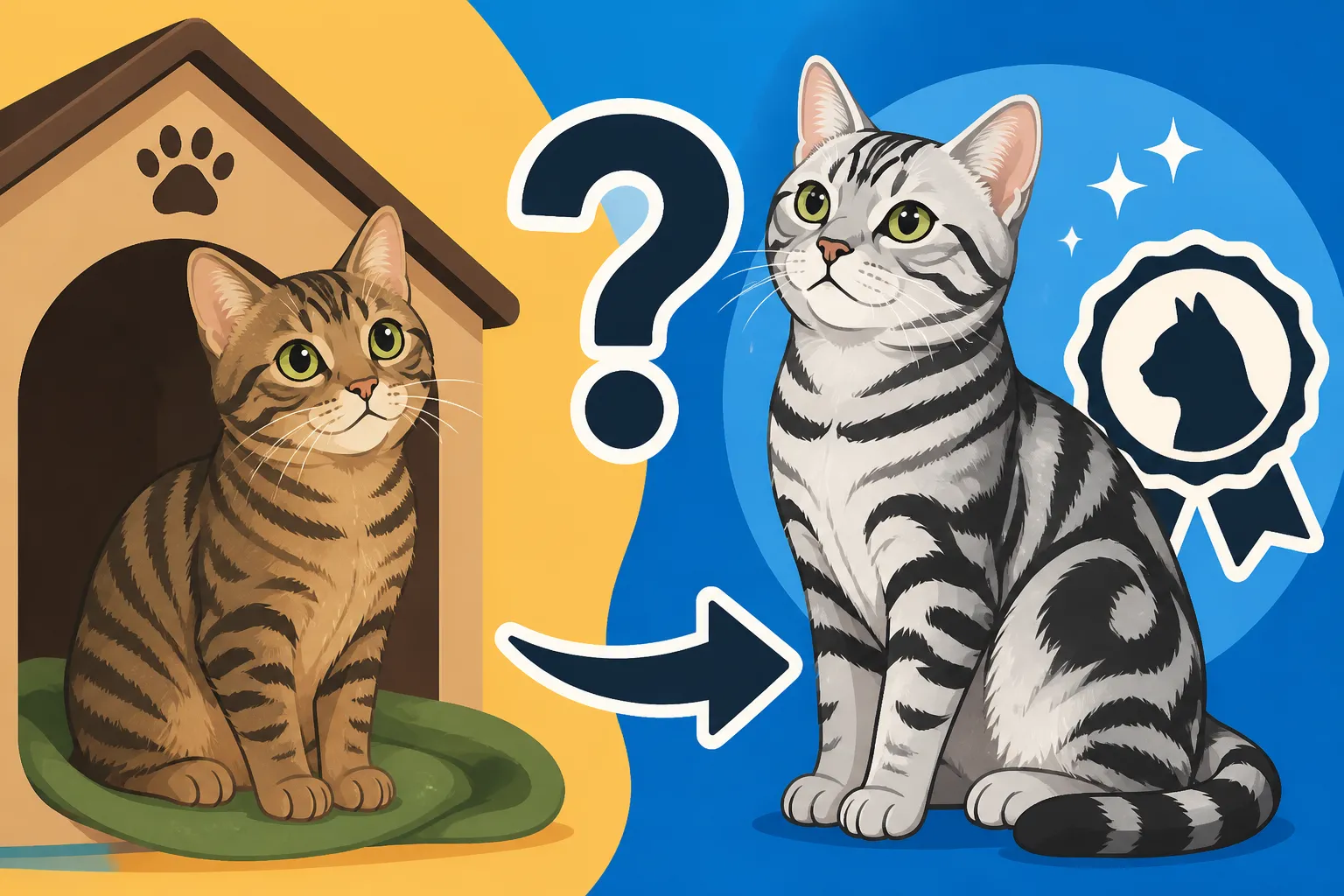
A shelter may use a breed label as a best guess based on appearance or information from a previous owner. That label can be useful as a description, but it does not by itself establish that the cat is a pedigreed American Shorthair. A silver tabby with a broad face might resemble one, for example, while still having an unknown or mixed ancestry.
This distinction is why cats without verified pedigrees are often described as domestic shorthairs. That label refers to a short-haired cat of unknown or mixed ancestry, rather than a specific registered breed. For more on the difference, see What a Domestic Shorthair Is Next to an American Shorthair and How to Tell an American Shorthair From a Random Bred Tabby.
Registries rely on documentation, not just looks
Cat registries set their own rules, so the precise paperwork and eligibility process can vary. In general, a registry needs reliable records connecting a cat to an accepted breed lineage. Those records may include registration documents for the cat’s parents and information about earlier generations.
A cat adopted from a shelter usually arrives without that kind of documented ancestry. Even if a shelter record says “American Shorthair,” the description may reflect appearance rather than verified parentage. Without the required pedigree trail, a registry generally has no basis for confirming the cat as a registered American Shorthair.
| What you have | What it can tell you | Does it usually establish American Shorthair registration? |
|---|---|---|
| Shelter listing that says “American Shorthair” | The cat’s appearance or reported background | No, not by itself |
| Adoption paperwork describing a tabby or shorthair | The cat’s shelter classification and adoption history | No |
| Photos showing breed-like features | What the cat looks like | No |
| DNA results estimating breed ancestry | Possible genetic clues, depending on the test | Usually not a substitute for a registry pedigree |
| Verified pedigree and accepted registration records | Documented ancestry under a registry’s rules | Potentially, subject to that registry’s requirements |
The practical takeaway is that registration is about documented lineage, not whether a cat seems to fit a breed description. This is also why Whether Papers Are the Only Difference an American Shorthair Has is a useful question: paperwork matters for pedigree status, but it does not determine whether a cat is a wonderful companion.
Can a domestic shorthair become an American Shorthair?
A cat does not generally become a registered American Shorthair simply because it looks more like one as it grows, or because an owner later decides the breed label fits. A registry’s rules determine whether a cat can be recorded under a breed, and those rules commonly depend on documented ancestry rather than a visual assessment.
There may be exceptions or special registration categories under particular organizations, but you should not assume that a shelter cat qualifies. Contact the registry directly and ask what documentation it accepts for an adult cat with unknown ancestry. If the cat has no pedigree records, ask whether any household-pet or companion-cat category is available instead. That is different from registering the cat as an American Shorthair.
For a closer look at the distinction between resemblance and breed status, see Whether a Domestic Shorthair Can Become an American Shorthair. The short answer is that looking the part is not normally enough.
Why a shelter tabby may be labeled an American Shorthair
Breed descriptions at shelters can be educated guesses
Shelter staff often need to describe cats quickly and clearly. A breed name may be used when a cat has recognizable features, when a previous owner supplied that information, or when the adoption listing needs a familiar label. The description can help people picture the cat, but it is not always a claim backed by pedigree records.
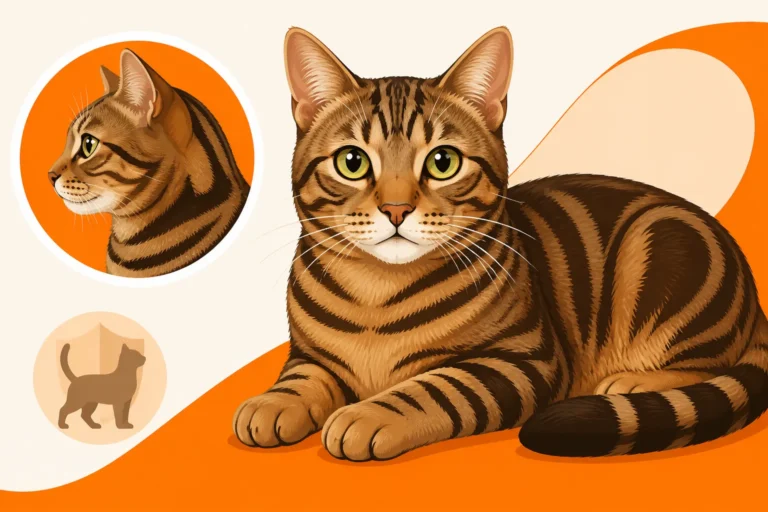
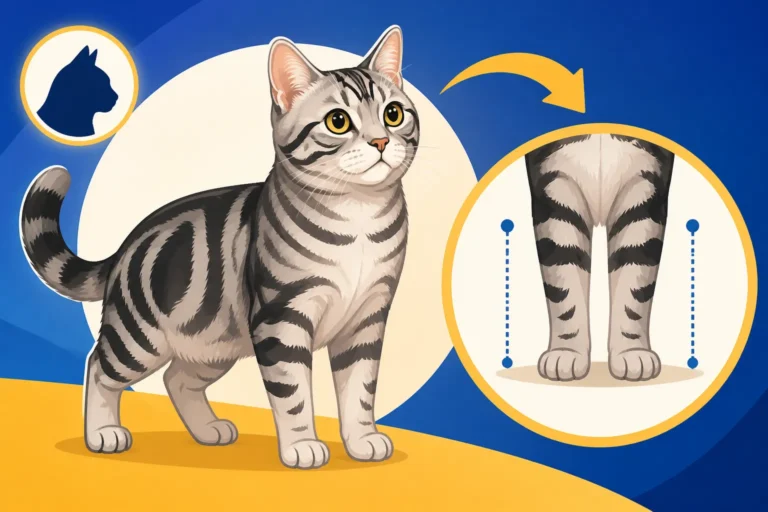
American Shorthairs are especially easy to confuse with ordinary shorthaired tabbies because the breed’s traditional look is not wildly unusual. A sturdy body, rounded head, dense coat, and familiar tabby pattern can all appear in cats with mixed or unknown ancestry. And a cat’s coat pattern is not proof of a specific breed.
If you’re trying to identify your own cat, compare the listing’s language with any original records. Was “American Shorthair” written by a breeder or registry, or did it appear in a shelter’s description? The answer helps you understand how much confidence to place in the label.
DNA tests may offer clues, not a registration certificate
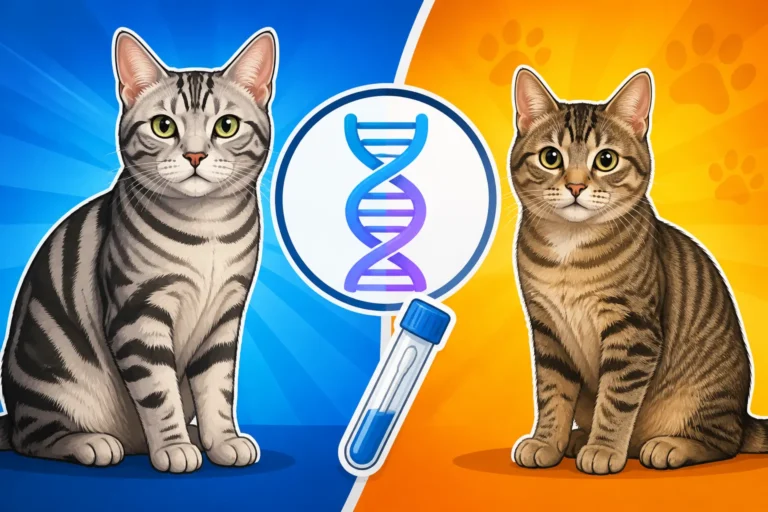
Some pet DNA tests estimate genetic similarities or ancestry. These results can be interesting, but they do not necessarily provide the documented pedigree a registry asks for. A genetic estimate is not the same as a chain of registered parents and ancestors, and different tests may use different reference populations and methods.
That means a test result suggesting a relationship to a breed should not be treated as proof that a shelter cat can be registered as that breed. It may give you additional background to discuss with a veterinarian or simply satisfy curiosity, but the registry’s own rules remain decisive. See Whether a DNA Test Tells an American Shorthair From a Moggy for more on what these tests can and cannot establish.
A DNA test also cannot replace ordinary observation and veterinary care. Whether your cat is a pedigreed American Shorthair or a domestic shorthair, its health needs are best assessed through its history, current condition, and veterinary checks.
A breed guess does not reduce a cat’s value
It can feel disappointing to discover that the breed on an adoption listing is not formally documented. That doesn’t make the shelter’s description dishonest, and it doesn’t make the cat any less special. It usually means the label was a practical description rather than a registry-backed claim.
For many adopters, the qualities that matter most are visible in everyday life: whether the cat is comfortable with the household, how it handles handling and play, and what care it needs. Breed registration may matter if you plan to show or breed a cat under particular rules, but it is not a measure of affection, temperament, or worth.
If the cat’s background is unclear, Whether Papers Are the Only Difference an American Shorthair Has can help put the paperwork question in perspective. A pedigree may document lineage; it cannot guarantee a particular personality or replace getting to know the individual cat.
What to check if you want to confirm your cat’s status
Start with the records you already have
Gather the adoption contract, shelter medical records, any intake notes, and documents provided by the person or organization that transferred the cat. Look for the exact wording: “American Shorthair” might appear as a reported breed, a visual estimate, or a verified pedigree claim. Those are not interchangeable.
If the cat came from a breeder before reaching a shelter, ask whether there are original registration papers, a pedigree, or records for the parents. A photo of an old certificate may be a useful lead, but contact the issuing registry to confirm whether the paperwork is valid and whether it connects to your cat.
Keep copies of everything, even if the documents do not establish registration. Adoption paperwork and veterinary records are useful for routine care, insurance questions, and future treatment. If your new cat also needs basic supplies during the settling-in period, retailers such as Chewy can be one place to find food, litter, or a carrier; those purchases, of course, do not affect pedigree status.
Ask the registry what it requires
If you have paperwork that might support registration, contact the registry named on the documents. Ask which records it needs, whether a transfer of ownership is required, and how it handles a cat whose identity or ancestry is not fully documented. Get the answer from the organization that would make the decision rather than relying only on a seller’s or online forum’s interpretation.
If you have no pedigree documents, be direct about that when you ask. A registry may explain that the cat is not eligible for breed registration, or it may point you toward another category, such as a household-pet class where available. A household-pet entry is not the same thing as American Shorthair breed registration, but it may still allow participation in certain activities, depending on the organization’s rules.
For someone considering a future purchase from a breeder, Which Generations an American Shorthair Pedigree Must Show is a useful related topic. It illustrates why a registry needs more than a convincing photo or a general statement about breed.
Be cautious about claims that registration is guaranteed
Be wary if someone promises that a shelter cat can definitely be registered based only on photos, coat pattern, or a DNA test. Ask which registry is involved and request its written eligibility requirements. If a person says they can produce registration papers, find out whether those papers document the cat’s actual ancestry or merely record it in a different category.
Similarly, a registration paper is not automatically proof that every aspect of a cat’s health or background is known. Ask what the document covers, who issued it, and whether the cat’s identity can be connected to the records. Whether a Rescue American Shorthair's Missing History Matters Here explores why gaps in a rescue cat’s background can matter even when the cat has a breed-like appearance.
What to do if your cat cannot be registered
Use the most accurate description
If no pedigree can be verified, “domestic shorthair” is usually a straightforward description for a short-haired cat of unknown or mixed ancestry. You can still mention the cat’s appearance—such as “silver tabby domestic shorthair”—without presenting an unconfirmed breed as fact.
That wording is useful when talking with a veterinarian, filling out forms, or explaining your cat to other people. If a form requires a breed and offers “mixed breed,” “domestic shorthair,” or “unknown,” choose the closest accurate option. Ask the organization or provider how it defines those choices if the distinction affects a particular service.
Focus on care and personality
A cat’s registration status does not tell you everything you need to know about caring for it. Pay attention to appetite, mobility, dental health, coat condition, and any changes in behavior. Shelter and veterinary records can provide a starting point, while a veterinarian can help tailor care to your cat’s age and needs.
For a newly adopted cat, write down questions as they come up: what food it was eating, whether it has had routine vaccinations, and whether there are known medical concerns. Chewy may be a practical place to source familiar food or litter if you need to maintain the cat’s routine while it settles in, but check with the shelter or veterinarian before making major diet changes. If your cat needs a secure ride for a vet appointment, Chewy also carries pet carriers; choose one that fits the cat safely and is easy to secure in your vehicle.
And if you’re still curious about breed, you can enjoy the resemblance without claiming more than the records support. Your cat can be a beloved tabby with a sturdy, American-Shorthair-like look and still have an unknown pedigree. That is a perfectly complete answer for most homes.
Disclaimer
This article is for general informational purposes only and does not constitute professional advice. Laws, prices and regulations vary by location and change over time. Consult a qualified professional for guidance on your specific situation.