How a Show American Shorthair Is Handled in the Ring
A show American Shorthair is not handled like a cat being cuddled at home: in the ring, a judge needs to assess the cat’s structure, coat, condition, and temperament. That can look intimidating if you are new to cat shows. This guide explains what happens, how cats are presented, and how to help one feel as comfortable as possible.
What happens when an American Shorthair enters the ring
Cat-show handling is a structured assessment, not a performance where a cat is expected to obey tricks. The judge examines each entry against the applicable breed standard and compares cats within the relevant class. The exact order and procedures can differ between registries and show formats, so exhibitors should follow the instructions given at their event.
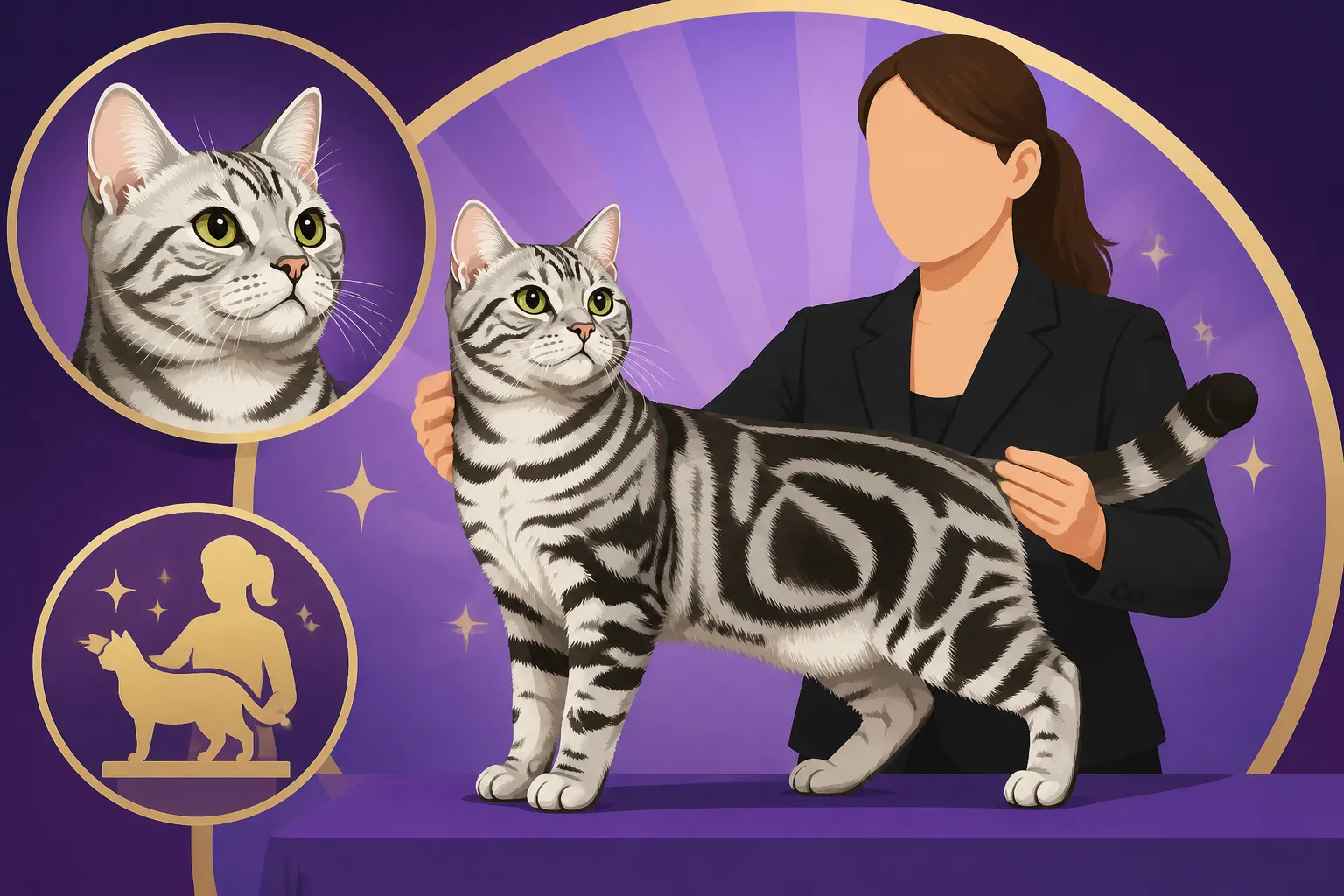
A first-time visitor may see cats placed on a judging table, lifted briefly, or positioned so the judge can examine them from different angles. Most of the handling is practical and deliberate: the judge is trying to see the cat clearly while keeping the examination safe.
The judge assesses the whole cat
An American Shorthair is evaluated as a complete animal, not just as a silver tabby pattern or a familiar-looking face. The judge may look at the head, muzzle, ears, eyes, body, legs, paws, tail, coat, and overall balance. They may also feel the cat’s structure with their hands, because a quick glance alone cannot tell them everything about build and condition.
The breed is known for a sturdy, muscular body and a balanced appearance rather than extreme features. The standard gives judges a framework for assessing those qualities, though details and class rules depend on the registry. If you want to understand the outline the judge is comparing against, What the American Shorthair Standard Asks For offers useful background.
Coat and pattern matter, but they do not replace structure or condition. A striking silver tabby may catch someone’s eye from across the hall, yet the judge still needs to assess whether the cat is well-balanced and in good physical condition. For more on why that pattern is so strongly associated with the breed, see What a Silver Tabby American Shorthair Is.
Cats are handled briefly and with purpose
The judge may lift the cat from the table, support its body, or hold it in a position that makes its proportions easier to assess. They might examine the cat from the side, check the tail, or feel the body and coat. The handling should be controlled, with the cat supported rather than left to dangle.
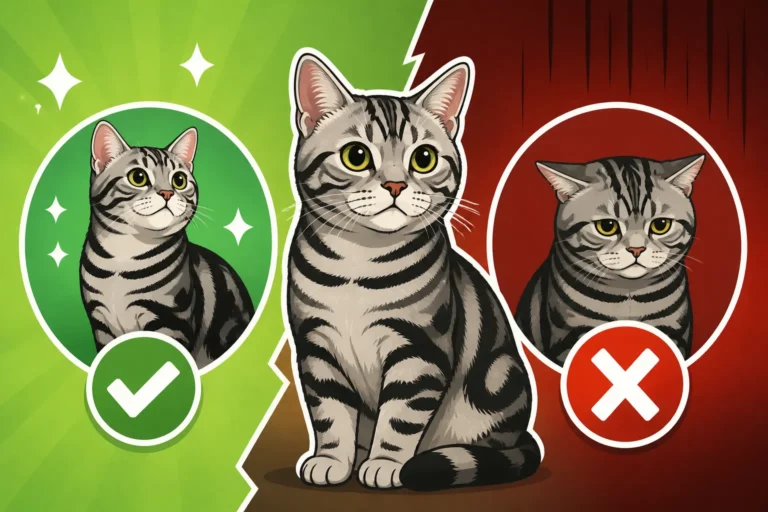
A cat that shifts, turns, or tries to look around is not automatically misbehaving. The ring is unfamiliar: there may be bright lights, voices, other cats, and new scents. Some cats remain calmly curious; others tense up or prefer to keep their feet on the table. Their reactions can reflect temperament, experience, and the individual cat, not simply how well someone has “trained” them.
Judges are accustomed to working with cats, but exhibitors still have an important role. They should listen to directions, avoid distracting the judge, and make sure the cat is presented safely. The point is not to force a cat to tolerate unnecessary handling. It is to make the necessary examination as calm and clear as possible.
Placement is about visibility, not making the cat perform
An exhibitor may place the cat on the judging surface and allow the judge to examine it. Depending on the show, the judge may reposition the cat themselves or ask the exhibitor to make a small adjustment. In either case, a steady, gentle approach is more helpful than repeatedly moving the cat to create a particular pose.
Some exhibitors practice brief handling at home so a cat is less surprised by being touched around the body and paws. Practice should be short and positive. If the cat shows signs of distress, stop and try another time rather than turning it into a struggle.
A show ring also has rules about where exhibitors wait, when cats are brought forward, and how awards are announced. Those instructions come from the show staff. If you are unsure what to do, asking a steward or show representative is better than guessing while the judge is examining your cat.
Preparing an American Shorthair for a show
Good preparation is mostly about basic care and familiarity. It does not mean transforming a cat’s appearance or trying to make its coat look like a different breed. An American Shorthair’s coat is naturally practical and dense, and the goal is for the cat to arrive clean, comfortable, and in good condition.
The days before a show can be busy, especially when you are arranging transport, paperwork, grooming supplies, and a suitable carrier. A short checklist helps prevent last-minute stress for both you and the cat.
Keep grooming simple and appropriate
A careful comb-through can remove loose hair and let you check for tangles, dirt, or skin concerns. Pay attention to the coat, paws, ears, and around the eyes. If your cat dislikes grooming, build up tolerance gradually at home rather than attempting a long grooming session just before the event.
Avoid experimenting with a new shampoo, grooming product, or cleaning routine immediately before a show. A new product can irritate sensitive skin or leave the coat feeling unfamiliar. If a bath is genuinely needed, use a cat-appropriate product and give yourself enough time to ensure the cat is fully dry and settled before travel.
For a cat that needs a comb, nail trimmer, or other everyday grooming supplies, Chewy is one place owners may look when making a preparation list. Choose tools that suit your cat and use them gently; a show is not a reason to rush through grooming that the cat finds upsetting. For more on what routine coat care usually involves, see How Little Combing an American Shorthair Actually Needs.
Make handling familiar before the event
A calm, brief practice session can help your cat get used to being touched and positioned. You might gently touch the shoulders, back, paws, and tail, then reward the cat if it remains relaxed. Stop before the cat becomes frustrated. Short sessions repeated over time are generally more useful than one long attempt.
You can also help the cat get comfortable with the carrier well before show day. Leave it open at home with familiar bedding inside, and allow the cat to investigate at its own pace. Forcing a cat into a carrier at the last moment can make the trip more stressful and can affect how settled it feels on arrival.
Treats can be useful as a positive reinforcement tool, provided they fit your cat’s usual diet and show rules. Chewy offers a broad range of pet supplies, but the more important choice is a treat your own cat tolerates well. Keep any treat portions modest, especially if your cat is on a weight-management plan. How to Score a Square Built American Shorthair's Body Condition explains why visual impressions alone can be misleading with a naturally solid build.
Pack for comfort, not just appearance
A show-day kit should help you manage ordinary needs without overcomplicating things. Consider bringing the cat’s carrier, familiar bedding, water, food if needed, cleanup supplies, and any required show documents. Check the event instructions for cage requirements, arrival procedures, and any items exhibitors are expected to provide.
| Preparation area | Practical approach | Why it helps |
|---|---|---|
| Coat | Comb gently and check for loose hair or dirt | Keeps grooming manageable and gives you a chance to notice problems |
| Handling | Practice brief, calm touches at home | Makes routine examination less unfamiliar |
| Carrier | Leave it accessible before show day | Reduces the chance of a stressful last-minute chase |
| Food and water | Follow the event’s rules and your cat’s routine | Helps avoid unnecessary changes on a busy day |
| Paperwork | Check event instructions in advance | Prevents confusion during check-in |
| Rest | Give the cat time to settle after travel | A calmer arrival can make the new environment easier to handle |
If you are buying a carrier or familiar bedding, Chewy may be one convenient place to compare options, but choose based on fit, ventilation, and how easily your particular cat can enter and exit. A square-built adult cat needs enough room to turn around and settle comfortably. For more on choosing equipment that fits the breed’s frame, see What a Carrier a Square Built American Shorthair Fits In Costs.
What an exhibitor should do in the ring
The exhibitor’s job is to help the judge assess the cat while keeping the interaction calm. You do not need to be theatrical or constantly adjust the cat. In many cases, being attentive, prepared, and responsive to instructions is more helpful than trying to make the cat look perfectly posed every second.
If your cat is new to showing, it is normal to feel uncertain about where to stand or when to move. Show staff and experienced exhibitors can often point you in the right direction. Take cues from the steward and judge rather than assuming every ring follows precisely the same routine.
Follow directions and move at the right time
Listen for your cat’s number or other event-specific instructions. When called, bring the cat forward safely and place it where directed. If the judge asks you to reposition the cat or assist with an examination, do so gently and without blocking the judge’s view.
Avoid distracting conversation during the assessment. It is fine to ask a brief practical question if you are confused, but the judge needs to concentrate on the cats and the class. If you are waiting nearby, keep your cat secure and give other exhibitors enough room to move.
Rings can feel busy, especially in a crowded hall where announcements and conversations overlap. A cat that startles at noise may benefit from a quiet approach and a familiar carrier or bedding between turns, as permitted by the event. For broader context on how the breed often responds to busy surroundings, How an American Shorthair Handles Household Noise looks at its reactions in a home setting.
Keep your cat supported and avoid forcing a pose
When handling the cat yourself, support its body rather than gripping tightly or lifting by the front legs. Use smooth movements and pay attention to signs that the cat is uncomfortable, such as repeated attempts to escape, flattened ears, a tense body, or escalating vocalization. A brief examination should not become a contest of wills.
If your cat resists, do not yank or scold it. Stay composed, follow the judge’s direction, and ask for help if you are unsure how to proceed safely. A cat may need a moment to settle or may not be suited to continued handling that day. The animal’s welfare comes before a ribbon.
At home, you can practice gentle lifting only if your cat is comfortable with it. Many cats prefer all four paws to remain supported, and some are simply less tolerant of being held. Understanding those preferences makes it easier to handle the cat respectfully rather than expecting every individual to behave the same way.
Accept the result without reading too much into it
A placement reflects the judge’s assessment of the cats present in that class and the criteria used at that show. It is not a complete verdict on your cat’s value, health, or suitability as a companion. Another show may have a different group of entries, and judges may weigh features somewhat differently within the standard.
If your cat does not place, you can still learn from the experience. Listen to any feedback offered, and consider whether there is a practical point to take away, such as grooming preparation or ring familiarity. Avoid making a major change to your cat’s care based on one brief comment without discussing it with a knowledgeable breeder or veterinary professional where appropriate.
A show should be an enjoyable activity for the cat as well as the exhibitor. Some cats settle in with experience; others find the environment tiring or stressful. If your cat is consistently distressed, there is no obligation to keep showing. A pet’s comfort matters more than continuing to pursue competition.
How to tell whether showing suits your cat
Temperament varies from cat to cat, even within a breed known for a steady, adaptable nature. An American Shorthair may be curious about a new room, or it may prefer familiar surroundings and a quieter day. Neither response makes it a lesser cat.
Before entering a show, think about how your cat manages travel, strangers, handling, and noise. Also consider the time and organization involved. A good match is one where the experience is manageable for both of you, not one where the cat has to endure repeated stress to meet an expectation.
Notice your cat’s response to new situations
A cat that remains curious, accepts brief handling, and recovers quickly after a startling sound may find a show environment easier than a cat that hides, freezes, or stays distressed for a long time. These are clues, not guarantees. A quiet cat can be comfortable, and an active cat can be anxious; look at the whole pattern of behavior.
Try introducing new experiences gradually. A short carrier practice or a calm visit to a different room can tell you more than suddenly taking your cat into a crowded venue. Give the cat time to recover after each new experience and do not push forward simply because you have already made plans.
If you are still learning what judges look for, How to Show an American Shorthair From a Random Bred Tabby can help clarify the distinction between breed identification and the qualities assessed in the ring. A pedigree and a show result are not substitutes for observing the individual cat’s comfort and well-being.
Keep breed standards separate from everyday worth
A show standard describes the traits used to evaluate a registered breed in competition. It does not determine whether a cat is affectionate, healthy, intelligent, or a good fit for a household. A cat can be a wonderful companion without being a show winner, and a cat that looks like an American Shorthair is not automatically a registered pedigree example.
That distinction is especially useful for new exhibitors, who may be tempted to treat every judge’s comment as a personal judgment. The ring is a specialized setting with its own criteria. Your cat’s value at home is not decided by its placement.
A show can be a rewarding way to learn about the breed, meet other owners, and understand how cats are assessed. The most considerate approach is to prepare thoughtfully, follow event instructions, and let your cat’s comfort guide how far you go. When the experience is positive, the ribbon is a bonus rather than the whole point.
Disclaimer
This article is for general informational purposes only and does not constitute professional advice. Laws, prices and regulations vary by location and change over time. Consult a qualified professional for guidance on your specific situation.