What Shape an American Shorthair’s Eyes Should Be
An American Shorthair’s eyes should look large, clear, and alert, with a rounded lower lid and an upper lid that gives the eye a gently almond-like outline. That balance can be hard to judge in a kitten photo or a cat with a broad, round face. This guide explains the expected shape, what variation is normal, and when an eye change deserves a veterinary check.
The eye shape expected in an American Shorthair
A rounded lower lid and a gently shaped upper lid
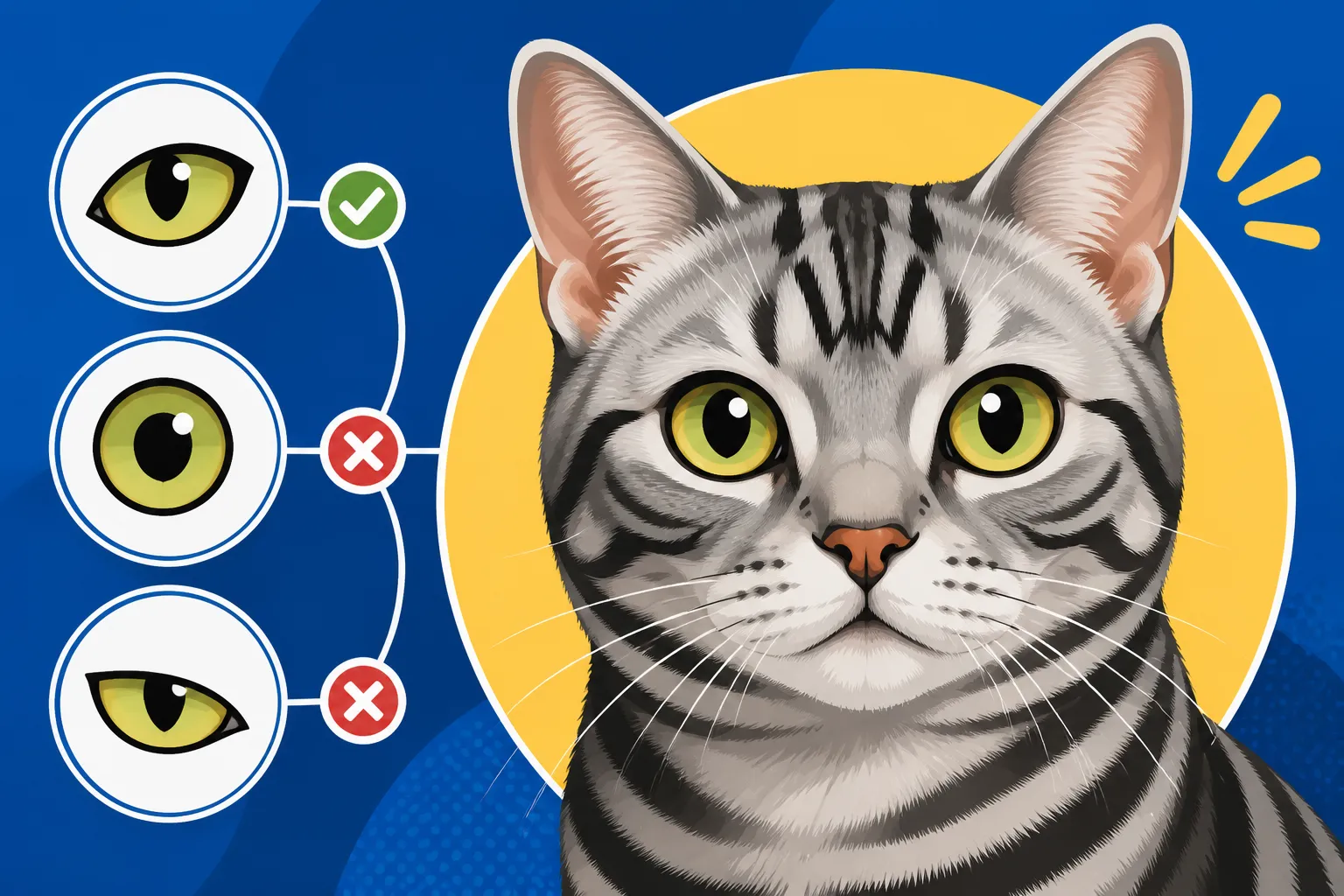
The American Shorthair’s eyes are not meant to look like perfect circles, nor should they appear sharply slanted. The breed standard describes a distinctive combination: the lower lid is rounded, while the upper lid has a softer, almond-like shape. Together, these features make the eye look open and rounded without losing its gentle, slightly elongated outline.
That balance matters when you are looking at the cat’s expression. An American Shorthair should generally appear bright and attentive, not startled by oversized, perfectly circular eyes or severe because of narrow, steeply angled ones. The shape is usually easiest to assess when the cat is relaxed and looking straight ahead. A startled kitten, a sleepy senior, or a cat squinting into bright light may look quite different for a moment.
The breed’s head shape also affects what you see. A broad head and full cheeks can make the eyes appear smaller, rounder, or more deeply set depending on the angle of a photograph. For a wider view of how those features work together, see What Shape an American Shorthair's Head Should Be. Eye shape is one piece of an overall impression, not a feature to assess in isolation.
Wide-set eyes that look balanced on the face
American Shorthair eyes are set relatively wide apart. In a balanced face, they look neither crowded together near the nose nor pushed so far toward the sides that the expression seems disconnected. The outer corners sit a little higher than the inner corners, creating a subtle lift rather than a dramatic slant.
It can be tempting to judge spacing from a single close-up. Phone cameras often distort proportions when held very close, and a cat turning its head can make one eye appear nearer the nose than the other. Try looking at several relaxed, front-facing views instead. If you are evaluating a kitten, remember that its head and facial proportions are still developing; the eyes may not look exactly like an adult’s.
Breed descriptions can help you understand the overall look, but they are not a shortcut to identifying a pedigree cat. A domestic shorthair may have eyes and facial proportions that resemble those of an American Shorthair. Registration and documented ancestry matter for breed identity, while appearance alone can only suggest resemblance. How to Tell an American Shorthair From a Random Bred Tabby explains that distinction in more detail.
What normal variation can look like
Shape is not the same as eye color
Eye shape and eye color are separate traits. A cat may have the characteristic open, gently rounded shape but a range of colors accepted in the breed. The color that looks especially striking often depends on the coat color and pattern, which can make photographs misleading: lighting, image filters, and reflections may change how an iris appears.
Some people expect every American Shorthair to have the same eye color, especially after seeing a particular silver tabby in a show photograph. In reality, coat and eye combinations vary. If you are curious about the range, read Which Eye Colors an American Shorthair Has and Which Eye Color Goes With Each American Shorthair Color. These can help explain why two cats of the same breed may have quite different-looking eyes.
A color difference by itself does not tell you whether the eye is healthy or whether a cat is purebred. Eye color is not a diagnosis, and a striking color is not proof of pedigree. When you are choosing a kitten, ask the breeder about registration and health records rather than relying on eye color or a flattering photograph.
Age, expression, and photography change the impression
A cat’s eyes can look rounder when it is alert, narrower when it is relaxed, and smaller when its pupils are constricted in bright light. The pupils also change with lighting and arousal, so a photograph taken outdoors may look noticeably different from one taken in a dim room. These ordinary changes can make it difficult to compare images taken under different conditions.
Age also changes the face around the eyes. Kittens have a softer, less mature appearance, while an adult’s cheeks and head may fill out over time. In older cats, a change in expression can sometimes reflect dental discomfort, general illness, or another health issue rather than a change in the breed’s eye shape. Compare the cat with its own usual appearance, not only with an idealized show image.
If you are assessing a possible show prospect, look at the whole cat and use the relevant breed standard, not a single feature or an online photo. What the American Shorthair Standard Asks For provides context for evaluating the breed’s overall outline. A pet can be a healthy, lovely American Shorthair without having every detail that a judge might favor in the show ring; Whether a Pet American Shorthair Can Be Shown covers that separate question.
| What you notice | Often a normal explanation | When to look more closely |
|---|---|---|
| Eyes look rounder in one photo | Expression, angle, or close-up camera distortion | The shape changes persistently or one eye looks different from the other |
| Pupils look large or small | Room lighting, excitement, or alertness | A pupil remains noticeably different from the other, especially with other symptoms |
| The eyes look watery briefly | Wind, dust, or a mild temporary irritation | Discharge continues, becomes thick, or comes with redness or squinting |
| The cat’s expression looks less bright | Sleepiness or a relaxed posture | The cat seems withdrawn, painful, or unwell |
When an eye change may need veterinary attention
Breed appearance should not be used to dismiss symptoms
Breed standards describe appearance; they do not establish that a particular eye is healthy. A cat can have a textbook eye shape and still develop irritation, infection, injury, or another eye problem. On the other hand, a slightly unusual-looking eye does not automatically mean something is wrong. What matters is whether the eye has changed, whether the cat seems uncomfortable, and whether other signs are present.
Watch for persistent squinting, repeated pawing at the face, redness, cloudiness, swelling, unusual tearing, or discharge. A cat holding one eye partly closed may be in pain even if it remains quiet and otherwise behaves normally. Cats are often skilled at masking discomfort, so “she is still eating” is not enough reassurance when an eye suddenly looks abnormal.
A sudden change in pupil size, a visible injury, or an eye that appears cloudy or bulging should be treated as a reason to seek prompt veterinary advice. Avoid trying to diagnose the cause from a photo or applying leftover drops. Products intended for people or another pet may be unsuitable, and some eye conditions worsen when treatment is delayed.
Keep care gentle and avoid unnecessary cleaning
For a healthy American Shorthair, routine eye care is usually simple observation. Check the area during ordinary handling, and note whether both eyes look comfortable and clear. If there is a small amount of debris at the corner, ask your veterinary clinic how they would like you to clean it. Do not rub the eyeball, use a cotton swab near the surface, or put a cleaning product into the eye unless a veterinarian has advised it.
If your cat needs an examination, a familiar carrier can make the trip less stressful. Some owners compare carrier options through retailers such as Chewy, but choose one that is secure, easy to clean, and large enough for your cat to sit and turn around comfortably. Leaving the carrier out at home and adding familiar bedding may also help your cat treat it as part of the household rather than a sudden signal that something unpleasant is happening.
For a cat that resists handling, do not wrestle it into a position just to inspect its eyes. A quick glance while it is resting is safer and often more useful than a prolonged struggle. If you need supplies for cleaning around the face, check with the clinic first about what is appropriate; Chewy may be one place owners look for general pet-care items, but a retailer listing is not a substitute for veterinary guidance. Keep a note of when symptoms began and whether they are getting better or worse. That simple timeline can help the veterinarian understand what has changed.
How to assess eye shape without overreading it
Look at the cat in a calm, natural pose
Start with the cat facing you in ordinary indoor light. Notice whether both eyes look similarly open, whether the lower edges appear rounded, and whether the upper edges have a gentle almond-like contour. Then watch the cat move its head and blink. A natural expression tells you more than a flash photograph or a posed image where the cat is tense.
Do not try to measure the eyes from a picture. Lens distortion and perspective can exaggerate the nose, change the apparent distance between the eyes, or make one side of the face look larger. If you are comparing kittens from a litter, look at them from the same distance and angle, but remember that individual expression and development vary.
If a breeder is describing a kitten as a show-quality American Shorthair, ask what that means in context. Request registration information, a pedigree, and an explanation of the kitten’s strengths and limitations. The shape of the eyes may contribute to a judge’s assessment, but it cannot establish ancestry on its own. A domestic shorthair and an American Shorthair can resemble each other closely, while their documented breed status differs; Whether a Domestic Shorthair and an American Shorthair Differ Genetically explores why appearance alone can be confusing.
Separate a cosmetic question from a health concern
If you are simply wondering whether your cat’s eyes match the breed’s general look, compare the overall shape with a reliable breed description and allow for age, posture, and individual variation. If the question is whether the eyes are healthy, focus instead on comfort and change: is the cat squinting, rubbing, tearing, or acting differently? Those observations are more important than whether an eye looks perfectly almond-shaped.
When both eyes have always looked slightly different from an idealized photo but are clear and comfortable, that may simply be individual variation. When one eye suddenly changes, or the cat seems sensitive to light or touch, arrange veterinary advice rather than waiting to see if the shape settles. A familiar carrier from a pet retailer such as Chewy can help with transport planning, but the clinic is the right place to assess a new eye symptom.
The most useful rule is simple: judge breed appearance with the whole face in mind, and judge eye health by the cat’s comfort and any change from its normal state. The American Shorthair’s characteristic eyes are open, balanced, and gently shaped—not a perfect circle and not a sharply slanted almond. That gives you a helpful visual guide without turning a breed description into a diagnosis.
Disclaimer
This article is for general informational purposes only and does not constitute professional advice. Laws, prices and regulations vary by location and change over time. Consult a qualified professional for guidance on your specific situation.