Whether a Chocolate American Shorthair Exists
A chocolate-colored cat can certainly exist, but that does not automatically make it a pedigree American Shorthair. The confusion often starts with brown tabbies, whose warm brown coats can look chocolate in photographs. This guide explains the difference between coat color and breed recognition, what to check in a breeder’s paperwork, and why a DNA result alone cannot establish an American Shorthair’s pedigree.
Does a chocolate American Shorthair exist
The short answer depends on what you mean by “exists”
A cat can have a genuinely chocolate-colored coat. Chocolate is a real feline coat-color variation, associated with a change affecting dark pigment. But “chocolate American Shorthair” can mean two different things: a cat with American Shorthair-like features and chocolate coloring, or a registered American Shorthair whose color is accepted under a particular breed standard. Those are not interchangeable descriptions.
Under the CFA American Shorthair standard, chocolate and lavender are among the disallowed colors. That means a chocolate-colored cat would not qualify as an accepted-color American Shorthair for showing under that standard. Breed rules can vary by registry, so someone considering a show or registration claim should check the relevant organization’s current standard rather than relying on a seller’s wording.
The practical answer is therefore: chocolate cats exist, but chocolate is not an accepted American Shorthair color under the CFA standard. A seller calling a kitten a “chocolate American Shorthair” may be describing its appearance, using a loose label, or claiming a pedigree that needs to be verified. The phrase itself is not proof that the color is recognized in the breed.
Why a brown tabby can look chocolate
American Shorthairs come in many colors and patterns, including brown tabby. In everyday conversation, people sometimes call a warm brown coat “chocolate,” especially when viewing a kitten indoors or in a photo with warm lighting. That can make an ordinary brown tabby seem like an unusual color variety when it is not.
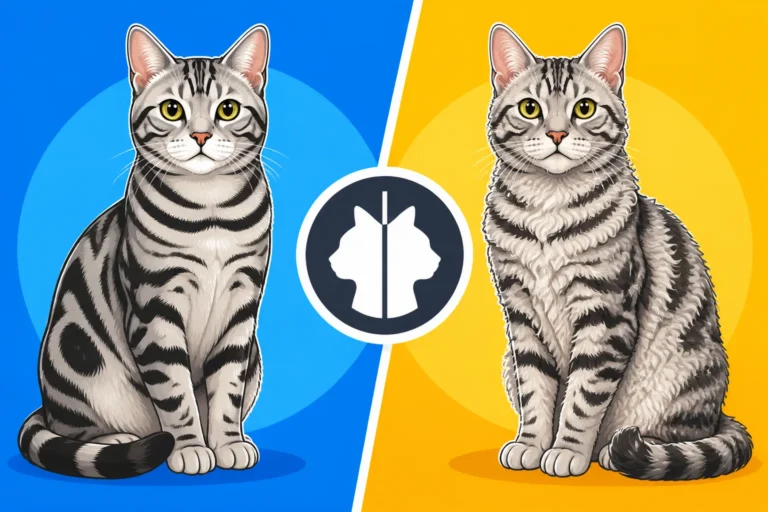
A brown tabby typically has a lighter brown or tan ground color with darker markings. Those markings may form classic swirls, narrow stripes, or another tabby pattern. A solid chocolate cat, by contrast, has a more consistently brown coat without the typical contrast between a pale tabby background and dark markings. Coat lighting, age, and individual variation can blur the visual distinction, so photos alone are not always enough.
If the cat has clear tabby markings, it may simply be a brown tabby rather than a solid chocolate cat. For a closer look at this common point of confusion, see What a Brown Tabby American Shorthair Is. The broader color range and breed-standard context are covered in Which Colors an American Shorthair Comes In.
| Description | What the coat usually looks like | What it establishes |
|---|---|---|
| Brown tabby | Brown or tan background with darker tabby markings | A coat pattern, not proof of pedigree |
| Chocolate | More consistently warm brown coloring, with no typical brown-tabby contrast | A color description, not proof of American Shorthair status |
| “Chocolate American Shorthair” in an ad | Depends on the cat and the seller’s meaning | A claim to investigate through records and registry rules |
How coat color and breed recognition differ
A color gene does not determine a breed
Coat color and breed identity are separate questions. A cat’s color comes from inherited pigment-related traits, while its breed status depends on ancestry and the rules of the registry that recognizes the breed. A chocolate coat cannot, by itself, show that a cat is an American Shorthair, just as a silver tabby coat cannot prove that a cat has an American Shorthair pedigree.
Chocolate coloring is generally associated with a recessive version of a pigment gene. In simple terms, a cat usually needs to inherit the relevant variant from both parents for the color to appear. The details can be more complicated when other coat-color genes affect the result, and a visual label such as “chocolate” is not a substitute for genetic or pedigree evidence.
That distinction matters when a seller uses a striking color as the main reason a kitten is supposedly rare or valuable. A buyer should ask what the description means: Is the seller describing a brown-looking coat? Is the kitten registered? Which registry issued the paperwork? Is the color eligible under that registry’s American Shorthair standard? These questions are more useful than relying on a color name alone.
Breed standards describe more than appearance
An American Shorthair is not defined only by a broad head, sturdy body, or familiar tabby pattern. A registered pedigree is built from documented ancestry, and a breed standard describes the traits and colors accepted by the relevant organization. To understand the physical expectations, see What an American Shorthair Looks Like by the Standard.
A cat can look a great deal like an American Shorthair and still be a domestic shorthair or a mixed-breed cat. That is not a criticism of the cat; many wonderful companions have no documented pedigree. It simply means that appearance and registered breed status should not be treated as the same thing. How an American Shorthair Differs From a Domestic Shorthair explains why the distinction can be hard to judge by sight.
Breeding history adds another layer. The American Shorthair has a documented breed history, and permitted breeding practices are not the same as any two cats producing kittens with a similar build. If a seller says an unusual color came from an outcross, ask what that means for the kittens’ registration and eligibility. The background is explored in Which Breeds the American Shorthair Was Outcrossed To.
How to assess a chocolate American Shorthair claim
Ask for documents, not just a color description
Start by asking for the kitten’s registration information and pedigree documents. Check that the registered name, breeder details, litter information, and parentage match the kitten being offered. If the seller claims that the kitten is an American Shorthair, ask which registry recognizes that claim and whether the kitten’s color is permitted under that organization’s rules.
A responsible seller should be able to explain the wording they use. If they call a kitten “chocolate,” they should be willing to clarify whether that is a casual description of a brown-looking coat or a color designation in their registry’s records. Be cautious if the seller avoids naming the registry, offers no pedigree paperwork, or treats a color label as proof of breed.
Keep in mind that paperwork supports a documented pedigree; it does not necessarily mean the cat meets every show requirement. Registration, breed-standard eligibility, and show eligibility are related but distinct matters. For more detail on what registration can and cannot establish, see What an American Shorthair Pedigree Guarantees and Whether Papers Are the Only Difference an American Shorthair Has.
Treat DNA tests as one piece of information
A DNA test may report genetic variants related to coat color or estimate breed ancestry, depending on the test. It cannot turn an undocumented cat into a registered American Shorthair, and a color result alone cannot prove that the breed standard accepts that color. A result identifying a chocolate-associated variant answers a genetics question, not necessarily a registry or pedigree question.
If you are considering a consumer cat DNA kit from a retailer such as Chewy, read the test’s stated scope carefully. Check whether it reports coat-color traits, breed ancestry, or both, and do not assume that a breed estimate substitutes for registration records. The same caution applies to a product listing on Chewy: make sure you understand what the test claims to measure before using its results to evaluate a seller’s breed claim.
If a Chewy listing or customer-service description is unclear about whether a test covers coat-color genetics, ask for the test provider’s own explanation before buying. The useful question is not simply “Does this test say American Shorthair?” but “What evidence does it analyze, and what can its report actually establish?” For more on the limits of breed identification, read Whether a DNA Test Tells an American Shorthair From a Moggy and Whether a Domestic Shorthair and an American Shorthair Differ Genetically.
What to do if you already have a chocolate-colored cat
Focus on the cat, not the label
If you already share your home with a chocolate-colored cat, the registry question does not change the care the cat deserves. A cat can be healthy, affectionate, and beautiful without being a registered American Shorthair. If the cat came from a rescue or an informal rehoming, it may be most accurate to describe it as a domestic shorthair with a chocolate-colored coat unless you have reliable pedigree documents.
A vet can help describe the cat’s appearance and assess health, but a routine examination cannot establish a documented breed pedigree. If breed identity matters to you for registration, breeding, or showing, contact the relevant registry and ask what records it requires. If it does not matter, there is no need to settle the label before enjoying life with your cat.
When checking a seller’s description, separate three questions: what color the coat appears to be, whether the cat has documented American Shorthair ancestry, and whether the color is accepted by the specific registry. Keeping those questions apart helps prevent a persuasive photograph or unusual color claim from doing more work than it can support.
A practical checklist for buyers
Before paying a premium for a kitten described as a chocolate American Shorthair, take these steps:
- Ask the seller to define “chocolate.” Find out whether they mean a solid coat color, a brown tabby appearance, or simply a warm brown shade.
- Ask which registry recognizes the kitten and request the registration and pedigree information.
- Check that registry’s American Shorthair color rules directly, especially if the seller says the kitten is show quality.
- Ask whether the parents’ documents match the litter information and whether the kitten’s registration status is included in the sale.
- Treat DNA results as supporting information about traits or ancestry, not as a replacement for pedigree documents.
- Walk away from pressure to pay extra for “rare” color unless the seller can clearly explain the documentation and the registry rules behind the claim.
The key distinction is straightforward: a chocolate-colored cat can exist, but that does not make chocolate an accepted American Shorthair color under every breed standard. A brown tabby may be mistaken for chocolate, and a DNA result may describe coat traits without confirming registry status. When the label matters, rely on the registry’s rules and the cat’s paperwork rather than appearance alone.
Disclaimer
This article is for general informational purposes only and does not constitute professional advice. Laws, prices and regulations vary by location and change over time. Consult a qualified professional for guidance on your specific situation.