Which Breeds Joined the American Shorthair on the CFA’s First List
The American Shorthair was part of the Cat Fanciers’ Association’s earliest breed group, but old records can be confusing: the breed was then called the Domestic Shorthair, and early registry categories do not always match modern breed names. Here’s which cats are commonly grouped with it, what that early list means, and how to read the history without mixing up breeds and individual registered cats.
The breeds commonly named in CFA’s founding group
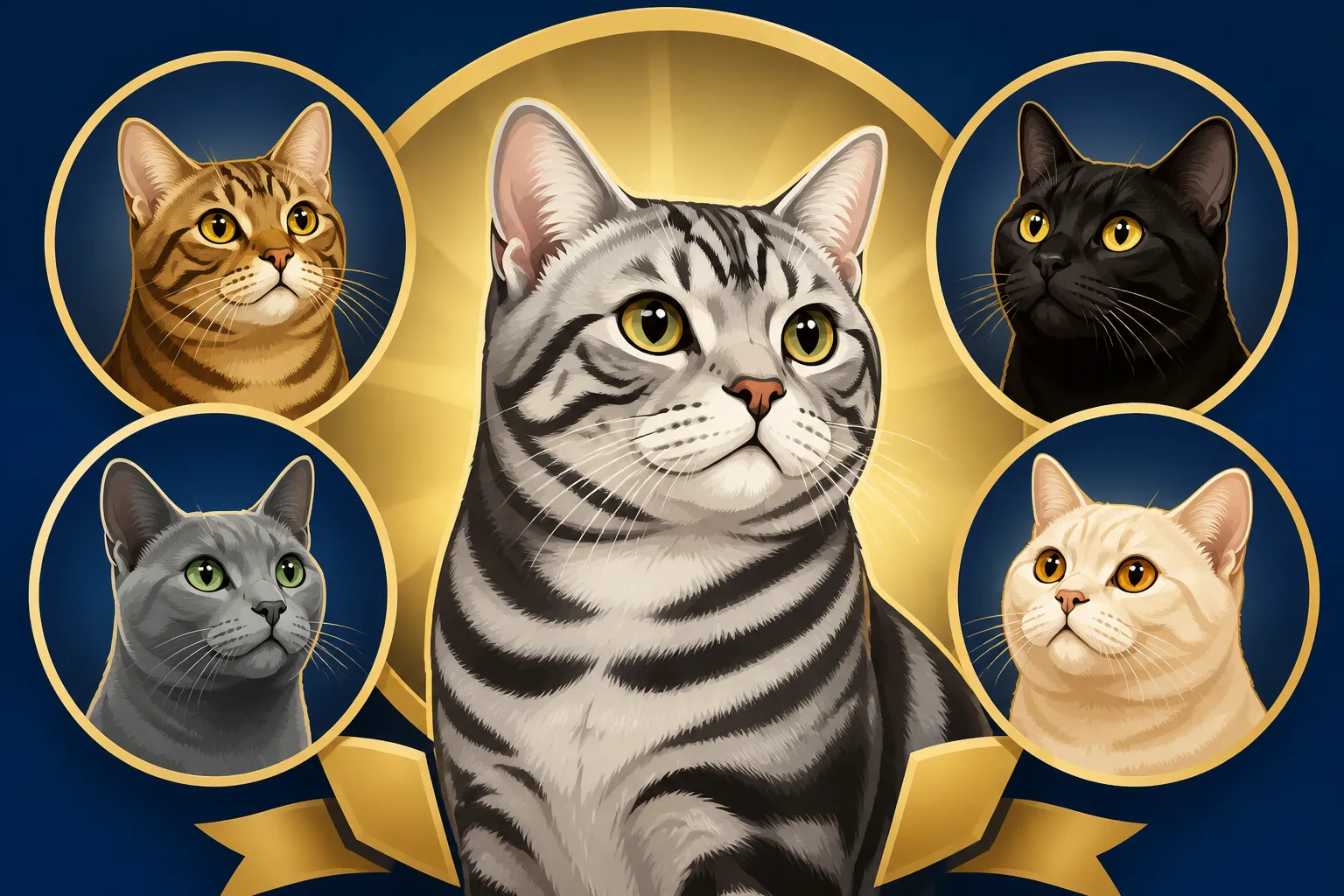
The American Shorthair is commonly described as one of five breeds associated with the Cat Fanciers’ Association’s earliest register. The other four are the Persian, Maine Coon, Siamese, and Russian Blue.
That list is a useful snapshot of the organized cat fancy taking shape in the United States. It is not, however, a complete account of every cat or category that may appear in early registry records. A registry’s first registrations, its first formal breed list, and the breeds represented at an early show are related milestones, but they are not necessarily the same event.
| Breed commonly included in the early group | Why it matters to the story |
|---|---|
| American Shorthair | Descended from sturdy working cats and registered under an older name |
| Persian | One of the longhaired breeds that became a central part of the organized cat fancy |
| Maine Coon | A large, longhaired American breed with roots in New England |
| Siamese | An established breed that brought a distinct, recognizable type to early shows |
| Russian Blue | A shorthaired breed associated with a refined blue coat and an established European history |
American Shorthair, then called Domestic Shorthair
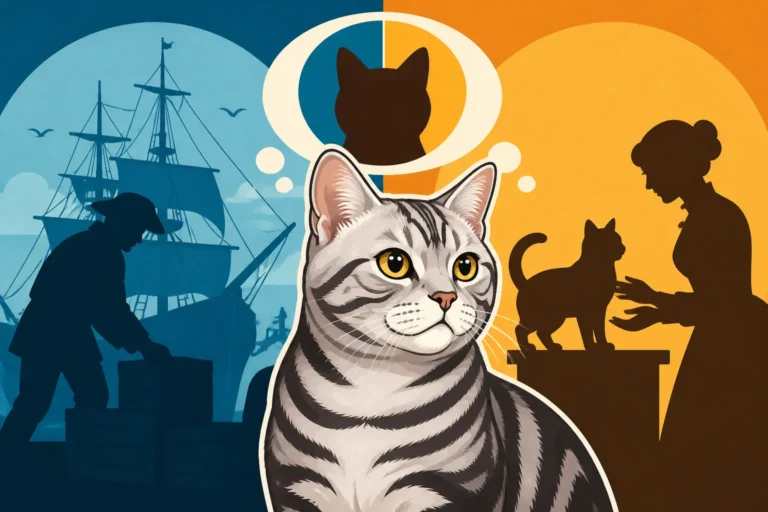
The cat now known as the American Shorthair was not always registered under that name. Early records used “Domestic Shorthair,” a broad label that reflected the cat’s everyday identity more than a carefully separated show-breed identity. In other words, the name did not yet draw a sharp line between a pedigreed American Shorthair and a shorthaired cat without documented ancestry.
That distinction matters when readers encounter old references to the first CFA breeds. A list may use a historical name, a later breed name, or a category that was broader than the modern standard. The name change to American Shorthair came later, helping establish the breed as a defined, selectively bred show cat rather than simply a domestic shorthaired type. For more on that shift, see What the Breed Was Called Before American Shorthair and Why the American Shorthair Name Changed in 1966.
The cats behind the breed were valued for practical qualities: a sturdy build, a capable hunting instinct, and an adaptable temperament. Those traits suited life around farms, homes, and ships, where cats helped control rodents. Their working history is one reason the American Shorthair’s story differs from that of breeds shaped primarily around a distinctive coat or appearance. Which European Cats the American Shorthair Descends From adds context to the older ancestry behind this distinctly American breed.
Persian, Maine Coon, Siamese, and Russian Blue
The Persian represented a very different kind of appeal. Its long coat and recognizable appearance made it a natural presence in the early world of cat shows, where breeders and fanciers were beginning to organize cats into named, recognizable types. Its inclusion alongside the American Shorthair shows that early cat fancy was not built around one body shape or one kind of coat.
The Maine Coon brought another kind of American identity to the group. A large, substantial cat associated with New England, it was known for a hardy look and a long coat. The Siamese, meanwhile, was a striking and established breed with a distinctive appearance that stood apart from the common domestic cats of the time. The Russian Blue added yet another shorthaired type, known for its blue coat and more refined outline.
These cats were not interchangeable varieties of one breed. They represented different histories, appearances, and breeding interests. Putting them in the same early registry group meant that the organization was making room for a range of recognized cats, from practical domestic types to long-established pedigree breeds.
What “the first list” actually means
The phrase “CFA’s first list” sounds as if there was one definitive, neatly printed roster that has remained easy to interpret. Historical registry work is often less tidy. Associations develop through record keeping, shows, breed descriptions, and changing standards; the date a cat is first registered may not be the same as the date a breed is formally recognized or shown under a consistent name.
That is why the five-breed group is best treated as a commonly cited founding-era summary, not a claim that every early document uses precisely the same wording. The broad answer remains useful: the American Shorthair’s peers in that early group are commonly given as the Persian, Maine Coon, Siamese, and Russian Blue.
Breed recognition is not the same as registering a cat
A registry records cats and their ancestry. Breed recognition, by contrast, involves an organization accepting a breed name and defining what qualifies as that breed. A cat can appear in a registry before all the details of a breed’s modern identity have settled.
This is especially important for the American Shorthair because its earlier “Domestic Shorthair” label could refer to a wider population than the pedigreed breed known by that name today. If you see an old record that says “Domestic Shorthair,” it does not automatically mean the cat would meet the present American Shorthair standard or have the documented pedigree expected of a registered modern American Shorthair.
CFA’s recognition history is also easier to understand when separated into its milestones: its founding, early registrations, early shows, and later breed-name changes. Which Year the CFA Recognized the American Shorthair looks specifically at the recognition timeline, while When Breeders Started Showing the American Shorthair helps explain how show culture influenced the breed’s identity.
Why historical names and modern names differ
Breed names can change as breeders and registries try to distinguish a specific type from a broad everyday category. In the American Shorthair’s case, “Domestic Shorthair” was not a name that clearly communicated a distinct pedigree breed to the public. The later name made the breed’s American identity more explicit and helped set it apart from the many shorthaired cats found in homes and shelters.
A name change does not mean the breed suddenly appeared at that moment. It means the label and the breed’s formal identity were being clarified. The working cats that contributed to the breed existed long before the modern name did, even as organized breeding and show standards shaped the cat into a more consistently defined type.
So when comparing CFA’s early list with a current breed directory, expect differences in wording and scope. The list reflects an organization and a hobby in development, not a modern catalogue retroactively applied to every early record.
Why these five breeds were a notable group
The early group combined cats that were already distinctive in different ways. Some had coats or features that made them recognizable in a show setting; others reflected American domestic and working-cat history. Their inclusion signals that the developing cat fancy was interested both in preserving particular types and in defining what counted as a breed.
The American Shorthair’s place among them is particularly interesting because it was not created around an extreme physical feature. Its identity grew from a functional, durable type and then became more formally defined through breeding and registration. This helps explain why the breed can look familiar to people who have lived with ordinary tabby cats, while still having a separate standard and pedigree history. What an American Shorthair Looks Like by the Standard explains the features that distinguish the breed’s show type.
Different origins, shared place in the registry
The Persian, Siamese, and Russian Blue had histories and appearances that were readily associated with named breeds. The Maine Coon was tied to an American regional story, while the American Shorthair grew from a broad population of domestic working cats. The early roster therefore brought together cats whose paths into organized breeding were not identical.
That difference also helps avoid a common misunderstanding: being included in the same early group does not mean the breeds share the same ancestry, temperament, or breeding purpose. A registry list is an administrative and historical grouping, not a family tree. The American Shorthair and Maine Coon both have strong American associations, for instance, but that alone does not make them close relatives.
The list also reflects the priorities of people building cat shows and registries. They needed names, descriptions, and categories that let exhibitors and judges talk about cats consistently. Over time, those categories became more detailed, and standards developed to describe the desired characteristics of each breed.
What the list does not tell you about an individual cat
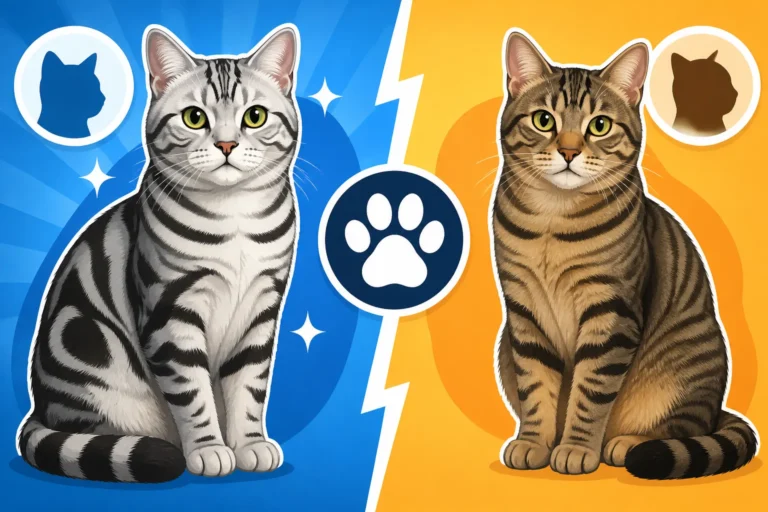
A breed appearing in an early CFA group does not establish that a particular cat today belongs to that breed. A shorthaired tabby may resemble an American Shorthair, but appearance alone cannot confirm its pedigree. Likewise, the historical use of “Domestic Shorthair” should not be taken as proof that every cat once described that way had the ancestry of a modern registered American Shorthair.
If you are trying to identify a cat, look for reliable pedigree documentation rather than relying only on coat color, head shape, or body build. Many domestic cats share features with pedigreed breeds, and resemblance is not the same as documented lineage. For more on that distinction, see How an American Shorthair Differs From a Domestic Shorthair.
For owners, the practical takeaway is simple: historical breed recognition is interesting context, but it does not determine what care an individual cat needs. A cat’s age, health, body condition, and daily behavior matter more than an old registry label. Breed history can help explain where a type came from; it cannot replace veterinary guidance or knowledge of the cat in front of you.
How to read CFA’s early breed history
When you come across a claim about CFA’s “first breeds,” check what the claim is referring to. It may describe early recognized breeds, the first cats registered, a first show, or a short founding-era list used in a later account. Those are all connected to CFA’s beginnings, but they are not identical statements.
A careful reading keeps the central fact intact without making the history sound more precise than the record supports: the American Shorthair was part of CFA’s early breed story, and the commonly cited companion breeds are the Persian, Maine Coon, Siamese, and Russian Blue.
A quick way to sort out the terminology
- Check the name used in the historical account. “Domestic Shorthair” may refer to the American Shorthair’s earlier registered identity, but it can also be used more broadly.
- Ask whether the reference is about breeds or individual cats. A first registered cat is not the same thing as a breed’s formal recognition.
- Look for the date and milestone being described. Founding, registration, recognition, and showing are separate parts of the story.
- Compare the historical term with the modern breed name. Later names and standards may clarify a breed without changing the fact that its ancestors existed earlier.
This approach is useful beyond the American Shorthair. Breed registries change their rules and terminology as a hobby grows, and old sources may use language that no longer maps neatly to modern categories. Reading the label in context is more reliable than assuming every historical list was written using today’s definitions.
Why the story still matters
The early CFA group gives a glimpse of how cat breeding became more organized in the United States. It shows a registry making room for very different cats and helps explain how a working domestic type eventually developed a formal breed identity. The American Shorthair’s inclusion is meaningful precisely because its history began outside the show ring: it was shaped by usefulness before it was described by a modern breed standard.
That background also puts the breed’s familiar appearance into perspective. The American Shorthair may remind someone of a shelter tabby, but the modern pedigree breed has a documented identity and a standard of its own. Its early place in CFA history is one part of that identity, alongside its name change, breeding history, and the standards that followed.
The short answer, then, is that the Persian, Maine Coon, Siamese, and Russian Blue are commonly named alongside the American Shorthair in accounts of CFA’s earliest breed group. The finer details depend on whether a source means initial registrations, formal recognition, or early show categories—an important distinction when reading any piece of breed history.
Disclaimer
This article is for general informational purposes only and does not constitute professional advice. Laws, prices and regulations vary by location and change over time. Consult a qualified professional for guidance on your specific situation.