Whether the American Shorthair Has Any Wild Ancestry
Many people, when they first meet an American Shorthair, are struck by their robust build, keen eyes, and undeniable air of self-sufficiency. It's easy to look at this capable feline and wonder if there's a whisper of the wilderness in their lineage, a hint of ancient, untamed ancestors roaming forests. This guide is here to untangle those notions, exploring the true historical tapestry of the American Shorthair and whether its roots actually trace back to wild cat species.
Dispelling the Myth: The Truly Domestic Roots of the American Shorthair
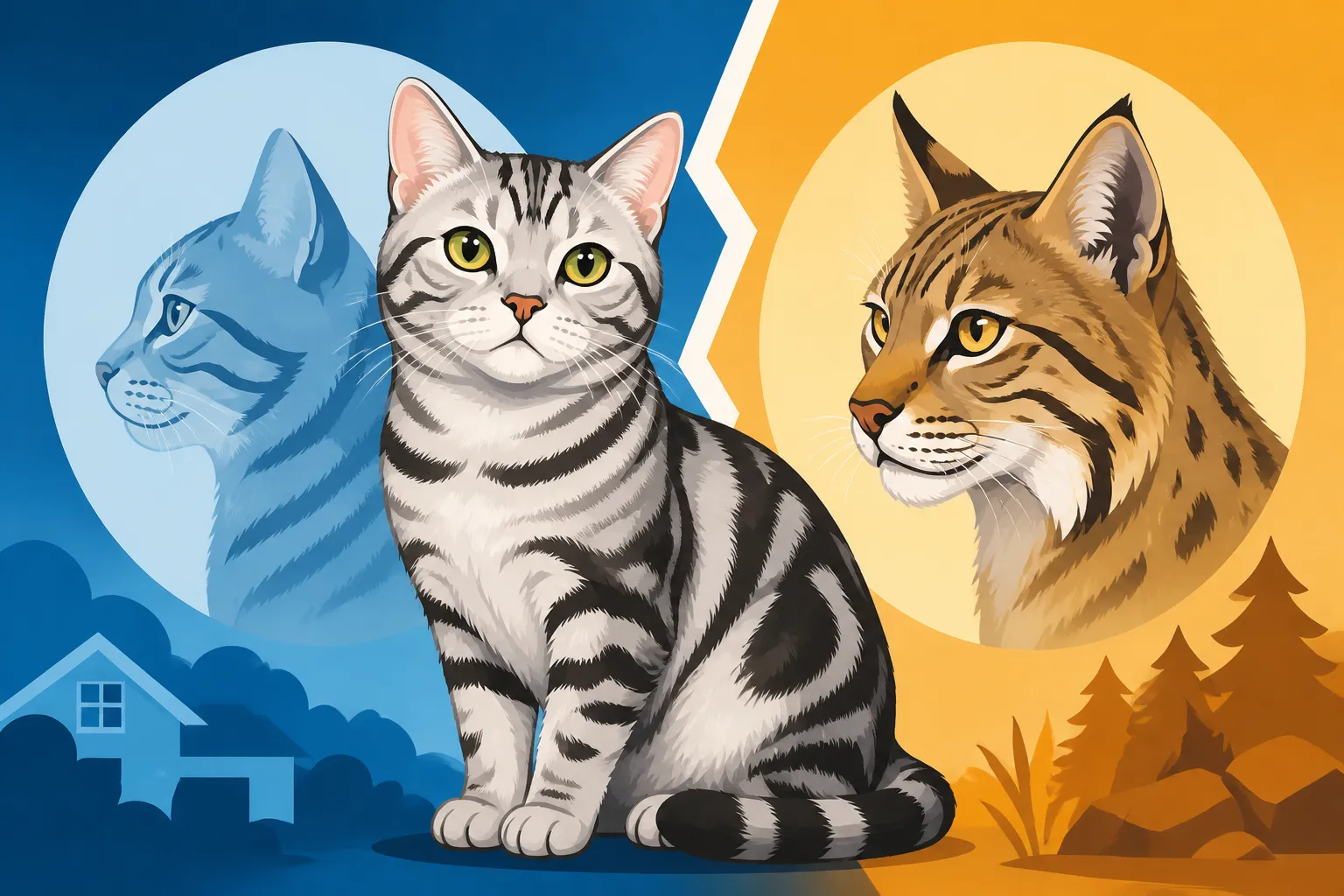
It's a common misconception, particularly with breeds that look naturally strong and capable, to assume they must have some wild blood flowing through their veins. After all, isn't that where all cats came from originally? While it's true that all domestic cats, Felis catus, ultimately share a distant ancestor with wild felines, the American Shorthair does not possess any recent or direct genetic contributions from wild cat species like bobcats, servals, or Asian leopard cats. They are, through and through, a product of centuries of natural selection within a domestic context.
A Journey from Working Cat to Pedigree
The American Shorthair's story is one deeply intertwined with human migration and settlement, not with a deliberate crossing into the wild. Their ancestors weren't bred from wild felines to create a new, exotic hybrid. Instead, they were the hardy, adaptable cats that sailed across oceans with early European settlers, tasked with a very important job: pest control. These "working cats" were indispensable companions on ships, keeping rodent populations in check, and later on farms and in homes across the burgeoning North American continent. The Mayflower Cats Behind the American Shorthair is a testament to their early contributions.
These were pragmatic cats, valued for their skills and resilience rather than any specific aesthetic. They bred freely, and natural selection favored those traits that made them excellent hunters, robust survivors, and generally amiable companions for humans. This long, organic process of adaptation to a domestic, albeit often challenging, environment is what forged the American Shorthair's foundational characteristics. There was no introduction of wild DNA; rather, it was a refinement of existing domestic cat genetics for a specific, practical purpose.
Understanding the Difference Between Feral and Wild
A key point of confusion for many lies in the distinction between a "feral" cat and a "wild" cat. A feral cat is a domestic cat that lives without direct human contact and has reverted to a wild-like state in terms of behavior. They might be born feral or become feral after being abandoned or lost. They are still Felis catus, the same species as your pampered housecat, but their lifestyle and temperament differ greatly. Many of the American Shorthair's early ancestors could certainly be described as feral or semi-feral, especially those living on large farms or in busy port towns, fending for themselves.
A truly wild cat, however, belongs to a different species entirely. Think of the African wildcat, from which domestic cats ultimately descended tens of thousands of years ago, or native North American wildcats like the bobcat or lynx. These animals have distinct genetic makeups, behaviors, and physical adaptations that set them apart from domestic cats, regardless of how "wild" a domestic cat might act. The American Shorthair's rugged look and impressive hunting instincts stem from its long history as a highly effective, independent domestic working cat, not from a recent cross with a wild species.
Tracing Ancestry: European Ships and Natural Selection
The American Shorthair's lineage is far less mysterious and far more practical than many imagine. Their origins are firmly rooted in European domestic cats, which arrived in North America centuries ago. These cats were not some exotic, specially bred lineage but simply the common, everyday felines brought along for their invaluable pest control services.
The Original Working Cats of North America
When European settlers came to the Americas, they brought with them livestock, supplies, and, crucially, cats. These cats were the ultimate working animals, essential for protecting food stores from rodents on long sea voyages and in new settlements. Ships Carried the American Shorthair's Ancestors as Ratters vividly illustrates this historical role. Without these feline pest controllers, early settlements would have faced much greater challenges in terms of disease and food loss.
Over generations, these cats adapted to the varied climates and challenges of North America. They were truly "American" cats, surviving and thriving through natural selection, becoming hardy, healthy, and resourceful. There was no specific breed standard for centuries; survival and utility were the primary drivers. This long period of natural selection, rather than selective breeding for aesthetic traits, allowed the American Shorthair to develop its famously robust constitution and sound genetics. This is why you often hear the American Shorthair described as a "benchmark" for health in the cat world.
Formal Recognition: From Alley Cat to Pedigree
It wasn't until the late 19th and early 20th centuries that enthusiasts began to appreciate and formally recognize these common, well-adapted North American shorthaired cats. Before this, they were simply known as "Domestic Shorthairs" or "House Cats." Breeders began to select for consistent type, health, and temperament, establishing the breed we know today. This was a process of taking existing, well-established domestic cat lines and refining them, not introducing new, wild blood.
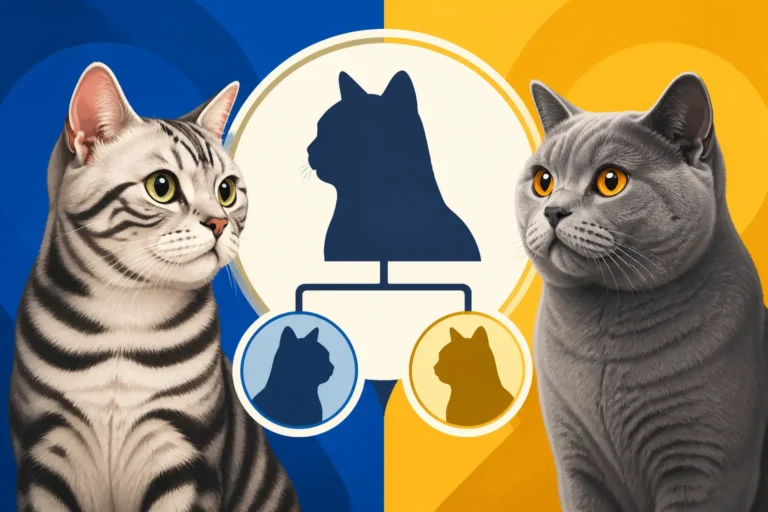
The name change in 1966 from "Domestic Shorthair" to "American Shorthair" was a deliberate move by the Cat Fanciers' Association (CFA) to distinguish these pedigreed cats from the general population of random-bred domestic shorthairs. It cemented their status as a recognized, purebred cat with a long, distinct history in the United States. While many might think a domestic shorthair looks exactly like an American Shorthair, How an American Shorthair Differs From a Domestic Shorthair explains the nuances in their distinctions. This formalization did not involve cross-breeding with wild species; it was about honoring and preserving the qualities developed over centuries of natural selection.
Distinguishing the American Shorthair from Hybrid Breeds
If you're still pondering the possibility of wild ancestry, it's worth understanding how different the American Shorthair's story is from that of modern hybrid breeds. There are indeed some wonderful cat breeds today that do have recent wild ancestry, but they are a very different kind of cat with very different needs.
Cats with Known Wild Ancestry
Modern hybrid breeds, such as the Bengal (Asian Leopard Cat x domestic cat) or the Savannah (Serval x domestic cat), were intentionally created by crossing domestic cats with specific wild feline species. These breeds were developed to capture the exotic look of their wild ancestors while maintaining a manageable domestic temperament. They often come with higher energy levels, more specific dietary requirements, and behaviors that reflect their wild heritage, even many generations removed. Owners of these breeds often talk about their vertical capabilities, their intelligence, and their intense play drive.
In contrast, the American Shorthair has no such recent wild crosses in its background. Its "wildness" is purely in its innate hunting drive and robust constitution, traits that evolved naturally over centuries of being an effective mouser and survivor in human-centric environments. They are the quintessential house cat, refined for consistency and health. You won't find specific care instructions for managing "wild" traits in an American Shorthair, beyond providing ample opportunities for play that satisfies their natural prey drive, perhaps with toys you might find on Chewy.
Behavioral Traits and Care Needs
The lack of wild ancestry directly influences the American Shorthair's temperament and care requirements, making them a fantastic choice for many families. They are known for being adaptable, easygoing, and affectionate without being overly demanding. Their intelligence and problem-solving skills are geared towards navigating a human household, not scaling trees in a jungle or hunting large prey. An American Shorthair Asks You for Almost Nothing, highlighting their independent nature.
Consider the following comparison:
| Trait / Category | American Shorthair | Modern Hybrid Breed (e.g., Bengal, Savannah) |
|---|---|---|
| Ancestry | Purely domestic, European origins, natural selection in North America. | Deliberate crosses between domestic cats and specific wild felines (e.g., Asian Leopard Cat, Serval). |
| Temperament | Easygoing, adaptable, affectionate, independent, good with families. | Often higher energy, more vocal, requires significant mental and physical stimulation. |
| Hunting Instinct | Strong prey drive, excellent mousers, but easily satisfied with indoor play. | Very strong prey drive, may need specialized enrichment, can be challenging with small pets. |
| Physical Build | Robust, muscular, round face, square muzzle, medium to large size. | Lean, athletic, often spotted or marbled coat, long legs, distinct "wild" appearance. |
| Care Requirements | Standard domestic cat care, regular vet checks, balanced diet (many find their preferred brands on Chewy). | May require specialized diets, extensive enrichment, secure outdoor access (catios) or strictly indoor life. |
| Noise Level | Generally quiet, uses soft chirps and meows. | Can be quite vocal, with a wider range of sounds, sometimes mimicking wild calls. |
This table clearly shows that while both types of cats are fascinating, their foundational origins are quite distinct. The American Shorthair's heritage is one of thriving alongside humans through its natural abilities as a domestic feline. You can easily find suitable food and toys for an American Shorthair from pet suppliers, often browsing options on Chewy for convenience and variety.
Ultimately, the American Shorthair’s charm isn't in its exotic "wild" blood, but in its perfectly balanced domestication. They represent centuries of what a capable, robust, and well-adjusted house cat can be. Their independent nature, intelligence, and affectionate demeanor are all products of their unique journey from working cat to cherished family member, entirely within the realm of Felis catus. They are a testament to the power of natural selection within a human environment. How Long the American Shorthair Lives Against Other Pedigrees is a reflection of this sound genetic foundation.
Disclaimer
This article is for general informational purposes only and does not constitute professional advice. Laws, prices and regulations vary by location and change over time. Consult a qualified professional for guidance on your specific situation.