Why a Stocky American Shorthair Looks Heavier Than It Is
It's incredibly easy to look at an American Shorthair and think they might be a little chunkier than they actually are. Their naturally broad, sturdy frame and dense coat often create an optical illusion, making them appear heavier set than their healthy body condition dictates. This guide aims to clear up that confusion, helping you understand the unique physiology of your American Shorthair and how to accurately assess their ideal weight and build.
Understanding the American Shorthair's Natural, Robust Build
When you first meet an American Shorthair, especially if you're used to more delicate or svelte breeds, their sheer presence can be striking. They carry themselves with an undeniable strength and solidity that speaks to their heritage. This isn't a flaw; it's a testament to centuries of purpose and resilience. Their entire physical makeup is geared towards a working life, which means they are built to be robust, powerful, and utterly capable.
A History of Practicality, Not Delicacy
The American Shorthair's ancestors weren't bred for dainty laps or delicate beauty contests. They were the indispensable crew members on ships, guarding precious cargo from rodents, and later, the diligent workers on farms and in homesteads across North America. The Mayflower Cats Behind the American Shorthair isn't just a romantic notion; these cats were vital to survival. This historical role dictated that only the strongest, healthiest, and most efficient hunters would thrive and pass on their genes. Their bodies evolved to be functional first and foremost.
This practicality translates into a dense muscle structure and strong bones, designed for agility, strength, and endurance in pursuit of prey. They needed power to pounce, speed to chase, and a sturdy frame to withstand the rigors of a working life outdoors. Unlike many modern breeds selectively bred for exaggerated features or ethereal elegance, the American Shorthair retained a grounded, athletic build. When you feel their substantial weight, it’s often the density of healthy muscle and bone, not excess fat.
The "Square" Frame Explained
One of the defining characteristics of the American Shorthair, according to breed standards, is their "square" or "cobby" body type. This isn't about being perfectly cuboid, but rather a description of their overall proportions. They have a broad chest, substantial shoulders, and a well-muscled body that is neither elongated nor overly compact. Their legs are of medium length, strong and powerful, ending in round, firm paws, perfectly adapted for stability and grip. Why an American Shorthair Is Built Square details how this shape came to be.
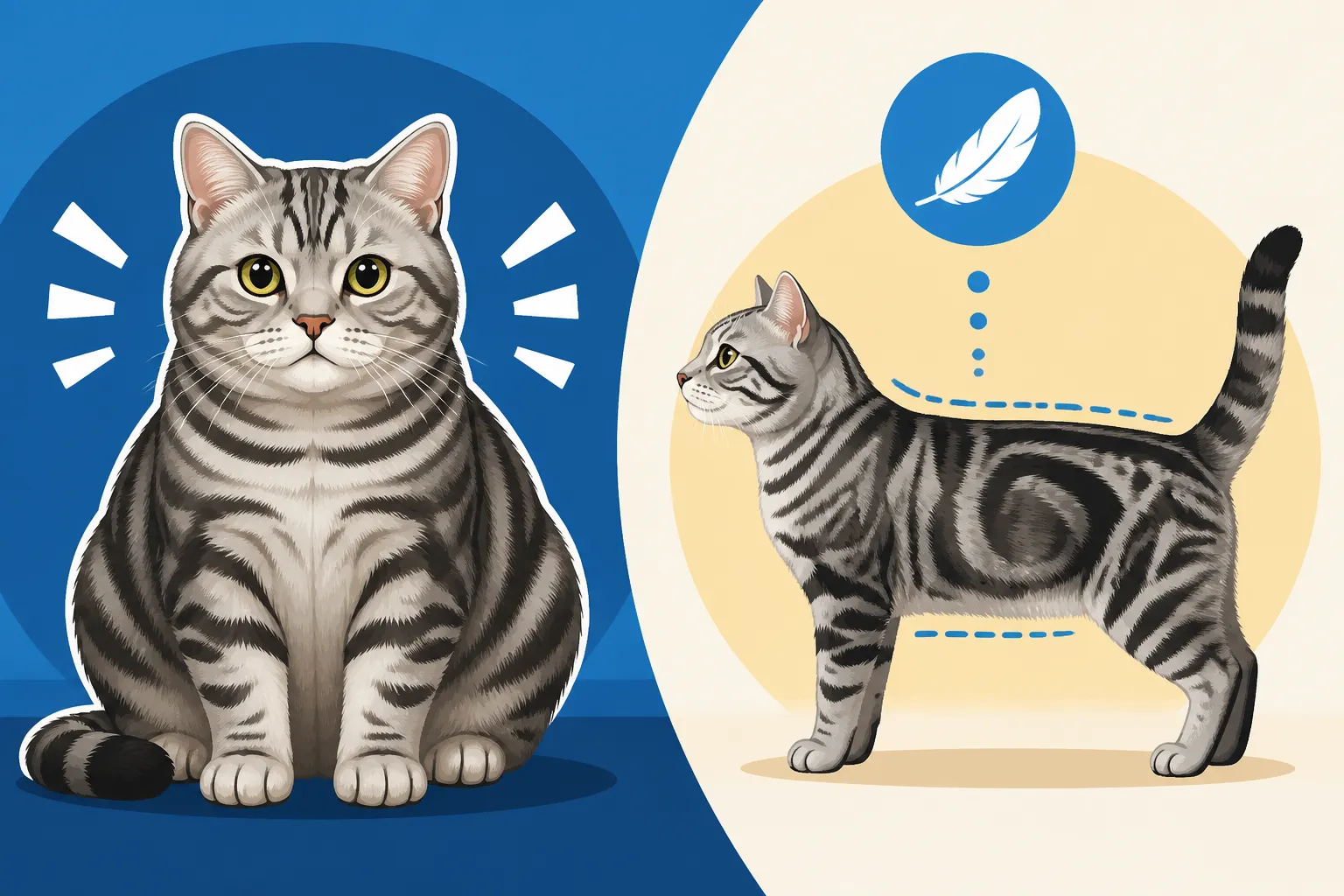
This "square" appearance can be a major contributor to the illusion of being overweight. A cat with a long, slender body might weigh the same, but appear much leaner due to its stretched-out proportions. An American Shorthair, with its impressive breadth and depth, fills out its skin differently. Imagine a compact, muscular athlete versus a tall, slender one; both can be incredibly fit, but their silhouettes are vastly different. When you run your hands over a healthy American Shorthair, you'll feel the solid musculature beneath the coat, not a flabby softness.
Decoding the Illusion of Weight
The American Shorthair's appearance can be deceiving, leading many owners to mistakenly believe their cat is heavier than it actually is. It's a testament to their robust genetics and how a working heritage manifests visually. Several key physical traits combine to create this "looks heavier" effect, and understanding them is crucial for accurate body condition assessment.
Muscle vs. Fat: A Key Distinction
One of the primary reasons an American Shorthair appears more substantial is their significant muscle mass. These cats are naturally well-muscled, a direct inheritance from their hunting ancestors. Muscle is denser than fat, meaning a muscular cat will often weigh more for its size than a less muscular cat with the same body fat percentage. When you pick up a healthy American Shorthair, you're not just lifting bone and fluff; you're feeling the solid, compact power of a feline athlete.
This muscle density is often misidentified as excess weight. A cat with a significant layer of fat might feel soft and squishy, particularly around the belly and flanks. A well-conditioned American Shorthair, however, will feel firm and solid. You should be able to feel the underlying musculature contouring their body, especially along their back and hindquarters. It's a difference you can feel as well as see, and it’s a vital aspect to consider when evaluating their condition.
The Impact of a Dense, Weather-Resistant Coat
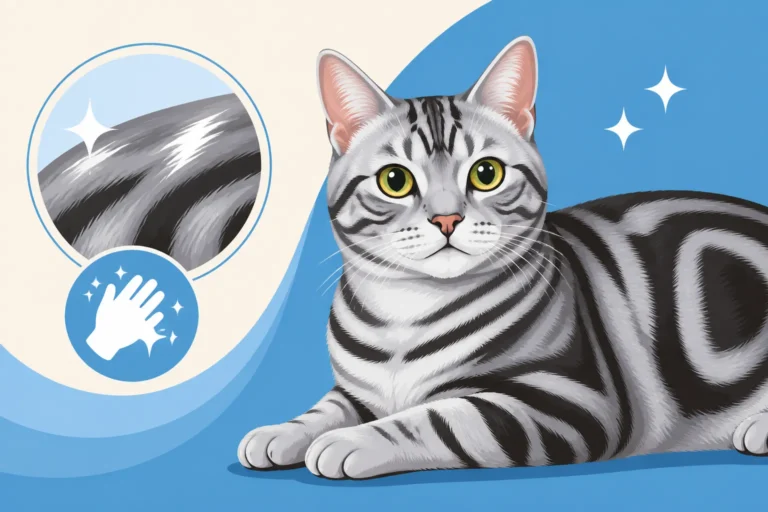
Another significant factor contributing to the perception of extra weight is the American Shorthair's coat. They possess a short, dense, and firm coat, designed to protect them from the elements during their outdoor working days. The American Shorthair's Coat Was Built for Weather, Not a Judge outlines how functional this coat truly is. This coat lies close to the body but still adds a noticeable layer of volume, especially during the colder months when it thickens.
Imagine putting on a thick wool sweater; it adds bulk, making you look larger, even if your underlying body mass hasn't changed. The same principle applies to your American Shorthair. Their coat, while short, is incredibly plush and contributes to their overall girth. It can obscure the subtle tuck of a healthy waistline and round out their appearance. When you gently part their fur, you should still be able to discern the contours of their body, which might surprise you given how solid they look from a distance.
Broad Chest and Stout Legs
The breed standard for American Shorthairs calls for a broad chest and strong, medium-length legs. These features are essential for a working cat, providing stability, power for jumping, and resilience against physical demands. However, these very desirable traits also contribute to the illusion of being heavier. A broad chest, especially when combined with a dense coat, can make the cat look wider and more barrel-chested than if they had a narrower, more V-shaped torso.
Their stout legs, while perfectly proportionate to their body, don't create the same lean, elongated lines seen in some other breeds. Instead, they provide a powerful, grounded stance. When these elements – the broad chest, muscular build, and thick coat – are combined, they create a visual effect of greater mass. It’s like looking at a powerlifter versus a marathon runner; both are fit, but one has a visibly larger, more dense physique, even if their body fat percentages are similar.
Assessing Your American Shorthair's True Body Condition
Accurately determining if your American Shorthair is at a healthy weight means looking beyond the surface. Their unique build necessitates a hands-on approach, combined with regular monitoring. You can’t just go by how they look in a picture or from across the room. It’s about feeling their body, understanding their natural frame, and tracking changes over time.
The Rib and Waistline Test
The most reliable way to assess your American Shorthair's body condition at home is through a simple tactile examination, often referred to as the "rib and waistline test." First, gently run your hands along your cat's sides, just behind their front legs. You should be able to easily feel their ribs without pressing hard. They shouldn't be visibly prominent like a washboard, but you should be able to count them without a thick layer of fat obscuring them. If you can't feel the ribs at all, it's a red flag for being overweight.
Next, observe your cat from above and from the side. When viewed from above, a healthy American Shorthair should have a discernible waistline behind their ribs, though it won't be as dramatic as in some svelter breeds. It should appear as a gentle indentation, not a straight line from ribs to hips, nor bulging outwards. From the side, their abdomen should tuck up slightly, rather than sagging or appearing round. How to Score a Square Built American Shorthair's Body Condition provides more detail on this method, which is a fantastic tool to use between vet visits. Remember, a cat’s true shape is often hidden under its fur, so touch is key!
Why Regular Weigh-Ins Matter
While the visual and tactile tests are excellent for at-home assessment, regular weigh-ins are invaluable for tracking your American Shorthair's weight trends. Even small changes in weight can indicate underlying health issues or creeping obesity, especially as they get older. Use a reliable digital pet scale at home, or simply weigh yourself, then weigh yourself holding your cat, and subtract the difference. It's often easier than trying to get them to sit still on a tiny scale!
Tracking their weight monthly or bi-monthly can help you catch issues early. For instance, an unexpected weight gain could signal you need to adjust their portions, or an unexplained weight loss could be a sign of a health problem that warrants a vet visit. It's not about fixating on a number, but observing the pattern over time. Your vet will also perform regular weigh-ins during their annual check-ups, which are vital for a comprehensive health assessment. They can provide professional guidance on What an American Shorthair Weighs at One and How Much Is Left and throughout their life.
Comparing Your Cat to the Breed Standard
Understanding the official breed standard for the American Shorthair can also offer insights into what a healthy, well-proportioned cat of this type should look like. While pet cats aren't expected to be show ring perfect, the standard describes the ideal physique, which is a sturdy, well-balanced cat. It emphasizes muscle, strong bone structure, and proportionate features, all contributing to their powerful yet agile build. What an American Shorthair Looks Like by the Standard can be a great reference.
Breed standards help differentiate a robust, healthy American Shorthair from one that is genuinely overweight. For example, the standard often highlights a broad chest and powerful legs, characteristics that, as we've discussed, can make them look heavier. Knowing these are desirable, inherent traits helps you reframe your perception. If your cat meets the tactile and visual tests for healthy body condition, and their weight is stable, their "stocky" appearance is likely just them being a perfect example of their breed!
Managing a Healthy Weight for Your American Shorthair
Maintaining an ideal weight for your American Shorthair isn't just about aesthetics; it's crucial for their long-term health and vitality. Despite their robust appearance, they can be susceptible to weight gain, especially as indoor cats whose natural hunting instincts are no longer fulfilled by actual prey. Proactive management of diet and activity is key to ensuring they live a long, happy, and healthy life.
Tailoring Diet to an Active Hunter's Legacy
The American Shorthair's lineage as a working cat means they evolved on a diet that was primarily protein-rich from their kills. While they no longer need to hunt for every meal, their nutritional needs still reflect this heritage. A high-quality diet that is rich in animal protein and moderate in fats, with appropriate carbohydrate levels, is generally recommended. It helps support their muscle mass without contributing to excess fat.
It's tempting to free-feed, especially with easygoing breeds, but for an American Shorthair prone to looking heavier, portion control is vital. How Many Calories a Working Framed American Shorthair Needs a Day can provide a good starting point for dietary planning. Consult with your veterinarian to determine the precise caloric intake suitable for your cat's age, activity level, and current body condition. Many excellent food options are available on platforms like Chewy, offering specific formulations for indoor cats or weight management. Consider fresh, portion-controlled meals if you're interested in an option that caters to a cat's carnivorous needs.
Encouraging Movement and Play
An indoor American Shorthair still possesses that innate drive to hunt and explore. Without opportunities for physical and mental stimulation, they can become sedentary, making weight management an uphill battle. Incorporate regular, interactive play sessions into their daily routine to mimic the hunt. Wand toys that allow for stalking, pouncing, and a "kill" are particularly effective. These activities burn calories and keep their minds sharp.
Puzzle feeders are another fantastic way to engage their natural foraging instincts while slowing down mealtime. Instead of simply eating from a bowl, your cat has to "work" for its food, which can prevent overeating and provide mental enrichment. Look for various puzzle feeders on Amazon that can be filled with their regular kibble. Climbing structures, cat trees, and shelves also provide vertical space for exploration and exercise, appealing to their territorial nature. If your American Shorthair has started to slow down, pay attention to signs like Why an American Shorthair Stops Jumping to the Counter, as it could indicate joint discomfort needing veterinary attention.
A Quick Glance: Perceived vs. Actual Weight in American Shorthairs
To help clarify the common misconceptions, here's a table summarizing how some of their physical traits can be misinterpreted:
| Perceived Heavy Trait | Actual Healthy Trait for American Shorthairs | What to Look For (Healthy) |
|---|---|---|
| Broad Chest | Strong, muscular frame for agility and power | Ribs easily felt (not seen) without a thick fat layer |
| Dense, Plush Coat | Weather protection, contributes to sturdy appearance | Coat feels firm over muscle, not soft or squishy |
| Substantial Bone Structure | Inherited robustness, foundational strength | Overall solid feel, no visible bones but firm underlying structure |
| "Stocky" Overall Appearance | Balanced, powerful physique of a working cat | Recognizable waist tuck from above, abdomen tucks up from side |
| Appears "Big-Boned" | Dense muscle and bone for longevity and function | Active, agile movement, good muscle tone |
Remember, your American Shorthair's robust appearance is often a sign of their healthy, well-developed physique, not necessarily excess weight. Trust your hands, your vet, and their behavior more than just your eyes!
Disclaimer
This article is for general informational purposes only and does not constitute professional advice. Laws, prices and regulations vary by location and change over time. Consult a qualified professional for guidance on your specific situation.