How the American Shorthair Standard Reads Today
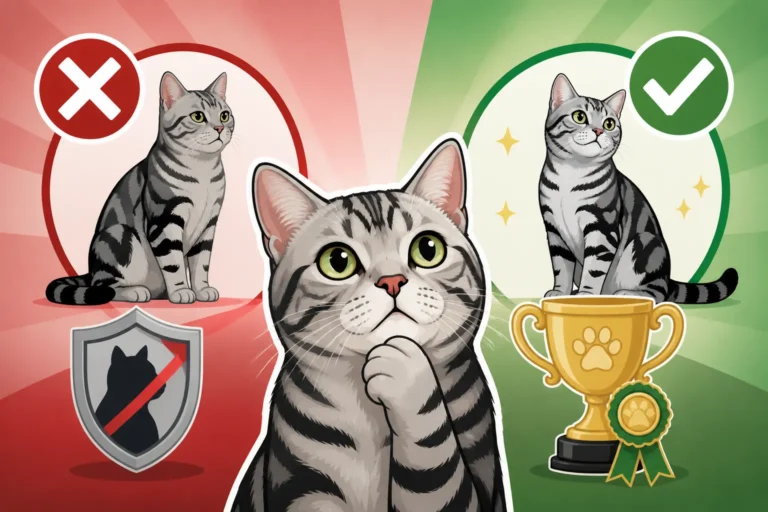
A cat can look like the classic American Shorthair in a photograph and still not meet a show standard—or even be a registered American Shorthair. The standard is a written description of the breed’s ideal structure, coat, and expression, not a checklist that proves ancestry. This guide explains how to read that description and what judges are looking for.
What the American Shorthair standard is for
A description of an ideal, not a guarantee about every cat
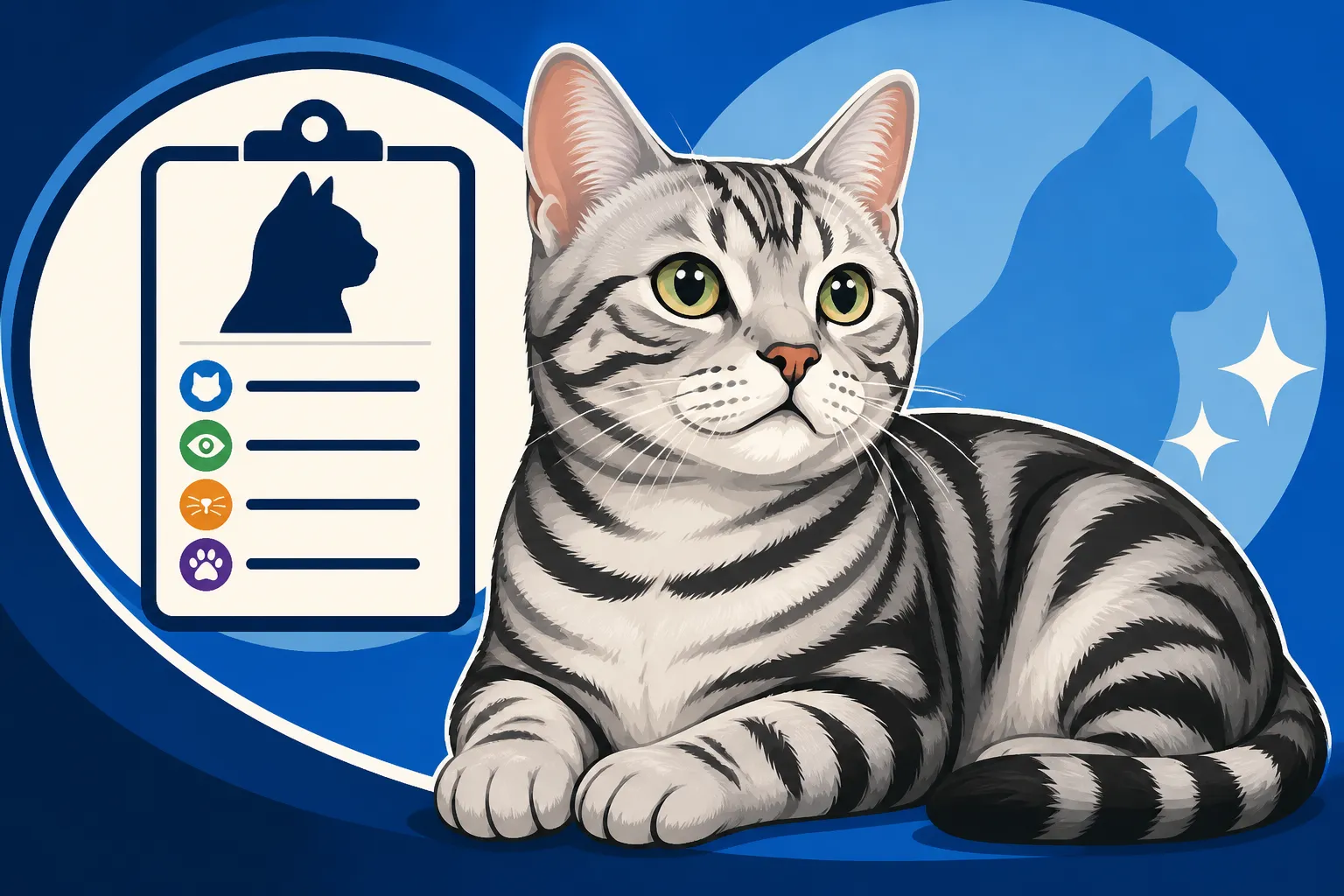
A breed standard is a shared description of the traits a registry wants breeders and judges to preserve. For the American Shorthair, it emphasizes a sturdy, balanced cat with the strength and useful proportions associated with the breed’s working history. It also describes details such as head shape, eye placement, coat texture, and acceptable colors.
The word ideal matters. A standard does not mean every registered cat will match every feature perfectly. Cats are individuals, and even kittens from the same litter can differ in build, facial expression, coat pattern, and size. A pet-quality cat may be a well-loved, healthy American Shorthair while having a feature that would make it less competitive in a show ring.
The standard is also not a diagnostic tool or a substitute for pedigree records. A sturdy tabby at a shelter may resemble the breed, but appearance alone cannot establish that it is a registered American Shorthair. For a closer look at that distinction, see How an American Shorthair Differs From a Domestic Shorthair.
There is more than one registry context
When someone says “the American Shorthair standard,” it helps to ask which cat registry they mean. Breed standards are written by associations, and their wording, organization, and show rules may differ. They generally describe a recognizable shared type, but a detail or judging emphasis in one registry’s document should not automatically be treated as a universal rule.
If you are considering showing a cat, use the standard and show rules of the organization where you plan to compete. A breeder’s explanation can help translate formal language into what you can actually see on a cat, but the registry’s own document is the reference for judging. This is especially useful when a description uses terms like “moderate,” “balanced,” or “well developed,” which are meaningful in context but not precise measurements.
It is also useful to separate three questions that can get tangled together: Does the cat resemble the breed? Is it registered as an American Shorthair? And how closely does it match the show ideal? The standard speaks most directly to the last question. For a broader overview of the written description, read What the American Shorthair Standard Asks For.
How to read the body and head description
A sturdy outline without exaggeration
The American Shorthair is described as a medium-to-large cat with a strong, balanced body. The overall impression should be solid and muscular, not delicate, narrow, or overly elongated. The chest is broad, the shoulders and hindquarters are well developed, and the body is often described as slightly longer than it is tall. That gives the cat a substantial outline without making it look low-slung or excessively cobby.
The legs should suit that body: sturdy and of moderate length, with firm, rounded paws. The tail is in proportion to the cat, substantial at the base, and tapering toward a rounded end. In a good overall outline, the parts look as if they belong together. A broad chest on a cat with very fine legs, for example, would not create the same balanced impression as a strong frame supported by appropriately sturdy limbs.
“Square-built” is often used informally to describe the breed’s substantial appearance, but it does not mean every American Shorthair should look like a compact block. Judges assess the whole cat, not a single silhouette feature. A cat can be muscular and broad while still showing proportion, mobility, and a natural outline. For more on that overall frame, see Why an American Shorthair Is Built Square.
| Standard feature | What the description means in practice | What it does not mean |
|---|---|---|
| Strong, muscular body | The cat looks sturdy and capable, with a balanced frame | The cat should be overweight or cumbersome |
| Broad chest and developed shoulders | The front of the body has substance and strength | The chest should overwhelm the rest of the body |
| Medium-length legs | The legs are in proportion to the body | The cat should look either short-legged or unusually tall |
| Firm, rounded paws | The feet appear substantial and suited to the frame | The paws should look delicate or out of proportion |
| Balanced tail | The tail fits the body and tapers naturally | The tail alone determines whether the cat is well built |
A rounded head with clear, balanced features
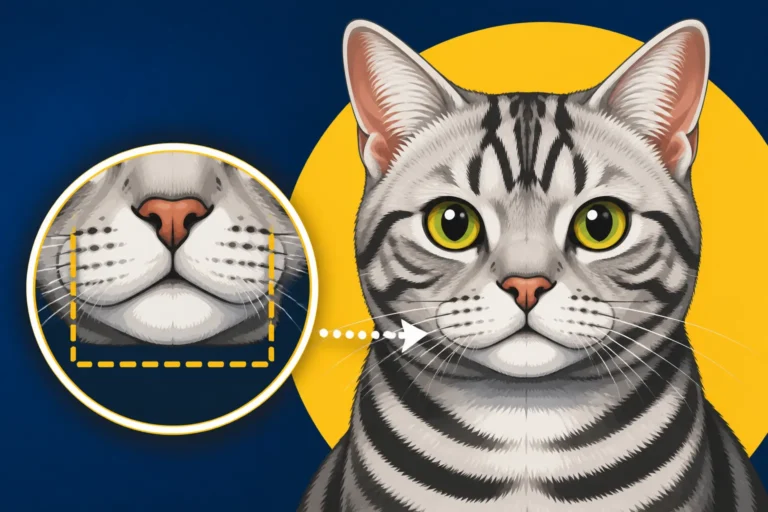
The head description generally calls for a broad, rounded appearance, full cheeks, and a muzzle that looks square rather than pointed. The nose should be in proportion, and the chin should be firm. These features contribute to the breed’s characteristic expression: sturdy and alert, without the extreme flatness or exaggerated shape associated with some other types.
The ears are usually described as medium in size, set apart, and rounded at the tips. The eyes should be large and open, with a shape and placement that fit the broad head. The standard’s descriptions of eyes and ears are not invitations to assess each feature in isolation. Placement, proportion, and the overall expression matter alongside size and shape.
This is where close-up photographs can be misleading. Camera angle, lighting, a cat’s age, and even a momentary expression can make the head appear narrower, rounder, or more pronounced than it is. A standard is best understood by looking at the cat as a whole and reading the head features as part of that balanced picture. For a more focused explanation of the head, see What Shape an American Shorthair's Head Should Be.
Coat, colors, and the details people notice first
The coat is short, dense, and practical
The American Shorthair’s coat is short and dense, with a texture often described as firm or hard rather than soft and plush. That wording helps distinguish the breed’s practical coat from a coat that is prized mainly for a luxurious, velvety feel. The coat should suit the cat’s sturdy type and look healthy and even.
“Shorthaired” does not mean “no grooming.” Most American Shorthairs can manage much of their own coat care, but seasonal shedding can still leave plenty of loose hair on furniture and clothing. Regular brushing can help remove shed hair and give you a chance to check the skin. A basic comb or brush is usually a more realistic need than elaborate salon styling; if you are comparing simple grooming tools, Chewy is one retailer where owners may browse options alongside local pet shops.
The standard describes how the coat should look and feel in the show context. It is not a reason to shave a cat or try to alter its coat texture. A cat’s comfort and health come first, and any skin or coat concern—such as persistent dandruff, hair loss, or itching—is better discussed with a veterinarian than treated as a cosmetic issue.
Color and pattern are only part of the picture
American Shorthairs come in a range of colors and patterns, with the silver tabby being one of the best-known. The standard and show rules determine which colors and patterns are accepted in a particular registry. Because those rules can be registry-specific, check the relevant association’s color list rather than relying on a general online description or a seller’s claim.
Even a striking pattern does not replace the rest of the standard. A beautifully marked cat still has to be assessed for structure, head, coat, condition, and overall balance. Conversely, a cat whose markings are less dramatic may still be a registered American Shorthair and a valued companion, even if it is not the strongest show prospect. Read Which Colors an American Shorthair Comes In for more on the range of recognized appearances.
For a pet owner, color is usually a matter of preference and identification rather than a care requirement. A silver tabby and a brown tabby do not need different basic grooming simply because their markings differ. If browsing supplies for a new cat, Chewy may be useful for comparing everyday items such as brushes or litter boxes, but color should not be treated as evidence of pedigree or health.
What the standard means for pet owners and show prospects
Show faults are not the same as health problems
A judge compares a cat with the written ideal and may note features that fall short of it. These are often called faults or deviations. Depending on the registry and the specific standard, a feature may affect how the cat is scored or ranked. That does not automatically mean the cat is unhealthy, poorly cared for, or unsuitable as a companion.
The distinction matters because show terminology can sound harsher than it is. A cat may have a coat pattern that is not preferred, a proportion that is less ideal, or a feature that is not as clearly expressed as the standard describes. Those observations concern conformity to a breed description. They do not replace a veterinary examination, and they do not tell an owner whether the cat is comfortable or thriving.
Standards also discourage extremes that undermine the breed’s intended type. The goal is not to create the biggest possible cat, the roundest possible head, or the most exaggerated feature. A sound, balanced animal is more important than pushing one trait beyond proportion. To understand how judges discuss departures from the ideal, see Which Faults Judges Mark on an American Shorthair.
Choosing between a show goal and a good companion
If you hope to show an American Shorthair, ask the breeder which registry the kitten is registered with, what the relevant standard emphasizes, and how the breeder evaluates the kitten’s prospects. A thoughtful breeder should be able to explain the difference between a kitten with promising show qualities and one being placed primarily as a companion. No kitten’s future show success can be guaranteed from a few photos.
A prospective pet owner can use the standard differently. It can help explain why the breed has a sturdy outline, short dense coat, and broad facial features, but it should not become a rigid test for whether a cat is “good enough.” Temperament, health, fit with your household, and responsible placement matter far more in daily life than whether a cat perfectly matches a judge’s ideal.
If you are wondering whether a companion cat can participate in a show, rules depend on the event and registry, and not every competition has the same entry categories. The standard remains relevant because it describes the target type, but eligibility and judging are separate questions. Whether a Pet American Shorthair Can Be Shown explores that distinction. For the practical experience of presentation and judging, see How a Show American Shorthair Is Handled in the Ring.
When the standard’s coat and build prompt everyday-care questions, keep the response simple: routine brushing, appropriate nutrition, exercise, and regular veterinary care. A brush or nail clipper can be found at many pet retailers, including Chewy, but no product can make a cat conform to a breed standard. The standard is best used as a guide to breed type—not as a shopping list, a health certificate, or a measure of a cat’s worth as a companion.
Disclaimer
This article is for general informational purposes only and does not constitute professional advice. Laws, prices and regulations vary by location and change over time. Consult a qualified professional for guidance on your specific situation.