Whether TICA Recognizes the American Shorthair
TICA recognizes the American Shorthair as a pedigree breed, but that does not automatically make every shorthaired cat with a similar build or coat pattern a registered American Shorthair. The distinction matters if you are checking a kitten’s papers, considering a show, or trying to understand what a registry’s recognition actually proves. Here’s how breed recognition and individual registration differ.
Does TICA recognize the American Shorthair
What recognition means
The International Cat Association, commonly known as TICA, recognizes the American Shorthair as a breed. It has a breed standard describing the traits expected in a show-quality American Shorthair, and cats that meet the relevant registration and show requirements may compete in the breed’s class.
That recognition establishes an official breed category within TICA. It gives breeders and judges a shared framework for describing and evaluating the breed, including its overall structure, coat, head shape, and other characteristics. It does not mean every cat that resembles the standard automatically qualifies as a pedigree American Shorthair.
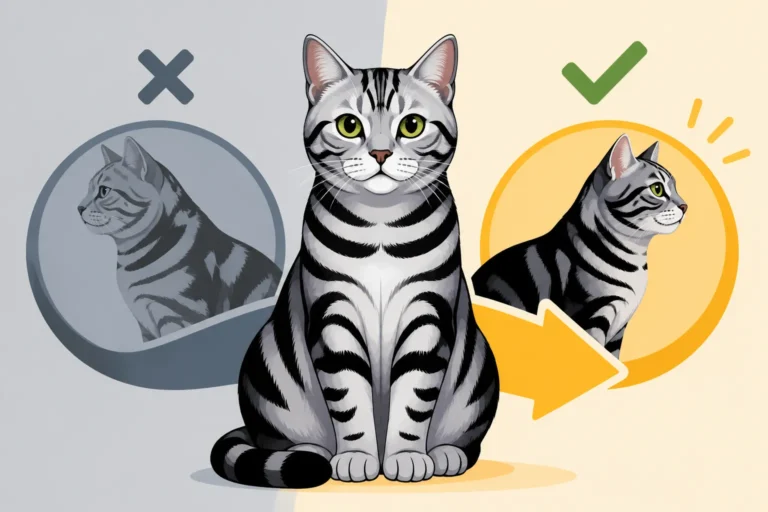
It can help to think of recognition as a registry’s decision to formally define and accept a breed. Registration, meanwhile, concerns an individual cat and its documented background. A cat may look very much like an American Shorthair and still lack the records needed to be registered as one.
Recognition is not the same as certification for an individual cat
If a breeder says a kitten is an American Shorthair, ask what documentation supports that description. A TICA-recognized breed name by itself does not verify a particular kitten’s ancestry. The kitten’s registration documents and pedigree, along with the breeder’s records, are what connect that individual cat to a recognized breed.
This distinction is especially useful when a listing uses phrases such as “American Shorthair type,” “American Shorthair mix,” or “looks like an American Shorthair.” Those descriptions may refer to appearance, rather than a documented pedigree. A shelter cat with a silver tabby coat and a sturdy frame can be lovely and healthy without being a registered American Shorthair.
If you are comparing a pedigree cat with a domestic shorthair, How an American Shorthair Differs From a Domestic Shorthair explains why appearance alone cannot settle the question. The breed’s looks are only part of its identity; reliable lineage records matter too.
How TICA recognition relates to registration and pedigrees
What to look for in a cat’s records
For a kitten being sold as a registered American Shorthair, ask which registry issued the paperwork and what it actually says. Depending on the breeder and registry, documents may show the cat’s registered name, identifying details, parentage, and registration information. A pedigree traces ancestry across generations, while a registration document records the individual cat with the registry.
Read the documents rather than relying on a verbal assurance that “the parents are registered.” Ask whether the kitten itself is registered, whether registration is still pending, and whether the breeder will provide the paperwork under the terms of the sale. If the answer is unclear, request clarification before paying a deposit or making travel arrangements.
A DNA test may provide information about genetic ancestry, but it should not be treated as a substitute for registry records. If you are trying to establish whether a cat can be registered, the registry’s rules and the cat’s documented lineage are more relevant than a visual resemblance or a general breed estimate. For a deeper look at the role of paperwork, see Whether Papers Are the Only Difference an American Shorthair Has.
TICA and other registries
TICA is not the only organization involved in pedigreed cats. Different registries maintain their own breed standards, registration policies, and show systems. Recognition by one registry does not automatically mean that another registry uses identical rules or awards the same show status.
The American Shorthair is also recognized by other cat registries, including the Cat Fanciers’ Association. If a breeder registers kittens through a particular organization, check that registry’s own requirements rather than assuming all organizations handle transfers, pedigrees, or show eligibility in precisely the same way. A useful starting point is Which Registries Recognize the American Shorthair.
| Question | What it tells you | What it does not prove |
|---|---|---|
| Does TICA recognize the American Shorthair? | TICA has an official breed category and standard for the breed | That a specific cat is registered |
| Does the cat have TICA registration paperwork? | The individual cat has been recorded under TICA’s rules | That every other registry will accept the same record automatically |
| Does the cat have a pedigree? | Its documented ancestry is available for review | That it meets every show-quality preference |
| Does the cat look like an American Shorthair? | Its appearance may resemble the breed | That it has a documented American Shorthair pedigree |
If you are choosing a breeder, ask for records before you commit. You can also compare the documents with the guidance in Whether an American Shorthair Kitten Comes With Papers and Whether an American Shorthair Kitten Comes With Certificates. The point is not to collect paperwork for its own sake; it is to understand what is documented and what remains a claim.
Showing an American Shorthair through TICA
Breed classes and household pet classes
A TICA-recognized breed can be shown under the rules that apply to its category, but a cat’s eligibility depends on its own registration and documentation. A pedigreed American Shorthair may be considered for the appropriate breed competition if it meets the registry’s entry requirements. A cat without the necessary pedigree records may instead be eligible for a household pet class, depending on the show’s rules.
That distinction can be disappointing if you have a cat that looks almost exactly like the breed standard. But show categories are based on more than appearance. Breed classes assess cats within a documented breed framework, while household pet classes provide a way for many non-pedigreed cats to participate without being presented as registered members of a breed.
Before entering a show, contact the organizer or check the applicable TICA rules. Confirm what records are required, how the cat should be entered, and whether there are additional conditions for the class you have in mind. If a cat is registered with another organization, ask whether that registration is accepted for the intended entry rather than assuming it will transfer automatically.
What judges compare
A breed standard is a guide to the desired characteristics of a breed, not a promise that every registered cat will have identical features. Judges compare cats against the standard and against other eligible cats in the show. A registration record establishes the cat’s documented status; it does not guarantee a title or prove that the cat is an ideal example of the standard.
For the American Shorthair, the standard concerns the cat as a whole rather than a single feature such as a silver tabby coat. A cat can have a striking pattern and still differ from the standard in other ways. Conversely, a pet-quality registered cat can be a wonderful companion even if it is not a strong show prospect. What the American Shorthair Standard Asks For offers more background on the traits the breed standard describes.
If you are preparing for a show, focus first on the practical basics: a comfortable carrier, a calm approach to handling, and any grooming tools appropriate for your cat’s coat. Some owners use retailers such as Chewy to find ordinary supplies like combs or travel items, but check that anything you buy is suitable for your cat and the event. A new grooming tool is not a substitute for practicing gentle handling well ahead of show day.
How to verify a claim about TICA recognition
Questions to ask a breeder or seller
When a breeder advertises TICA-registered American Shorthair kittens, ask direct, simple questions. Is the kitten already registered, or will the paperwork be completed later? Which registry issued the documents? Will you receive the pedigree or registration paperwork, and when? If the kitten is being sold as a pet rather than for breeding or showing, ask whether any terms in the contract affect how the registration is handled.
A responsible conversation should leave you with a clear picture of what the breeder can document. If a seller uses “TICA recognized” to suggest that a kitten is automatically registered, ask them to explain the difference. Recognition applies to the breed within the registry; registration applies to an individual cat. A seller who understands that distinction should be able to describe the kitten’s records without relying on vague assurances.
You can also ask to see information about the kitten’s parents and the breeder’s registration practices. Keep copies of documents and contracts, and make sure the registered name and identifying details match the cat you are taking home. If you are buying supplies while preparing for a new kitten, Chewy is one example of a retailer where owners may look for basics such as litter or a carrier; the breeder should still be your source for the kitten’s specific records and care history.
If you are adopting a cat that resembles the breed
An adopted cat does not need pedigree papers to be a cherished member of your household. If a shelter describes a cat as an American Shorthair type, treat that as a description of appearance unless it can provide pedigree documentation. Many domestic shorthairs share the sturdy build, short coat, and familiar tabby patterns people associate with the breed.
If you want to enter an adopted cat in a show, ask the show organizer about household pet eligibility. That route can allow a non-pedigreed cat to participate without mislabeling it as a registered American Shorthair. For more on the distinction, Whether an Unregistered American Shorthair Can Be Shown at All is a useful companion topic.
A cat’s registration status does not determine whether it will be affectionate, healthy, playful, or a good fit for your home. Those questions are better explored through the cat’s individual temperament, veterinary history, and daily needs. You can use Chewy or another pet retailer for routine supplies, but neither a product listing nor a breed-like appearance can replace documentation when you are trying to verify pedigree.
TICA does recognize the American Shorthair as a breed. The important next step is separating that broad recognition from the status of a particular cat: check the individual paperwork, understand the registry named on it, and ask how the records support the seller’s description. Whether you are hoping to show a cat or simply want to know what you are bringing home, clear documentation makes the answer much less confusing.
Disclaimer
This article is for general informational purposes only and does not constitute professional advice. Laws, prices and regulations vary by location and change over time. Consult a qualified professional for guidance on your specific situation.