What a Smoke American Shorthair Is
A smoke American Shorthair can look like a solid-colored cat until it moves, parts its coat, or catches the light. The surprise is in the roots: beneath darker-tipped hairs is a much paler undercoat. This guide explains what “smoke” means, how it differs from tabby and silver coloring, and what the coat can—and cannot—tell you about a cat’s breed.
What smoke means in an American Shorthair
A pale undercoat beneath darker hair
“Smoke” describes a coat pattern, not a separate American Shorthair breed. A smoke cat has a pale, often silvery-white base to its hairs, with darker color over much of the outer portion. When the coat lies flat, that darker tipping can make the cat look almost solid. When the cat stretches, walks, or has its fur gently parted, the pale roots become easier to see.
That contrast is the defining visual clue. Imagine a black cat whose coat looks dark from across the room, but shows a bright, pale base when the fur is lifted against its natural direction. The difference can be especially striking on the neck, sides, or belly, where movement or a change in coat direction exposes more of the undercoat.
Smoke shades can include black smoke and other color variations, such as blue smoke. The visible color depends on the darker tips; the pale base is what gives the coat its smoky, layered appearance. The exact shade and contrast can vary between cats, so one smoke American Shorthair may look much darker than another.
Why smoke is not the same as a silver tabby
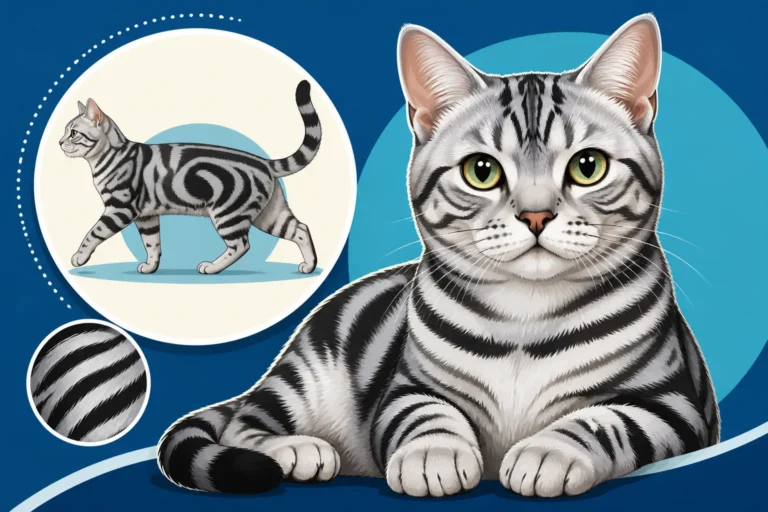
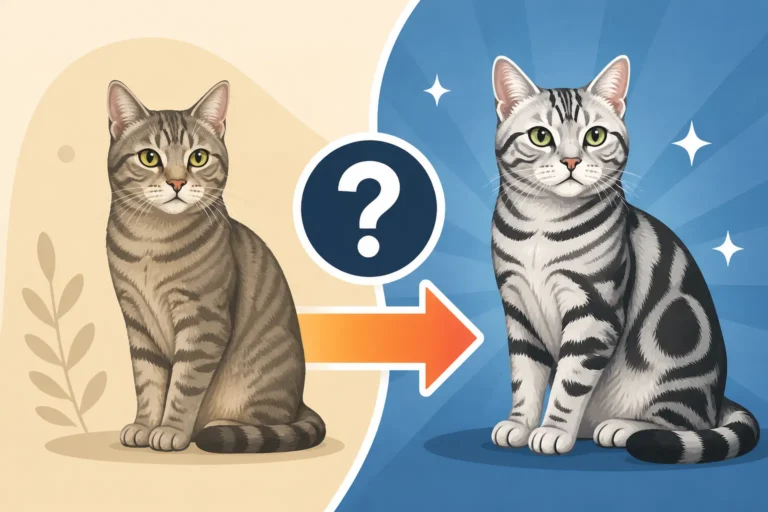
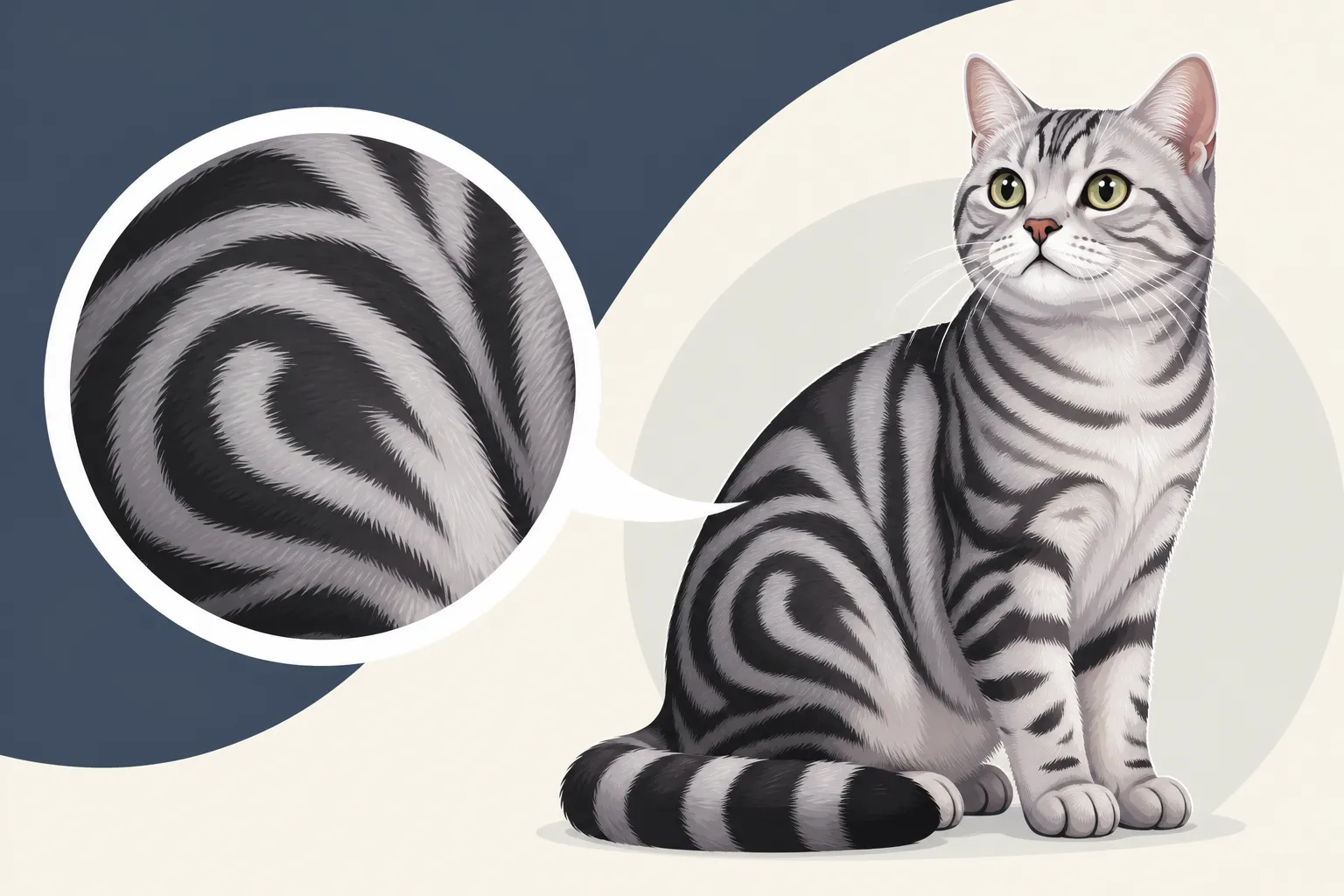
Smoke and silver tabby coats can both show pale areas and dark markings, so they are easy to confuse in photographs. The practical distinction is that a smoke coat generally appears solid or nearly solid at a glance, while a silver tabby has visible tabby markings—such as stripes, swirls, or spots—against a lighter background.
Look at the pattern, not just the brightness. A silver tabby’s dark markings form recognizable shapes across the body, often including facial lines and body stripes. A smoke cat’s dark appearance comes chiefly from the colored tips of the hairs. The pale base may flash into view, but it does not create the same clear tabby design.
| Coat appearance | What you are likely to notice | Helpful clue |
|---|---|---|
| Smoke | A mostly solid-looking outer coat with pale roots | Parting the fur reveals a lighter base |
| Silver tabby | Dark stripes, swirls, or spots over a pale ground | Markings remain visible as a pattern |
| Solid color | A more uniform color from root toward tip | There is not a strong pale undercoat beneath dark tips |
If you are comparing a smoke cat with a silver tabby, check several areas rather than relying on one photo. Lighting, camera exposure, and the direction the fur lies can all change how a coat looks. What a Silver Tabby American Shorthair Is explains the tabby pattern in more detail, while Which Patterns an American Shorthair Comes In covers the wider range of patterns.
How to recognize a smoke coat
Check the coat in natural light
Indoor lighting can make a smoke coat look flat or uniformly dark. If possible, observe the cat in soft daylight and look at the coat from more than one angle. A pale undercoat may show around the ruff, sides, belly, or wherever the fur separates as the cat moves. A close-up can help, but the overall pattern matters too: the cat should not have obvious tabby stripes or swirls if you are trying to identify a smoke appearance.
You do not need to pull or tug at the hair. Simply smooth a small section gently in the opposite direction of growth, or watch what happens when the cat stretches. If a pale base appears beneath colored tips, that supports a smoke description. If the coat has strong, repeated markings, it may be a tabby pattern or another coat type instead.
Photos can be misleading. A dark coat photographed in shadow may seem black, while bright sunlight can make the pale roots look unusually white. Filters and phone-camera processing can also alter color. When assessing a kitten or a cat whose coat is unfamiliar, compare what you see in person with several clear images taken in ordinary light.
Remember that coat color does not prove breed
A smoke coat by itself does not establish that a cat is an American Shorthair. Domestic shorthairs and cats of other backgrounds can have similar coloring. The American Shorthair is a pedigreed breed with a defined history and standard; a cat’s appearance alone cannot confirm its ancestry. How an American Shorthair Differs From a Domestic Shorthair explains why the two labels are not interchangeable.
If you are considering a pedigreed cat, look for reliable documentation and ask the breeder which registry the cat is registered with. A casual description such as “American Shorthair type” may refer to appearance rather than confirmed pedigree. Whether Papers Are the Only Proof an American Shorthair Has and Whether a DNA Test Tells an American Shorthair From a Moggy provide useful context for evaluating those claims.
For an adopted cat, missing pedigree paperwork does not make the cat any less deserving of a good home. It simply means you may not be able to verify a specific breed. In that situation, describe the cat’s visible features accurately—perhaps as a smoke-colored domestic shorthair—rather than treating coat color as proof of breed.
Smoke coat color and everyday care
The coat does not usually need special grooming
Smoke coloring does not, by itself, call for a special grooming routine. American Shorthairs have short coats, and regular, gentle brushing can help remove loose hair and give you a chance to notice changes in the skin or coat. How often a cat needs brushing depends on its shedding, household conditions, and tolerance for grooming. Seasonal shedding may make brushing more useful for a while.
Use a tool that feels comfortable on the cat and avoid pressing hard. A short session while the cat is relaxed is often easier than trying to brush the whole body at once. If you shop for a comb or brush, listings at Chewy can be a place to compare tool types, but choose based on your cat’s coat and comfort rather than the color pattern.
The smoke effect can make it tempting to brush aggressively in hopes of making the pale undercoat more visible. That is not necessary. Grooming should remove loose hair and keep the coat comfortable, not change its natural appearance. If the coat becomes dull, greasy, patchy, or unusually thin, or if the cat seems itchy, ask a veterinarian rather than trying to solve the problem with more brushing or a new shampoo.
Keep an eye on the whole cat, not just its color
Coat color is not a reliable way to judge a cat’s overall health. A glossy coat can be reassuring, but it cannot replace routine veterinary care, a suitable diet, or attention to changes in appetite, weight, behavior, and grooming. Smoke coloring does not mean a cat has a particular health problem, nor does it guarantee that the cat is free of one.
A simple home routine helps you notice changes early. While petting your cat, check for new lumps, scabs, areas of hair loss, or sensitivity. Watch whether the cat is grooming as usual and whether the coat is becoming difficult to maintain. If you use supplies from Chewy, such as a brush or nail trimmer, introduce them gradually and stop if your cat becomes distressed. The aim is calm, regular handling—not a perfect-looking coat.
If a smoke-colored cat is a kitten, keep in mind that its appearance may change as the coat develops. The contrast between the roots and tips can become easier to see with maturity, and lighting can make the same coat appear different from one day to the next. Avoid making a firm breed or color identification from a single kitten photo. When an American Shorthair Kitten's Adult Coat Arrives discusses coat development, while What an American Shorthair Looks Like by the Standard describes the breed’s general appearance.
Choosing and describing a smoke American Shorthair
Questions to ask when meeting a cat
If you are meeting a cat advertised as a smoke American Shorthair, ask what the seller means by “smoke” and what supports the American Shorthair label. A clear answer should distinguish the coat description from the cat’s pedigree. Ask to see the relevant registration paperwork if pedigree status matters to you, and request photographs or an in-person view in natural light so you can assess the coat without relying on edited images.
It is also reasonable to ask about the cat’s health records, age, temperament, and living environment. Those details matter more to your day-to-day life than whether the coat looks especially dramatic in a particular photo. A responsible conversation should not pressure you to make a quick decision based only on rarity, color, or a claim that a certain shade guarantees a special personality.
For a rescue or shelter cat, focus on the information the organization can actually provide. Staff may know the cat’s approximate age, behavior around people, or medical history even when they cannot confirm breed. Chewy may be useful for comparing routine supplies after adoption, but no product or coat label can substitute for a thoughtful adjustment period and veterinary check.
Describe the color without overclaiming
When you describe a cat, “smoke” is most useful when the coat has a pale base under darker tips and an overall solid-looking appearance. If you can see clear stripes or swirls, “silver tabby” may be a better description. If the coat is dark but you cannot confirm a pale undercoat, it is safer to say “dark-coated” until you have a closer look.
That careful wording is not being fussy. Breed and coat labels can affect expectations, especially when someone is choosing a cat based on a listing. The most helpful description separates what you can observe—such as dark tipping and a pale undercoat—from what would require documentation, such as confirmed American Shorthair pedigree.
A smoke American Shorthair is, in short, an American Shorthair with a distinctive coat effect: dark-looking outer hair over a pale base. The coat can be beautiful and subtle, but it is only one part of the cat. Temperament, health, care needs, and reliable breed documentation deserve just as much attention.
Disclaimer
This article is for general informational purposes only and does not constitute professional advice. Laws, prices and regulations vary by location and change over time. Consult a qualified professional for guidance on your specific situation.