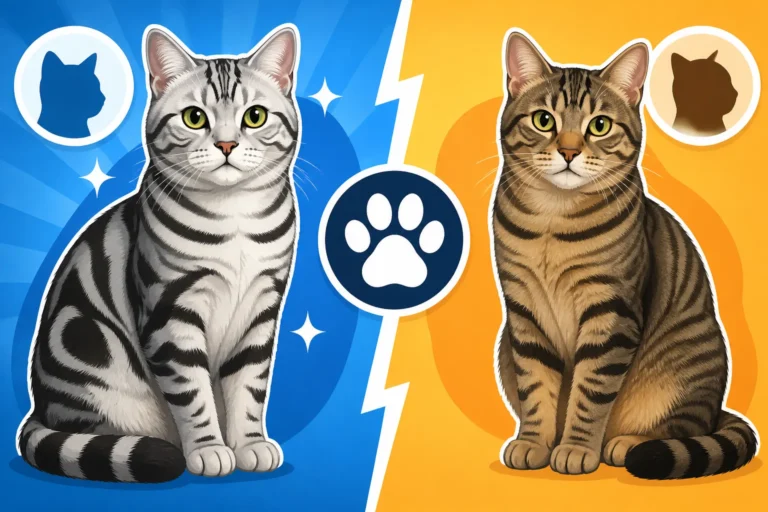
Whether the American Shorthair Was Ever Deliberately Bred Before 1900
It’s a common misconception that every cat breed, especially one as well-established as the American Shorthair, must have been meticulously planned and bred by humans from its very beginning. The truth, however, is far more organic and tied deeply to the practical needs of people, which often leaves new owners wondering if this beloved breed was always recognized for its unique qualities. This guide will explore the true origins of the American Shorthair, examining whether deliberate breeding efforts existed before the turn of the 20th century, and how its working-class roots shaped the cat we know and love today.
The American Shorthair's Humble Origins: A Working Cat's Legacy
When we think about the American Shorthair, we often picture a sturdy, calm companion, perhaps curled up on a comfy bed you got from a place like Chewy. But their history paints a very different picture, one far removed from pampered pets and show rings. These cats weren't developed in a cattery with specific breed standards in mind; their "breeding" was a natural selection process, driven by necessity and survival. They were the ultimate working-class heroes of the feline world, valued for their skills rather than their looks.
From Ship to Shore: The Early Settlers' Feline Companions
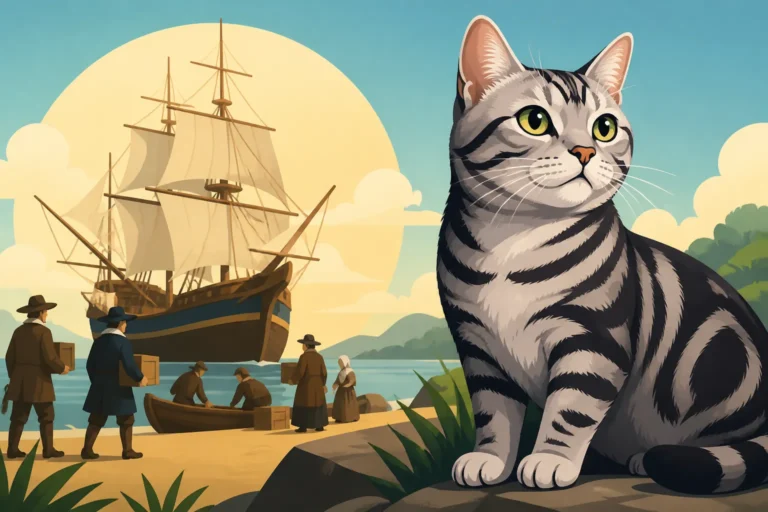
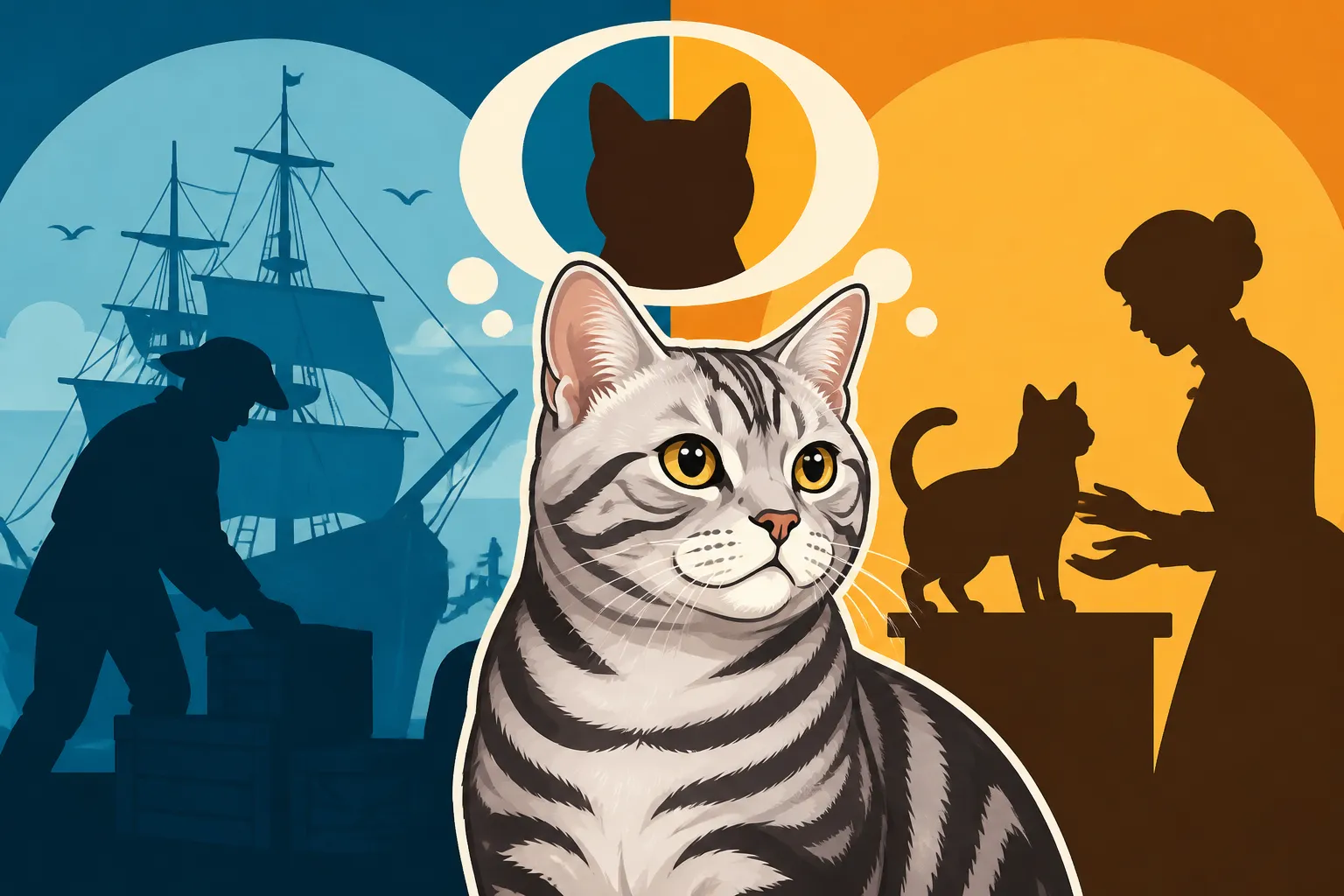
The ancestors of what we now call the American Shorthair didn't arrive on North American shores as cherished pets. Far from it. They were indispensable crew members aboard ships sailing from Europe to the New World. Imagine the long, treacherous voyages, with wooden hulls packed with provisions, cargo, and, inevitably, rodents. These cats were the ship's pest control, vital for protecting food stores from mice and rats that could easily decimate a voyage's supplies. Their presence wasn't a luxury; it was a matter of survival for the human passengers and crew. These early felines were hardy, resourceful, and incredibly adept hunters. Ships Carried the American Shorthair's Ancestors as Ratters is an article that goes into more detail about their seafaring history.
Once ashore, these tough, adaptable cats continued their essential work in the nascent settlements. They spread across the continent with the colonists, adapting to varied climates and environments, always fulfilling their role as rodent exterminators. They weren’t given fancy names or pedigrees; they were simply "domestic shorthairs" – cats that were good at their job. Their survival depended on their ability to thrive in harsh conditions, hunt effectively, and reproduce successfully, passing on their robust genes. This was breeding, yes, but it was nature's breeding, a harsh yet effective selection process.
Farm Life and Natural Selection: Shaping a Robust Breed
As settlements grew into farms and towns, these cats found their niche protecting crops, granaries, and homes from vermin. This wasn't a cushy job. Life on an early American farm was challenging, and cats had to earn their keep. They needed to be resilient, intelligent, and fiercely independent. The cats that survived and flourished were those with strong hunting instincts, good health, sturdy builds, and adaptable temperaments. This continuous "natural selection" meant that only the fittest, most capable cats contributed to the next generation. How Farm Work Shaped the American Shorthair elaborates on this vital period.
Owners certainly recognized which cats were the best mousers and probably encouraged them to breed, but this wasn't about conforming to a written standard for appearance. It was about propagating traits that directly benefited the farm or household. A cat with excellent hunting prowess, a calm demeanor (so it wouldn't scare away livestock), and a sturdy constitution that could withstand the elements was a valuable asset. If a male cat was particularly good at catching rats, and a female cat produced strong, healthy kittens, those were the ones whose offspring were desired. This informal, utility-driven "selection" was the closest thing to deliberate breeding before the concept of formalized cat breeds truly took hold.
What "Deliberate Breeding" Meant in the Pre-1900 Era
The idea of "deliberate breeding" as we understand it today – with written standards, selective mating based on specific physical traits, and official registration – simply didn't exist for the vast majority of cats before the 20th century. For the ancestors of the American Shorthair, "deliberate breeding" was a far more practical, survival-oriented concept.
Practical Mating, Not Pedigree Planning
Before 1900, if someone "deliberately bred" cats, it wasn't about creating a show-quality feline or adhering to a lineage. It was about ensuring a continuous supply of good working cats. Farmers might keep the kittens of their best mousers, knowing those offspring were likely to inherit their parents' skills. They might even try to keep a particularly effective male around for stud services. This was a form of intentional propagation, but it was a world away from modern pedigree planning. There was no concept of a "breed" in the way we use it now, with specific characteristics outlined in a club's rulebook. The cats were judged by their performance, not by their adherence to a visual ideal.
Consider the difference in approach: today, a breeder might select two cats with perfectly shaped ears or a specific coat pattern to try and replicate those traits. Before 1900, an owner might allow a sturdy, healthy female cat who consistently cleared the barn of rodents to have kittens with a male known for his robust hunting skills. The "deliberation" was entirely focused on functionality and practicality. There were no "papers" for these cats; their reputation was their pedigree. For a long time, these cats were simply known as the "Domestic Shorthair," a blanket term that applied to virtually any non-pedigreed cat with short hair, as discussed in Why the American Shorthair Was Called Domestic Shorthair Until 1966.
The Focus on Function: Mousers, Not Show Cats
The primary, indeed almost exclusive, purpose of these cats was pest control. A cat's value was directly proportional to its ability to hunt, kill, and deter rodents. Traits like a strong, muscular body, keen eyesight, stealth, intelligence, and resilience to various weather conditions were prized. Aesthetic qualities like coat color, eye shape, or specific markings were largely irrelevant beyond their potential utility (e.g., a darker coat might provide better camouflage at night).
Let's look at the priorities:
| Trait Category | Pre-1900 "Deliberate Breeding" Focus | Modern Deliberate Breeding Focus (Post-1900) |
|---|---|---|
| Primary Goal | Pest Control, Farm Utility, Survival | Adherence to Breed Standard, Show Success, Pet Temperament |
| Key Traits Selected | Hunting prowess, Hardiness, Health, Independence, Adaptability | Specific coat patterns, Eye color, Body conformation, Temperament for companionship |
| Mating Decisions | Informal, based on proven working ability | Formal, based on genetic lines, health screenings, physical traits |
| Recognition | Local reputation for effectiveness | Official registration with cat associations, pedigrees |
| Value | Economic (protecting food/property) | Aesthetic, companionship, genetic purity |
As you can see, the intention behind "breeding" was fundamentally different. There was no overarching desire to create a standardized "American Shorthair" until much later. Their natural physical attributes – their broad chests, strong jaws, and medium build – were the direct result of hundreds of years of needing to be effective predators and survivors. Why the American Shorthair Kept a Broad Chest explores one of these enduring physical traits that served them well.
The Dawn of Formal Recognition: The Turn of the Century Shift
The informal existence of the American Shorthair's ancestors began to change significantly as the 19th century drew to a close and the 20th century dawned. As urban populations grew and people had more leisure time, the concept of keeping cats as pets, not just working animals, started to gain traction. This shift in human-feline relationships paved the way for the formal recognition of various cat types.
The American Shorthair's Identity Crisis: From "Domestic Shorthair" to a Recognized Breed
For centuries, these robust, versatile cats were simply the "Domestic Shorthair." They were the common cat, the everyday feline found in barns, homes, and city streets across North America. However, as cat fancy began to emerge in the late 1800s, with a growing interest in pedigree breeds imported from Europe and Asia, American cat enthusiasts realized they had a unique treasure right in their own backyard. These home-grown cats, while lacking official papers, clearly possessed distinct characteristics that set them apart. There was a growing desire to elevate these ordinary, yet exceptional, cats to the same status as the more exotic breeds being showcased. What the Breed Was Called Before American Shorthair provides context on this naming period.
The initial challenge was distinguishing these indigenous working cats from the general population of alley cats and mixed breeds. They all shared the "Domestic Shorthair" moniker, making it hard to advocate for their unique qualities. The push was to recognize their stable type, their consistent temperament, and their inherent health, all honed by generations of natural selection on American soil. This identity crisis eventually led to the crucial decision in 1966 to officially rename the breed "American Shorthair," a move that cemented its status and differentiated it from the vast pool of non-pedigreed cats. Why the American Shorthair Name Changed in 1966 delves into the reasons behind this significant change.
Early Show Circles and the Push for a Standard
It was in the very late 1800s and early 1900s that dedicated cat lovers and early breeders began the concerted effort to "standardize" what was already a naturally occurring and highly successful cat type. They observed the best examples of these American working cats – the healthiest, sturdiest, most aesthetically pleasing ones – and began to articulate what made them special. The goal was not to create a new cat, but to preserve and promote the qualities that had naturally evolved. This meant taking these common, beloved cats and giving them a formal identity within the burgeoning world of cat shows.
These early enthusiasts started selecting cats for breeding based on their physical conformity to an emerging ideal. This was the true beginning of deliberate, pedigree-style breeding for the American Shorthair. They sought out cats that exemplified the strong, muscular build, the distinct facial features, and the intelligent, calm temperament that defined the type. This was a stark contrast to the previous centuries where utility was king. Now, aesthetics and consistency were gaining importance. When Breeders Started Showing the American Shorthair outlines this pivotal shift. The American Shorthair was even one of the five founding breeds recognized by the Cat Fanciers' Association (CFA), underscoring its historical importance in the development of the organized cat fancy in North America. More can be learned about this in The American Shorthair Was One of the CFA's Five Founding Breeds.
The Legacy of a Naturally Evolved Breed
The fact that the American Shorthair wasn't "deliberately bred" in the modern sense before 1900 is not a flaw; it's a testament to its incredible resilience and the effectiveness of natural selection. This history has left an indelible mark on the breed, influencing its physical characteristics, its renowned temperament, and its generally robust health.
Enduring Traits from a Practical Past
The American Shorthair's practical origins are visible in every aspect of the breed today. Their strong, muscular bodies, solid bone structure, and well-developed jaws are not just pretty features for a show judge; they are inherited traits from ancestors who needed to catch and hold prey efficiently. Their short, dense coats were perfect for protection against the elements, shedding water and offering insulation, whether on a ship deck or a windy farm. Even their calm, adaptable temperament can be traced back to a need for independence and resourcefulness, mixed with a sociable nature that allowed them to coexist peacefully with humans.
They are known for being incredibly healthy, rarely plagued by the severe genetic conditions seen in some other breeds. This is largely because they weren't subjected to extreme selective breeding for exaggerated features. Nature's ruthless selection process weeded out weaknesses, leaving a strong, genetically diverse pool. When you see an American Shorthair gracefully patrolling its territory, whether it's a sprawling farm or a cozy apartment, you're witnessing the culmination of centuries of evolutionary success. What an American Shorthair Looks Like by the Standard provides details on how these natural traits were eventually codified into a breed standard.
Why Understanding Their History Matters Today
Knowing that your American Shorthair's ancestors were self-sufficient, hardy working cats helps you understand and appreciate their needs and behaviors. This historical context illuminates why they are generally easy-going, intelligent, and possess a strong, innate hunting drive, even if their "prey" is now a feather wand from Chewy. It explains why they often aren't as "needy" for constant human attention as some other breeds, preferring to observe and interact on their own terms, fitting seamlessly into busy households.
It also provides reassurance regarding their general health and longevity. The broad genetic base and the absence of extreme breeding practices for superficial traits before the 20th century contributed significantly to their overall vitality. When you bring an American Shorthair into your home, you're not just getting a beautiful cat; you're adopting a living piece of history, a direct descendant of the cats who helped build America, largely shaped by natural forces rather than human whim. The stories told by their DNA, as explored in What DNA Says About the American Shorthair's Origin, echo this fascinating journey.
In conclusion, the American Shorthair was not deliberately bred before 1900 in the way we typically think of pedigree cats today. Instead, its evolution was a powerful testament to natural selection, guided by the practical necessities of human life in early America. The formal recognition and deliberate breeding efforts began only at the turn of the 20th century, as cat enthusiasts recognized the incredible qualities inherent in this naturally developed, truly American cat.
Disclaimer
This article is for general informational purposes only and does not constitute professional advice. Laws, prices and regulations vary by location and change over time. Consult a qualified professional for guidance on your specific situation.