Which European Cats the American Shorthair Descends From
Have you ever looked at your American Shorthair, perhaps while they're gracefully leaping onto a bookshelf or contentedly napping in a sunbeam, and wondered about their origins? It's easy to assume they just are, but tracing their lineage back to the European cats that first set paw on American shores is a fascinating journey. This guide will take you through the historical path, revealing the diverse European ancestry that formed the foundation of the beloved American Shorthair breed we know today.
The Ocean-Faring Ancestors: Ships' Cats from Europe
Before the American Shorthair became a recognized breed, or even known by its earlier designation of Domestic Shorthair, its ancestors were simply working cats. These felines weren't pampered pets; they were essential crew members on voyages across the Atlantic, tasked with a crucial job that allowed early European settlers to establish themselves in the New World.
Early Migrants and Their Indispensable Role
Imagine a sailing ship, months at sea, laden with supplies, livestock, and hopes for a new life. What do you think would be one of the biggest threats to those provisions and indeed, to the structural integrity of the ship itself? Rats and mice, of course! This is where the ancestors of the American Shorthair come into play. These were the hardy, no-nonsense working cats, brought along by European colonists, farmers, and sailors, precisely because they were phenomenal hunters. They weren't just decorative; they were vital for rodent control, preventing vermin from devouring food stores, spreading disease, and even gnawing through ropes and timbers.
These cats were, in essence, an early form of pest management, an indispensable part of any long voyage. They earned their keep, often enduring harsh conditions right alongside their human companions. Without these diligent mousers, the journey itself would have been far more precarious, and the success of early settlements significantly hampered. It’s no exaggeration to say that without the ancestral working cat, the course of American history might have looked quite different. You can delve deeper into this critical role in Why a Ship Could Not Sail Without an American Shorthair Type Cat.
A Melding Pot of European Domestic Cats
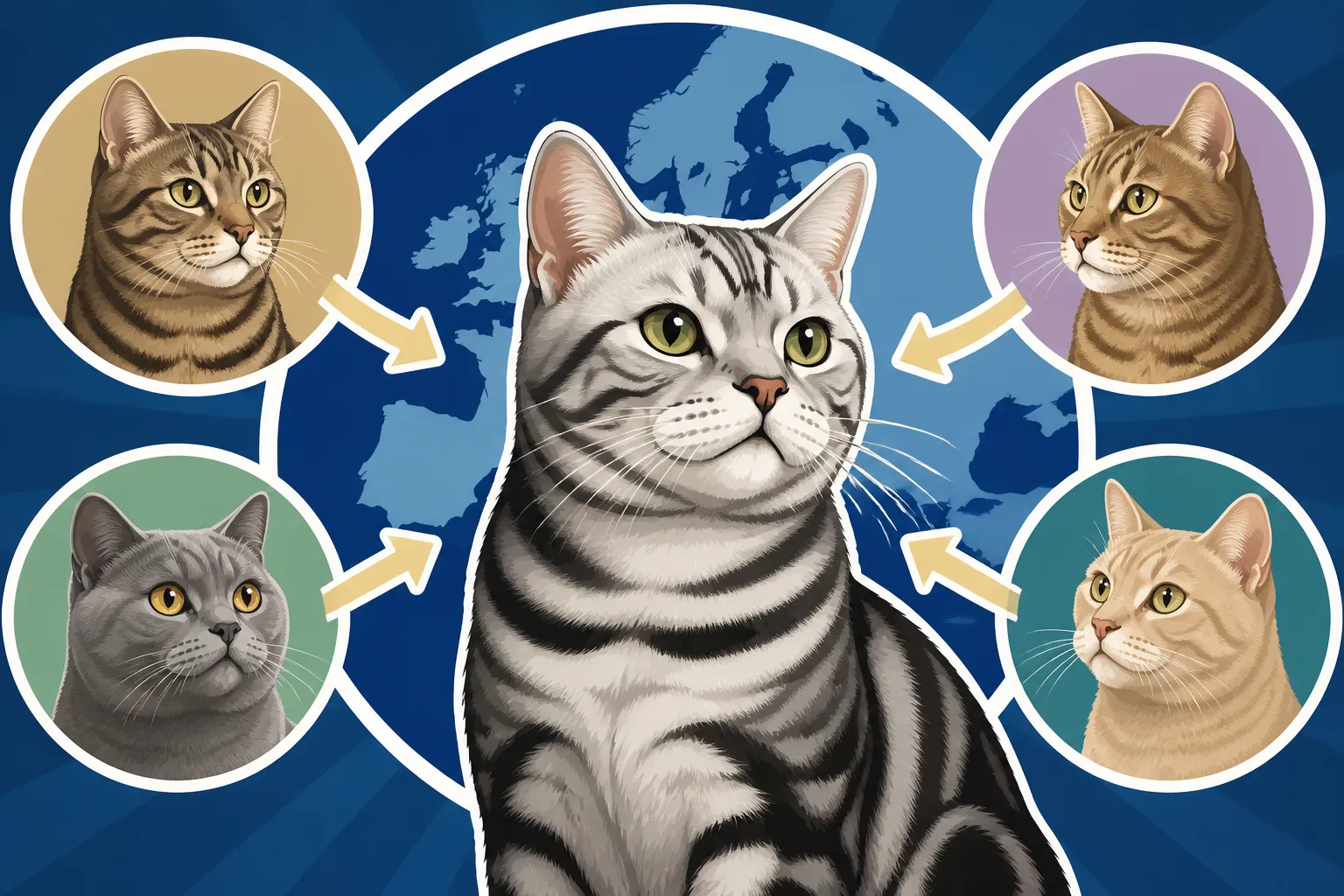
When we talk about the "European cats" that were the ancestors of the American Shorthair, it's important not to envision a single, unified breed. This wasn't a case of a particular pedigree being exported. Instead, these were the common, sturdy domestic cats – often referred to as "landrace" cats – from various parts of Western Europe. Think of the alley cats and farm cats of England, Scotland, Ireland, France, Germany, and other seafaring nations. They were a diverse mix, united by their physical robustness, natural hunting instincts, and adaptability.
These cats were already well-adapted to surviving alongside humans in varied environments, from bustling port cities to quiet rural farms. They weren't selected for specific aesthetic traits like coat color or eye shape, but rather for their practical skills and hardiness. As a result, the gene pool that landed on American shores was incredibly broad, rich with genetic diversity. This wide array of backgrounds is precisely why the American Shorthair, even today, is known for its remarkable health and adaptability. If you were setting sail and needed reliable rodent control, you wouldn't be fussing over a cat's exact lineage; you'd want the strongest, most effective hunter available, regardless of its specific European region.
Natural Selection in a New World: Shaping the American Shorthair Type
Once these European cats disembarked from their ships and stepped onto the new continent, their job evolved. They transitioned from ship-board ratters to farm cats, barn cats, and urban mousers, facing new challenges and opportunities in the vast landscapes of North America. This period, spanning centuries, was crucial in solidifying the traits that would eventually define the American Shorthair.
Adapting to the Wilds of North America
Life in colonial and early American settlements was tough, and it was no different for the cats. They weren't just living in people's homes; many were still semi-feral, responsible for keeping barns and granaries free of pests. This demanding existence meant that only the most resilient, intelligent, and effective hunters thrived. Natural selection played a significant role, favoring cats with traits that allowed them to survive and reproduce in diverse North American climates and environments.
Over generations, this selective pressure naturally honed the physical and behavioral characteristics we now associate with the American Shorthair. They developed sturdy, muscular bodies perfect for patrolling territories and chasing prey. Their short, dense coats provided excellent protection against both cold winters and hot summers, shedding to adapt seasonally. Their independent yet companionable temperament, a balance between self-sufficiency and an affinity for human presence, also solidified during this period. You can read more about this in How Long the American Shorthair's Type Has Lived in North America.
The Absence of Early Selective Breeding
For many centuries after their arrival, there was no organized effort to breed these cats for specific physical standards or "pedigrees." They were simply "domestic cats" or "shorthaired cats," valued solely for their utility. Unlike many European breeds that were starting to be selectively bred for fancier appearances, the American cats were still very much working animals. Their mating was largely left to chance, with the fittest and most successful hunters contributing most to the gene pool.
This lack of human intervention in their early development is a key differentiator for the American Shorthair. While cats in Europe might have been unknowingly contributing to the foundation of what would become the British Shorthair or other recognized breeds through regional isolation and accidental selection, American cats were undergoing a much more organic, 'survival of the fittest' process. This resulted in a broadly healthy and robust population, largely free from the genetic weaknesses that can sometimes arise from intense, closed-pool selective breeding. This history is why they embody a natural, well-balanced feline form, a stark contrast to some breeds with exaggerated features.
Formalizing a Feline Heritage: From Landrace to Pedigree
It wasn't until the late 19th and early 20th centuries that cat fanciers in North America began to appreciate these common, hardworking cats not just for their utility, but for their inherent beauty and consistent type. This marked a turning point, moving them from anonymous barn cats to a recognized and cherished breed.
The Emergence of the "Domestic Shorthair"
As cat shows began to gain popularity in the late 1800s, there was a growing desire to celebrate and preserve distinct American feline types. Initially, these robust, native short-haired cats were simply shown under the general designation of "Domestic Shorthair." This name, however, proved problematic, as it didn't distinguish them from any other non-pedigreed short-haired cat. It was a bit like calling all mixed-breed dogs "Domestic Dogs" – true, but not very specific! This caused confusion, as people often couldn't tell the difference between a carefully bred specimen and a random alley cat.
The goal of early breeders was to identify and formalize the traits of these naturally evolved, hardy American cats. They sought to establish a standard that reflected the ideal characteristics honed by centuries of natural selection. This meant cats with strong, muscular builds, balanced proportions, and a dense, short coat. The idea was to recognize the "best of" the common American house cat, a true representation of the feline companions who had helped build the nation. You can explore this historical context further in What the Breed Was Called Before American Shorthair. When searching for specific cat supplies for such a well-defined breed, resources like Chewy can be incredibly helpful for finding reputable brands that cater to general feline health rather than breed-specific novelties.
Differentiating from European Counterparts
The name "Domestic Shorthair" persisted for many years, but the confusion it caused eventually led to a crucial change. In 1966, the breed was officially renamed the "American Shorthair." This was a deliberate and important step to give these cats a unique identity, proudly reflecting their American origins and distinguishing them from all other short-haired cats, both domestic and pedigreed.
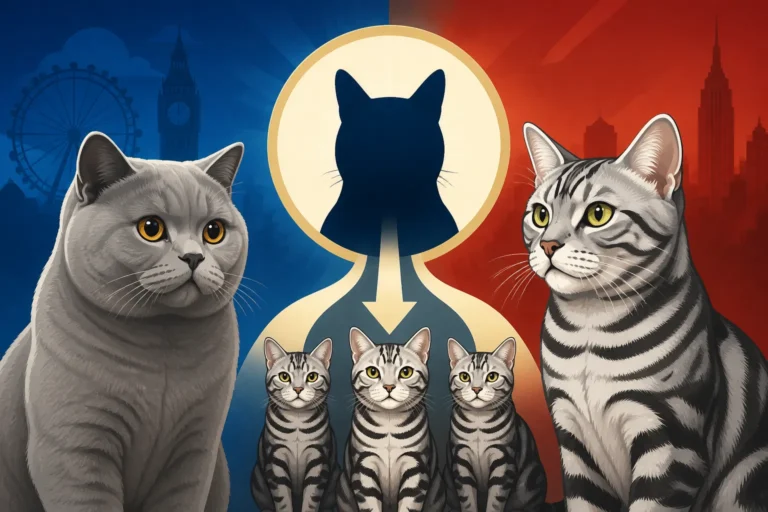
This renaming also served to differentiate them clearly from their European cousins, particularly the British Shorthair and the European Shorthair. While all these breeds share a common ancestry in the hardy working cats of Europe, centuries of independent development and separate breeding programs had led to distinct types. The British Shorthair, for example, developed a much rounder, more cobby body and a plush, dense coat, quite different from the American Shorthair's more athletic, muscular build and harder coat. Similarly, the European Shorthair, also a natural breed, retained a generally common cat appearance, but with its own regional variations and standards. The American Shorthair emerged as a uniquely American feline, a testament to its journey from ship's cat to respected pedigree. Understanding these distinctions is important, and you might find How an American Shorthair Differs From a European Shorthair an interesting read.
| Ancestral Origin Factor | Description for American Shorthair | Impact on Breed Traits |
|---|---|---|
| Geographic Origin | Western Europe (UK, France, Germany, etc.) | Diverse genetic input, broad adaptability |
| Initial Role | Ships' cats, rodent control | Strong hunting instinct, robust health |
| Selection Process | Natural selection in North America | Muscular build, hardy coat, independent temperament |
| Breeding Focus | Utility, survival (pre-1900s) | Minimal exaggerated features, functional conformation |
| Genetic Diversity | High, mixed gene pool | Resilient, generally healthy breed |
The American Shorthair's story is one of natural triumph and adaptation. Its European ancestors were the unsung heroes of early transatlantic voyages and colonial life, laying the groundwork for a breed that embodies health, versatility, and an easygoing nature. From the ships that crossed the ocean to the farms and homes they protected, these cats were integral to the lives of early Americans. Today's American Shorthair carries that legacy, a living link to a rich history. When you're looking for toys to engage that ancestral hunting drive or quality food to maintain their robust health, consider browsing trusted retailers like Chewy for a wide selection.
Remember, the American Shorthair isn't just a pretty face; it's a testament to centuries of resilience and natural development, a true American icon built on European foundations.
Disclaimer
This article is for general informational purposes only and does not constitute professional advice. Laws, prices and regulations vary by location and change over time. Consult a qualified professional for guidance on your specific situation.