How the First American Shorthair Standard Read
When people ask how the first American Shorthair standard read, they often expect to find a neat paragraph describing today’s familiar round face and silver tabby coat. The early standard was less about a signature look and more about defining a sturdy, useful domestic cat. This guide explains what that first description emphasized, what it left open, and why it differs from the modern breed standard.
The first standard described a working domestic cat
A breed standard was a judging guide, not a portrait
A breed standard gives judges and breeders a shared description of the qualities a cat should have. It is not a promise that every cat in the breed will look alike, and it is not a complete history of how the breed developed. In the early days of organized cat shows, standards helped distinguish one recognized type from another and gave judges a consistent basis for comparing cats.
For the American Shorthair, the key historical detail is the name. The breed was known as the Domestic Shorthair before it became the American Shorthair in 1966. So when discussing the first standard, it is more accurate to think of an early description of a recognized domestic shorthaired type—not to imagine a document titled “American Shorthair” in the modern sense. For more on that naming shift, see What the Breed Was Called Before American Shorthair.
The original description is best understood as a broad picture of a sound, balanced, shorthaired cat. It did not need to turn every feature into a highly specific visual trademark. The cat’s sturdy frame, practical coat, and general proportions mattered because they reflected the kind of animal breeders were trying to preserve.
That distinction matters when someone quotes today’s standard as if it were the exact language used at the beginning. A modern standard may be useful for explaining the breed now, but it should not be presented as a verbatim copy of the first historical description. The breed’s name and judging conventions changed over time, and standards can be revised as breeding goals develop.
The cat’s usefulness shaped the type
The early American Shorthair was associated with domestic cats that lived and worked alongside people. Their ancestors were valued for practical qualities, including alertness, strength, and the ability to thrive in everyday conditions. The standard therefore had a different emphasis from one built around an extreme silhouette or a single fashionable feature.
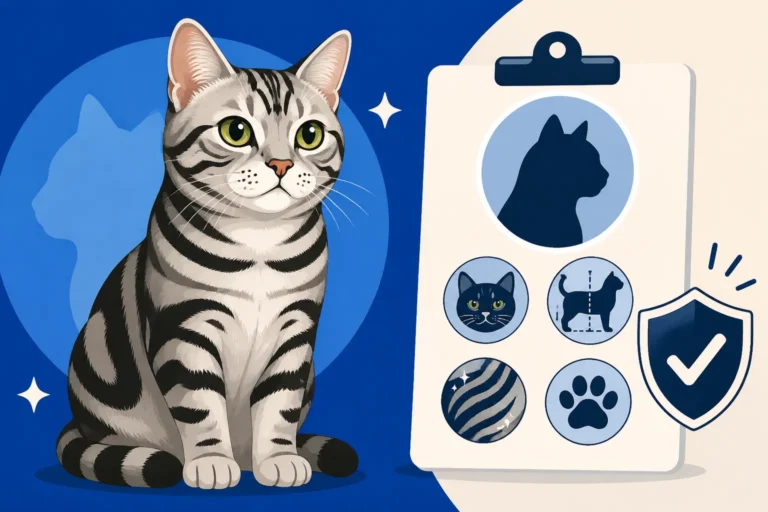
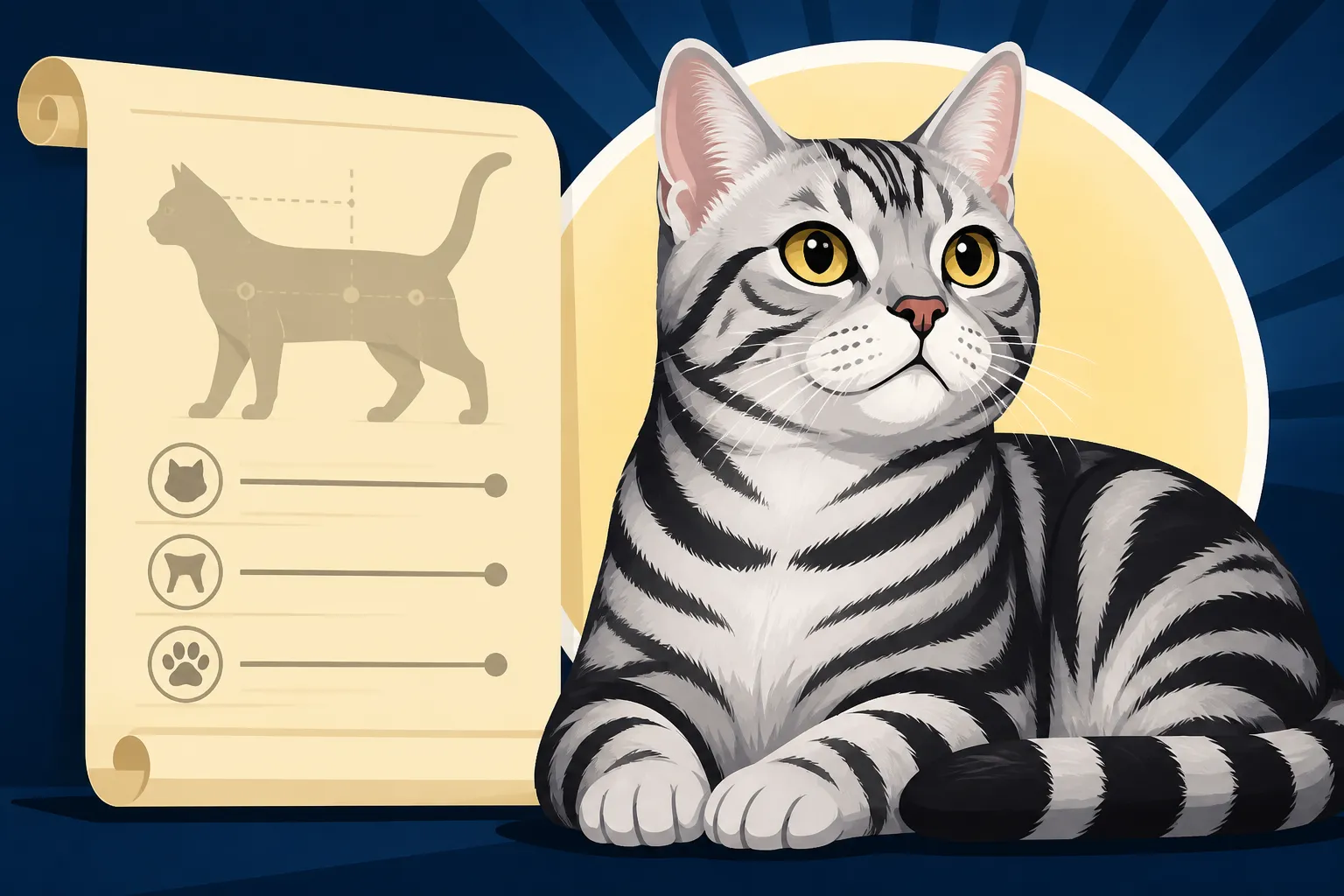
A useful way to picture the intended type is a cat with a solid, balanced body—not delicate, but not exaggerated. A strong frame and a short, functional coat made more sense than a look that would interfere with activity. The standard was an attempt to recognize and preserve qualities people considered characteristic, rather than to invent an entirely new kind of cat.
The history of the breed helps explain why a broad description made sense. Domestic cats were not all produced from a carefully managed show program; the recognized breed emerged from a population with a working background. How Farm Work Shaped the American Shorthair explores that connection between practical life and the breed’s physical type.
Early recognition did not mean every cat looked identical
Recognition by a registry gives breeders and judges a framework. It does not instantly create a uniform population. In the early period, individual cats could vary in size, markings, and overall appearance while still fitting the general idea of a sound domestic shorthair.
That variability is easy to underestimate when looking at modern breed photographs, where cats are often chosen to demonstrate a recognizable type. An early standard was not necessarily a checklist designed to make every cat look like a current show winner. It was more like a shared starting point: this is the general kind of cat the registry intends to recognize.
For background on formal recognition and its history, see Which Year the CFA Recognized the American Shorthair and When Breeders Started Showing the American Shorthair. Those milestones help place the standard in context: writing a description and building a consistent breed population are related, but they are not the same event.
What the early description emphasized
Strength and balance mattered more than exaggeration
The broad physical idea behind the early standard was a capable, well-proportioned cat. A sturdy body suggested strength; balance kept that strength from becoming clumsiness. In practical terms, the ideal was not simply “the biggest cat” or “the roundest cat.” It was a cat whose parts worked together and whose overall appearance looked sound.
That can be harder to describe than it sounds. A cat may be muscular but poorly balanced, or compact without looking heavy. Standards help judges distinguish an impression of healthy strength from an exaggerated feature that overwhelms the rest of the animal. The early approach put the emphasis on the whole cat rather than making one detail the sole measure of quality.
The current breed type is still often described through qualities such as a broad, substantial build and a rounded appearance. But it is important not to assume that every modern detail appeared in precisely the same form in the first standard. Breed descriptions develop, and later versions can give more precise attention to features that early descriptions treated generally.
| Topic | Early emphasis in broad terms | How to interpret it today |
|---|---|---|
| Overall build | A sturdy, useful, balanced cat | Strength should not be confused with excess weight or exaggerated bulk |
| Coat | Shorthaired and practical | Coat texture and condition can be assessed more precisely in modern judging |
| Appearance | A general domestic shorthair type | Today’s breed standard may describe individual features in greater detail |
| Color and pattern | Variation was part of the population | A familiar pattern is not the whole definition of the breed |
| Breed identity | A recognized domestic shorthaired type | The name American Shorthair became established later |
A short coat was part of the identity
The short coat was not just decoration. It helped distinguish the type from longhaired cats and suited the practical image associated with the breed. But “shorthaired” does not mean that every coat is identical. Length, density, texture, and seasonal changes can all affect how a cat looks and feels.
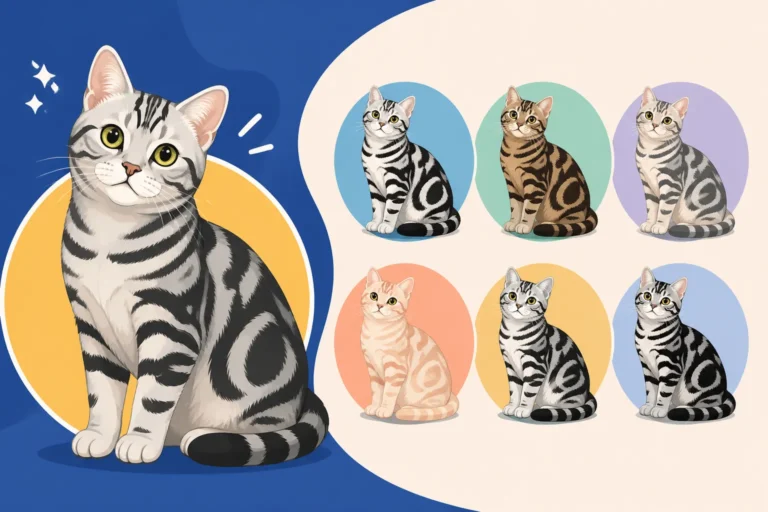
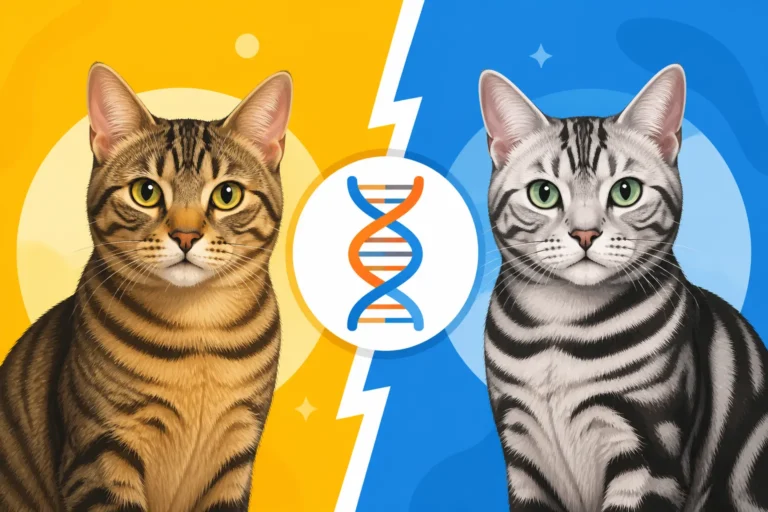
Nor does coat color alone establish that a cat is an American Shorthair. A silver tabby may be strongly associated with the breed in people’s minds, but many colors and patterns exist within the broader breed standard. The famous silver tabby became especially recognizable later; it should not be mistaken for the complete definition of the early standard. See The Silver Tabby That Made the American Shorthair Famous for how that image became so closely linked with the breed.
This is one reason historical standards can be misread through modern photographs. A gallery of silver tabbies gives a narrow visual impression, while early descriptions were concerned with a broader type. The coat mattered, but so did the cat underneath it: its overall soundness and proportions.
The standard was not a guarantee of ancestry
A standard describes a recognized breed type; it does not prove that a particular cat has documented pedigree. A shorthaired tabby may resemble an American Shorthair without being a registered member of that breed. Conversely, an American Shorthair does not have to be a silver tabby to qualify.
That distinction is especially useful for prospective owners. A cat’s appearance can suggest a type, but registration and pedigree records provide a different kind of information. A standard is not a DNA test, and a resemblance is not the same thing as documented ancestry. For a closer look at the difference, read How an American Shorthair Differs From a Domestic Shorthair and Whether Papers Are the Only Difference an American Shorthair Has.
How the original idea differs from the modern standard
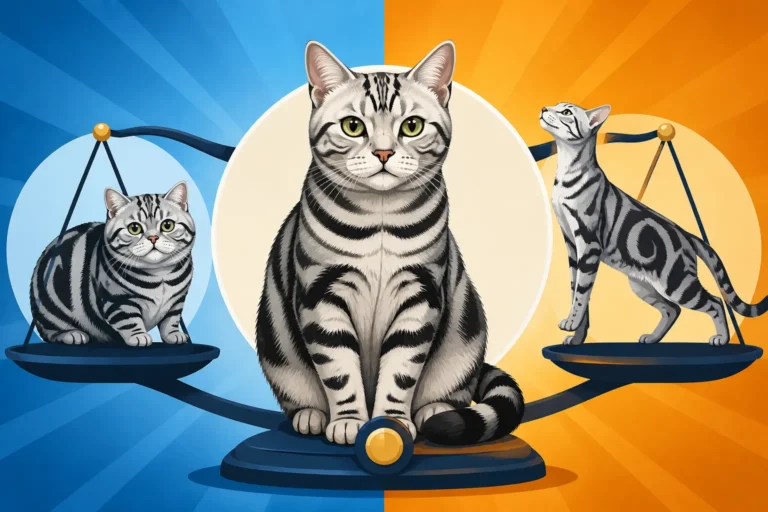
Modern standards make the description more specific
Over time, breed standards tend to become more detailed. As judges and breeders gain experience with a recognized population, they may settle on clearer ways to describe head shape, body proportions, eyes, ears, tail, coat, and other features. The goal is a more consistent shared language for evaluating cats.
That does not automatically mean the original standard was inadequate. It served a different stage of breed development. A broad description can be appropriate when the aim is to recognize a general type. Greater specificity becomes useful as breeders work with established lines and judges need to distinguish subtle differences among cats that already share a recognizable foundation.
A modern standard may therefore read like a detailed map of the breed, while an early one reads more like a broad outline. To understand what the breed is expected to look like today, see What the American Shorthair Standard Asks For. For the question of whether those expectations have changed, see Whether the American Shorthair Standard Has Changed.
The name change helped define a distinct identity
Changing the breed’s name from Domestic Shorthair to American Shorthair was more than a cosmetic edit. “Domestic Shorthair” was a broad label that could describe many shorthaired cats. “American Shorthair” identified a particular recognized breed with a developing standard and a distinct place in organized cat breeding.
The rename also made the breed easier to distinguish from ordinary shorthaired cats in conversation and in the show world. But a new name did not transform the cats overnight. It marked a clearer boundary around a type breeders and registries were already working to define. The background is covered in Why the American Shorthair Name Changed in 1966.
This is why it helps to separate three things that are sometimes treated as one: the domestic cats that contributed to the breed, the registry’s early recognition of a type, and the later use of the name American Shorthair. They are connected, but they happened across a longer history rather than in a single moment.
The familiar show cat reflects later selection
Today’s show American Shorthair may look more consistent than the cats people imagine when they hear “working domestic cat.” That consistency comes from generations of selection and from standards that describe an increasingly recognizable breed. It does not mean the breed’s early history began with every modern show feature already fixed.
Think of the difference as the gap between an original sketch and a refined drawing. The broad idea—an attractive, substantial shorthaired cat—can remain recognizable while breeders develop greater consistency in how that type appears. A standard can become more precise without erasing the older qualities that inspired it.
It is also worth remembering that a show standard is not a care manual or a health guarantee. It describes appearance and type for judging purposes. Responsible breeding and good veterinary care involve separate questions, including health screening and appropriate recordkeeping. The standard alone cannot answer whether a particular cat is healthy or how it will behave in a home.
How to read the first standard without confusing it with today’s
Treat historical summaries as paraphrases unless they show the original text
When a modern article says the first standard “read” a certain way, check whether it is reproducing a dated document or summarizing the description. A paraphrase can be helpful, but it should be labeled as a paraphrase. Otherwise, readers may assume that today’s terminology and level of detail appeared in the original wording.
A careful explanation should make three points clear: the early breed was called the Domestic Shorthair, the description focused broadly on a sound shorthaired type, and the modern American Shorthair standard should not automatically be treated as the original text. That approach avoids turning a historical reconstruction into a false quotation.
If you encounter a supposed first-standard quote, look for its date, the registry that issued it, and whether the language is shown as an exact transcription. Older documents may use terminology that feels different from current breed descriptions. A modernized summary can be easier to read, but it is not the same as the original document.
Use the history to understand the standard’s priorities
The first standard is most revealing when read as evidence of what breeders and judges wanted to preserve. The emphasis on a practical, sturdy shorthaired cat reflects the breed’s domestic and working background. It was not simply a list of traits chosen to create an instantly recognizable show image.
For a broad view of that heritage, The Mayflower Cats Behind the American Shorthair and Ships Carried the American Shorthair's Ancestors as Ratters offer useful historical context. The key is not to assume that every popular story about the breed’s ancestors is a documented fact, but to understand why the working-cat narrative became central to its identity.
Read this way, the early standard is both simpler and more meaningful than a checklist of points. It shows how a general cat type began to acquire a formal identity, while leaving room for the breed to become more precisely described in later standards. The American Shorthair’s history is not just a story of changing wording; it is also a story of how people chose to define and preserve a particular kind of cat.
Disclaimer
This article is for general informational purposes only and does not constitute professional advice. Laws, prices and regulations vary by location and change over time. Consult a qualified professional for guidance on your specific situation.