Whether an American Shorthair Has Won Best in Show
An American Shorthair can win Best in Show at an individual cat show, but the phrase does not refer to one universal title shared by every registry. Cat-show awards vary by organization and event, so the important question is which show, which judging system, and which award a particular cat actually received.
Can an American Shorthair win Best in Show
Yes, but the award belongs to an individual cat
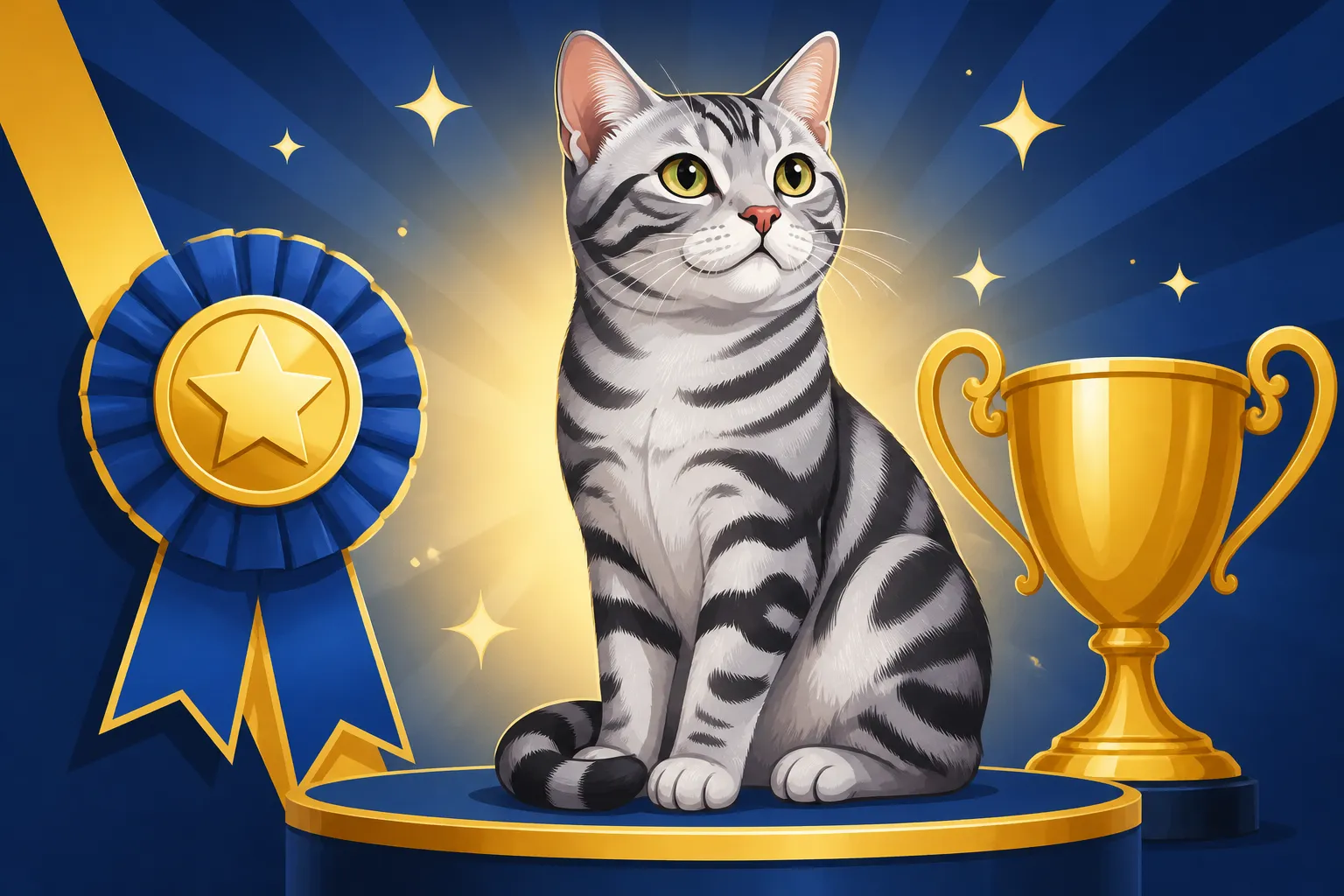
An American Shorthair is eligible to compete in cat shows run by registries that recognize the breed. An individual cat may win a show’s Best in Show award if it meets that event’s rules and advances through the judging process. The award recognizes that cat’s performance on that occasion, not the breed as a whole.
That distinction matters when you see a breeder or owner say an American Shorthair is “a Best in Show winner.” It may mean the cat won an award at one specific event, rather than a national or international title. To understand the claim, look for the show name, date, registry, and exact award wording.
The breed’s long history in organized cat fancy does not automatically give every American Shorthair a show title. The breed was among the early cats recognized by the Cat Fanciers’ Association, but a cat still needs to be entered, judged, and awarded at an eligible event. For context on that history, see The American Shorthair Was One of the CFA's Five Founding Breeds.
“Best in Show” can mean different things
Cat-show systems do not all use the same award structure. In some settings, “Best in Show” names a top award at a particular event. Other registries hold multiple judging rings, where judges assess entries separately and award placements within their own rings. A cat may earn strong results across several rings without receiving a single, shared Best in Show title.
Even within one organization, an award’s meaning depends on the event. A local show award is not automatically the same as a regional, national, or year-end honor. Likewise, a breed win, a color-class win, a championship title, and an overall show award are different accomplishments, even if casual descriptions blur them together.
| Award wording | What it usually tells you | What to check |
|---|---|---|
| Best in Show | The cat received the event’s top award under that show’s rules | Registry, event, date, and award category |
| Best of Breed | The cat was selected as the top entry of its breed in that context | Whether the award was limited to a class, ring, or event |
| Champion or Grand Champion | The cat earned a title through the registry’s competition system | The registry’s title requirements |
| Regional or national ranking | The cat accumulated results across a defined competition period | The ranking system and season |
| Best American Shorthair | The cat was selected among American Shorthairs in a specific judging context | Whether it means best in a ring, class, show, or annual standings |
If you are checking a particular claim, the registry’s show catalog or results are more useful than a vague “award-winning” description. Ask for the exact title as it appears in official records. That helps distinguish a genuine show result from marketing language that makes a modest placement sound like a universal championship.
How American Shorthairs are judged at shows
Judges assess the cat against a breed standard
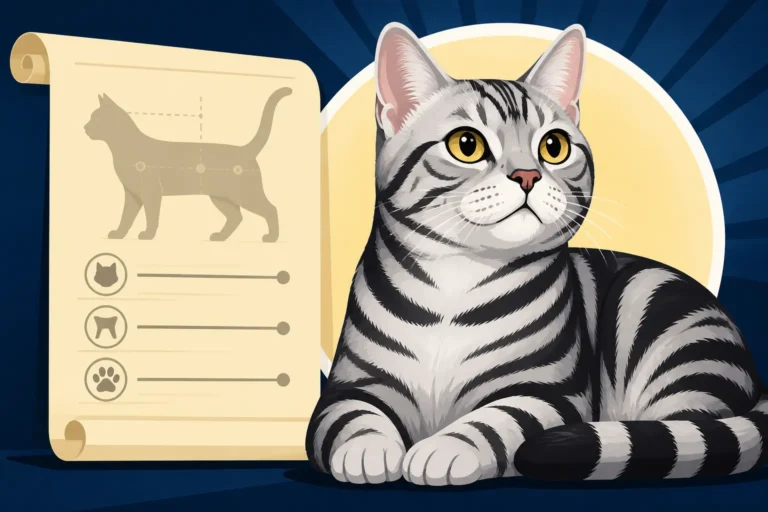
At a conformation show, judges compare a cat with the standard for its breed. They consider features such as body structure, head shape, coat, pattern, condition, and overall balance. An American Shorthair is not judged simply on whether it looks attractive or resembles a familiar tabby; the judge is evaluating how closely it fits the written standard.
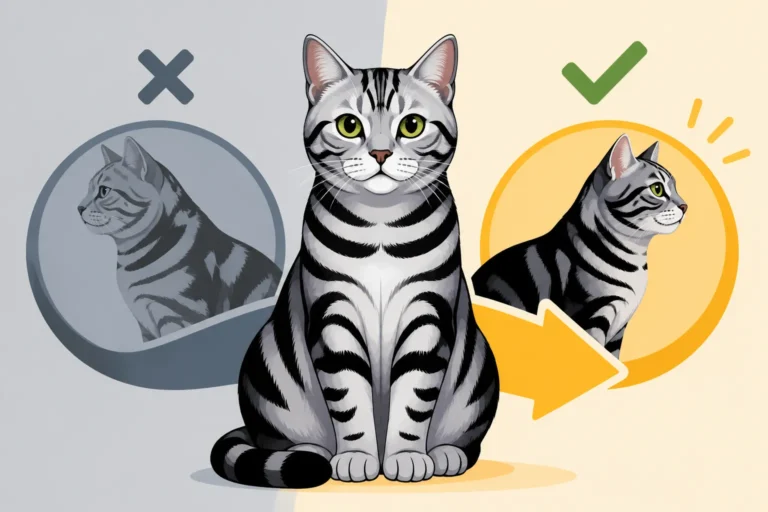
The American Shorthair is meant to look substantial and well-balanced, with a strong, practical build rather than an exaggerated outline. A cat can be a lovely companion and still have traits that make it less competitive in the show ring. Conversely, a cat that looks impressive to its owner may not match the specific details a judge is looking for. What the American Shorthair Standard Asks For explains the features that define the breed in the ring.
Judging is also affected by condition and presentation. A healthy coat, clean eyes and ears, trimmed claws where required, and a calm, manageable temperament all help the judge assess the cat. These details do not replace breed type, but they can affect how clearly the cat’s qualities show during handling. For more on the process, see How a Show American Shorthair Is Handled in the Ring.
A judge’s decision is not a verdict on the cat’s worth
Show judging is comparative and happens under specific conditions. A cat’s result can depend on which other cats are entered, the judging system, the judge’s assessment, and the class or ring involved. A cat that does not place at one event may perform differently elsewhere; that does not mean it is unhealthy, poorly cared for, or unsuitable as a pet.
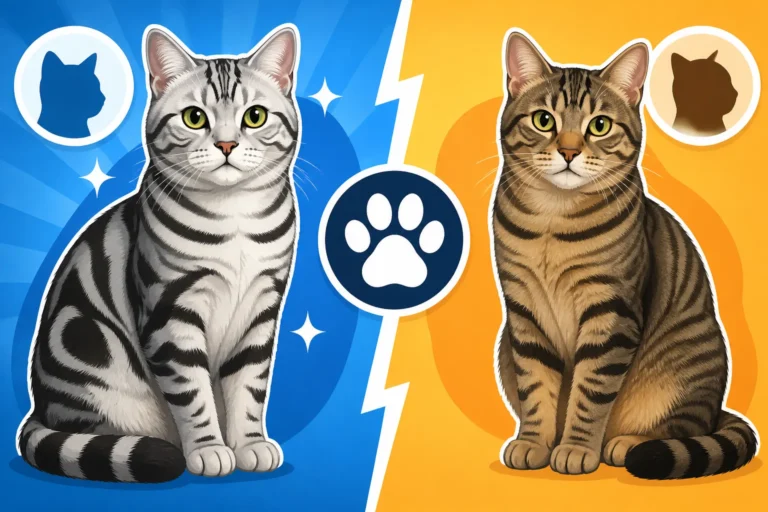
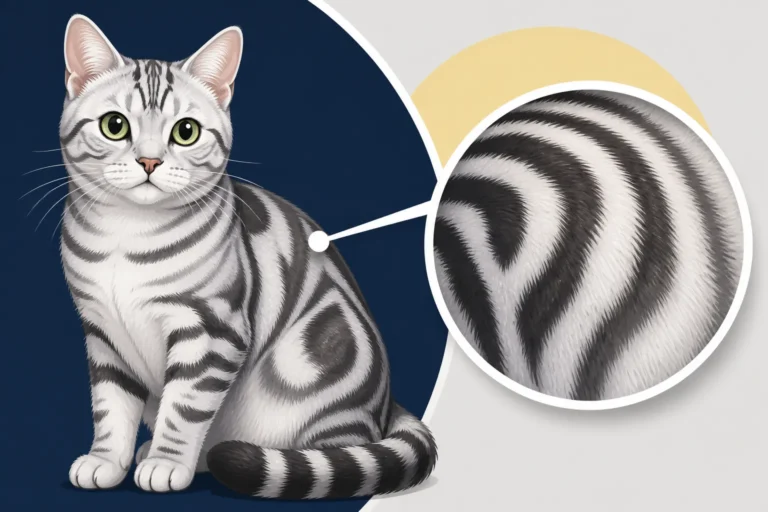
This is especially worth remembering for American Shorthairs because people often recognize the breed through its classic silver tabby appearance. The breed includes many colors and patterns, and show eligibility and competition depend on the applicable registry rules. A cat can be a registered American Shorthair without having the markings or presentation that give it the strongest chance in a particular class.
Judges may also note specific deviations from the standard. Those observations are about conformation, not a complete assessment of the cat’s personality or life at home. A point that affects a show placement may have no practical consequence for an affectionate, active family pet. Which Faults Judges Mark on an American Shorthair offers more context on how show-ring faults differ from everyday pet qualities.
How to verify a Best in Show claim
Ask for the registry and event details
If someone says an American Shorthair has won Best in Show, start with four basic questions: Which registry hosted the show? What was the event called? When did it take place? What exact award did the cat receive? A clear answer should identify the award rather than relying only on an impressive-sounding phrase.
Registry matters because organizations set their own rules for recognizing breeds and awarding titles. Some use show formats in which judging happens across separate rings; others may use a more familiar overall Best in Show label. If you want to understand where the American Shorthair is recognized, Which Registries Recognize the American Shorthair is a helpful place to start.
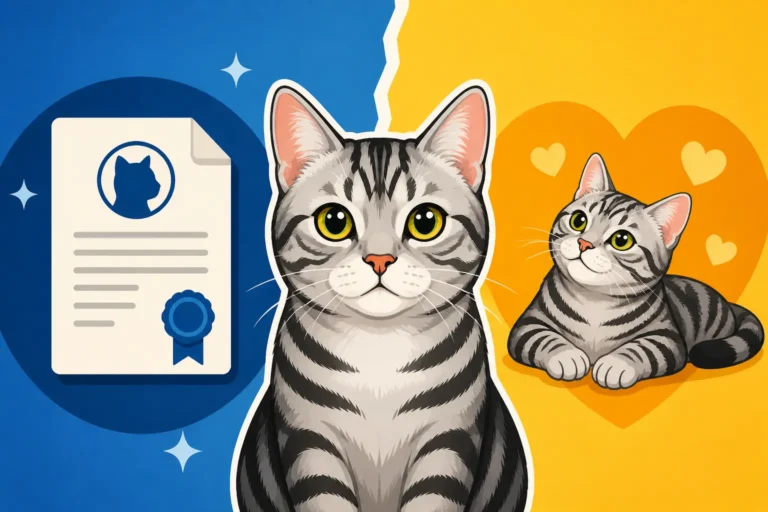
Then compare the wording with the event’s published results, if available. A certificate, show catalog, or registry record can clarify whether the cat won Best in Show, Best of Breed, a ring placement, or another title. If the claim comes from a breeder, asking to see the record is a reasonable way to understand the cat’s background—not an accusation that the claim is false.
Treat “award-winning” as a prompt to ask questions
The phrase “award-winning” can describe anything from a major event title to a placement in one class. It is not necessarily misleading, but on its own it leaves out information a prospective buyer or curious reader would need. Ask what the award was and whether it belongs to the cat being discussed or to another cat in its pedigree.
A pedigree and a show record answer different questions. Pedigree paperwork traces ancestry and registration; it does not prove the cat won a show. A show certificate documents a result; it does not guarantee that a kitten from that cat will have the same conformation or win similar awards. If you are considering a show prospect, learn about the breeder’s selection priorities as well as the titles they mention.
For people attending a show with their own cat, practical preparation can take pressure off the day. Get the cat comfortable with its carrier, handling, and the travel routine well in advance. Chewy is one place owners may use to find ordinary supplies such as carriers or grooming tools, but show-specific rules should come from the registry and event organizer. If a familiar brush or carrier makes the trip less stressful, Chewy may be useful for replacing it before the event. Chewy can also be one option for routine cat-care essentials, while the show’s official instructions should guide anything required for entry.
What a show win does and does not prove
It demonstrates success in a particular competition
A Best in Show award can be a meaningful achievement for the cat and its exhibitor. It indicates that the cat stood out under the rules and judging conditions of a particular event. For breeders, repeated strong results may also show that their cats are being recognized for traits valued by judges.
But one win does not establish that the entire breed is superior to other breeds. Cat shows compare individual entries within defined categories; they are not comprehensive tests of health, intelligence, temperament, or suitability for every home. Even a highly successful show cat needs ordinary veterinary care and the same thoughtful daily attention as any other cat.
Nor does a show title guarantee a kitten’s future. Kittens inherit a mix of traits, and their eventual appearance, temperament, and show potential cannot be promised simply because a parent performed well. A prospective owner should consider health information, socialization, living conditions, and whether the cat fits their household—not just trophies.
Pet cats do not need show titles to be genuine American Shorthairs
Many American Shorthairs live as companions rather than show competitors. Some are registered and never enter a ring; others are beloved household cats whose owners have no interest in conformation judging. Their value as pets does not depend on awards. A calm lap companion, a playful window watcher, or a cat who prefers to observe visitors from a safe perch can be a wonderful American Shorthair without a show record.
A pet cat may also have traits that make it ineligible for a particular show class or less competitive against the entries that day. That does not erase its breed registration or diminish its place in the family. If you are asking whether your own American Shorthair can be entered, check the relevant registry’s requirements and the event’s rules. Whether a Pet American Shorthair Can Be Shown covers the distinction between being a pet and being eligible to compete.
The most reliable answer is therefore: yes, an individual American Shorthair can win a Best in Show award at an event that offers one, but there is no single universal Best in Show title that belongs to the breed. To evaluate a specific claim, confirm the registry, show, exact award, and official result. And if your cat has never stood on a judging table, that says nothing about how good a companion it is.
Disclaimer
This article is for general informational purposes only and does not constitute professional advice. Laws, prices and regulations vary by location and change over time. Consult a qualified professional for guidance on your specific situation.